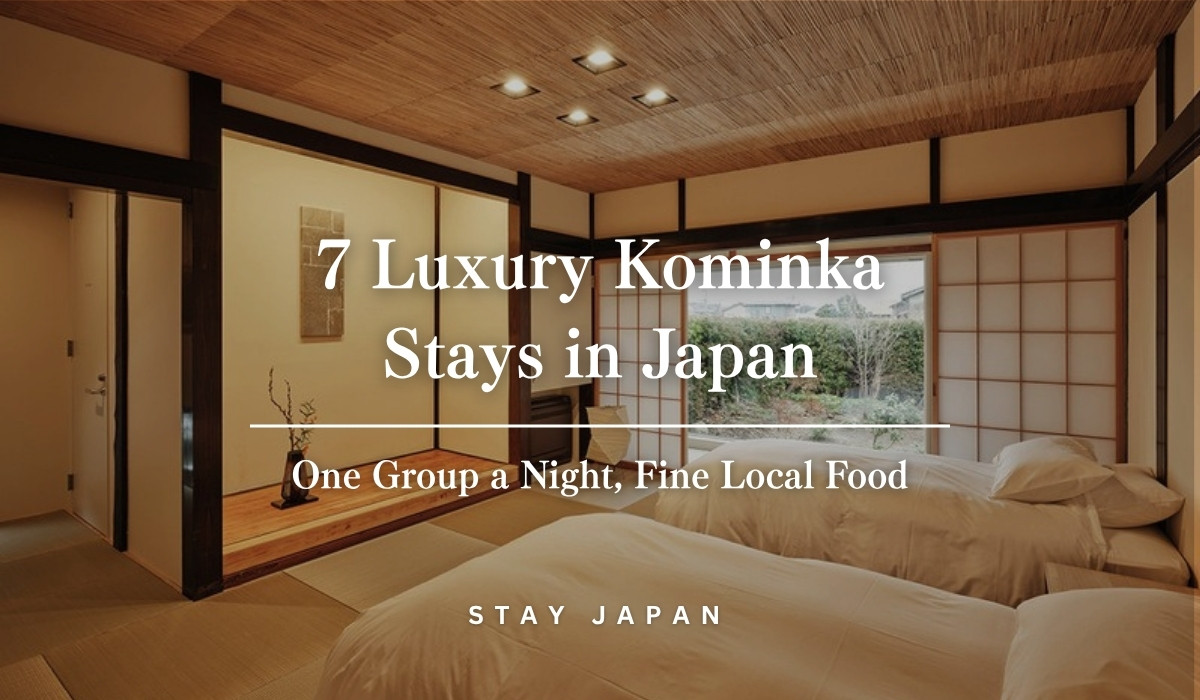

Some trips are decided not by where you go, but by how you spend the night. A luxury kominka is that kind of trip.
The seven houses in this guide are luxury kominka — traditional Japanese homes, most of them well over a century old — and every one of them is rented out whole, to a single group at a time. What makes them luxurious has very little to do with thread counts or marble bathrooms.
We chose these houses on two criteria: food and experience. Something you can only eat here, something you can only do here. All of them can be booked on STAY JAPAN, and we have included per-person price guides so you can see how the numbers change with your group size.
New to the idea? What is a Kominka? explains what these houses are and how they came to be.
What makes a luxury kominka different
A luxury hotel and a luxury kominka can cost about the same for a night, but they offer very different things. Here are three.
First, these houses take one group per day. No guests in the next room. Nobody passing you in a lobby. From check-in to check-out, a house that has stood for a hundred years or more belongs entirely to you. It is not that the rate could be lower — it is that only one booking exists per night.
Second, what you are paying for is people and time, not fittings. A local woman starts cooking in the morning so that regional home cooking is on your table by evening. Charcoal is lit in an irori — a sunken hearth built into the floor — and a river fish is grilled slowly on a skewer. None of this scales. None of it can be made more efficient. And the knowledge and handwork of people who actually live in these valleys cannot be bought in from somewhere else.
Third, staying here is what keeps the building standing. A house of 120, 150 or 400 years needs its kayabuki thatch re-laid, its damaged pillars spliced, its earthen walls re-plastered. The work is expensive and the craftspeople are becoming fewer. Houses that would otherwise be lost survive because they are used as inns. Part of what you pay goes toward carrying this architecture another hundred years forward.
One more thing worth knowing: with a whole-house rental, the arithmetic changes sharply with group size. A house at ¥75,000 a night can fall under ¥10,000 per person once the group is large enough. Each listing below shows the cost for two guests and for a near-full house.
Rates vary by season, group size and options. Always check the booking page for current availability and exact pricing.
1. Luxury kominka where the local food is the reason to go
NIPPONIA Narayama Village -HIJIRI- (Nishiaizu, Fukushima) | Home cooking by the village mothers
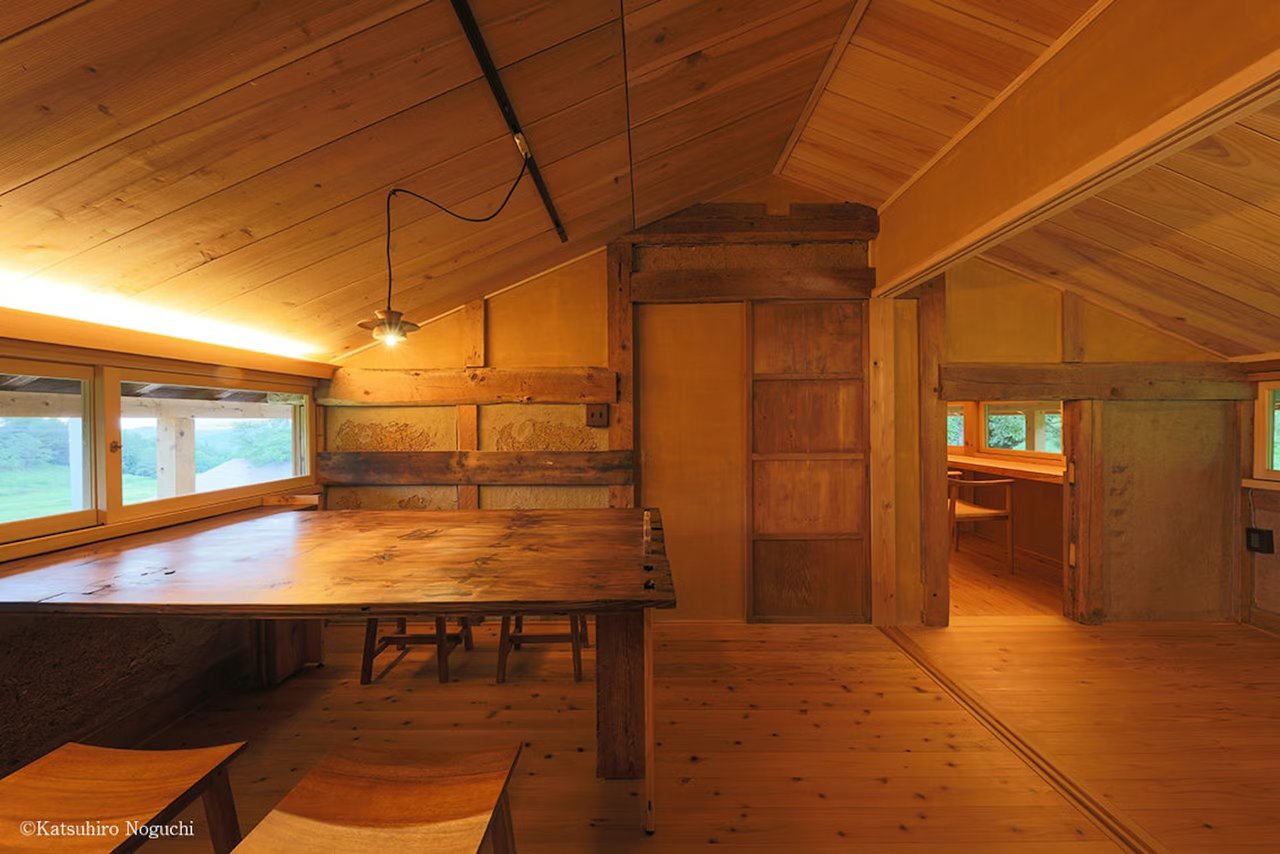
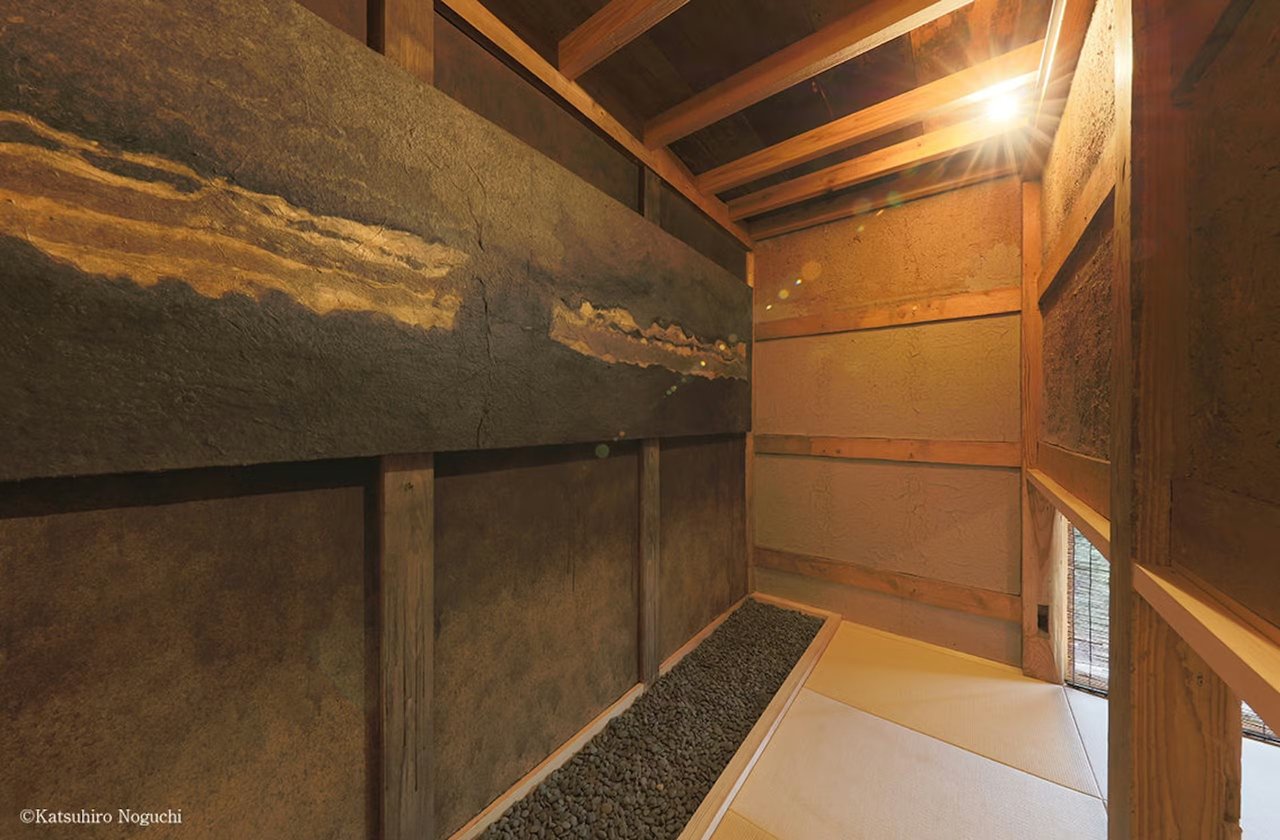
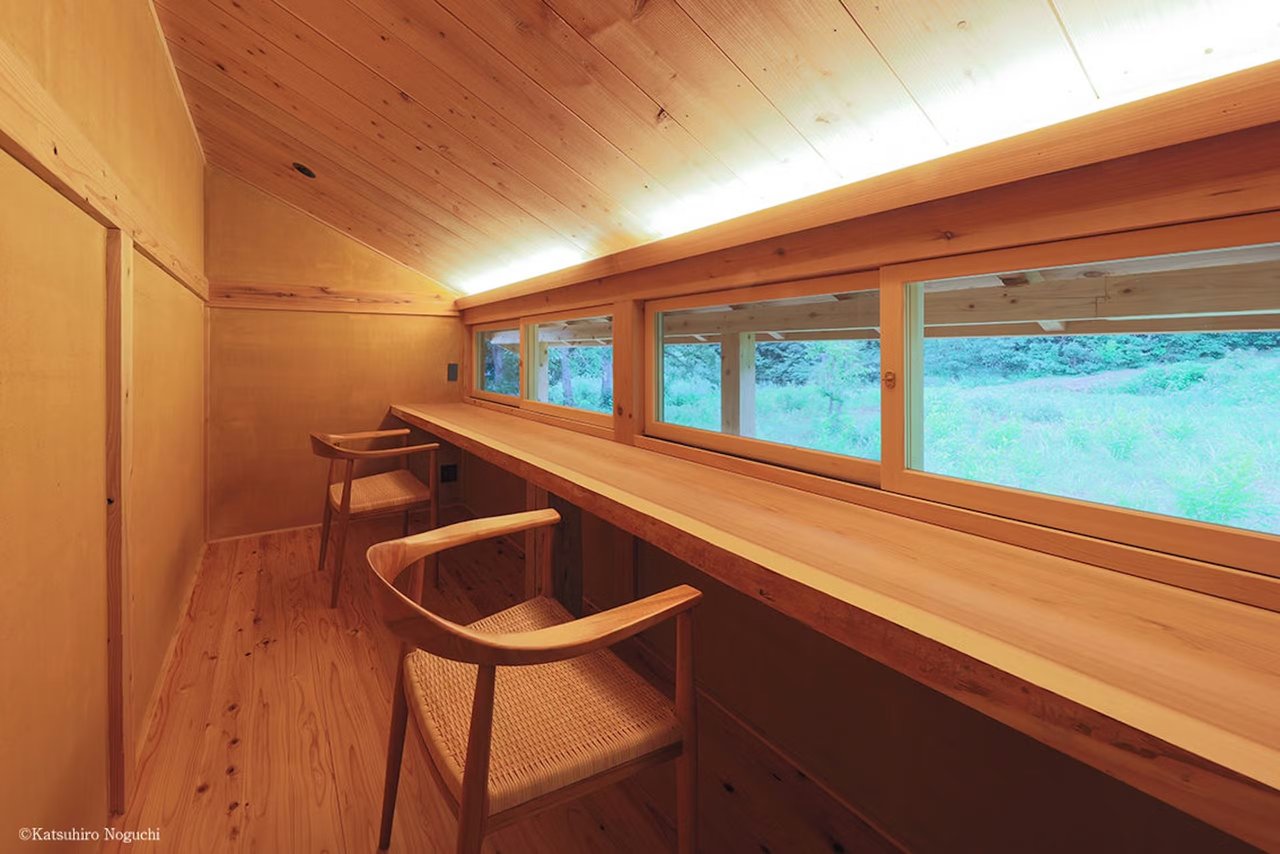
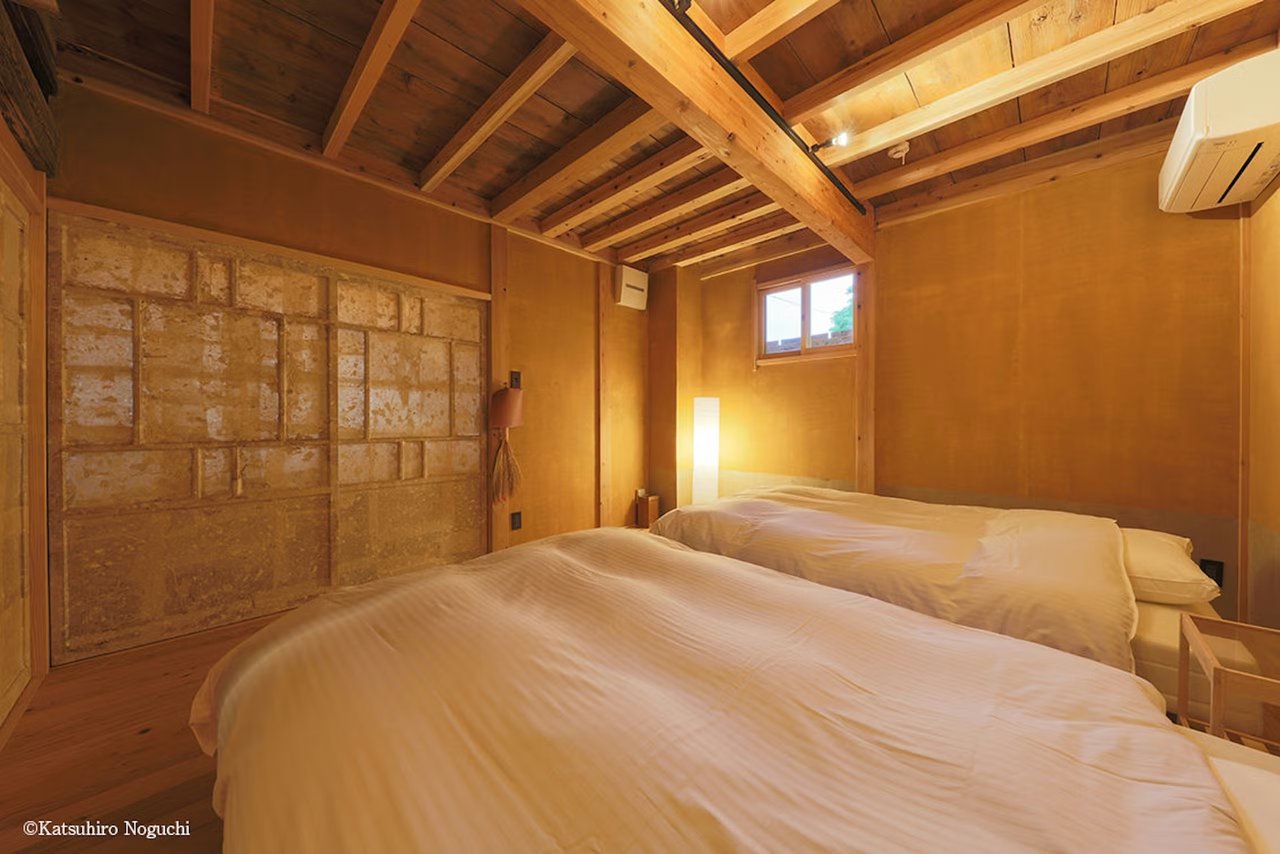
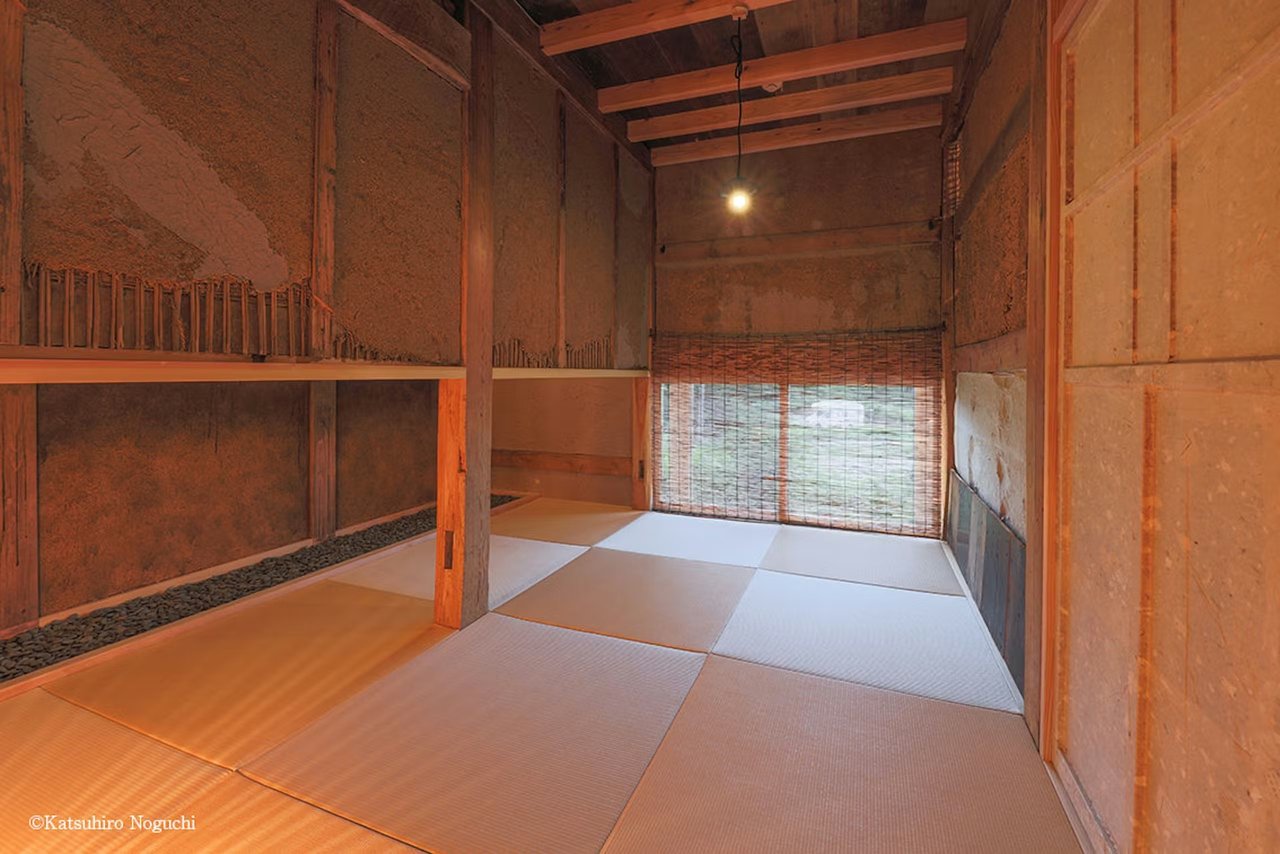
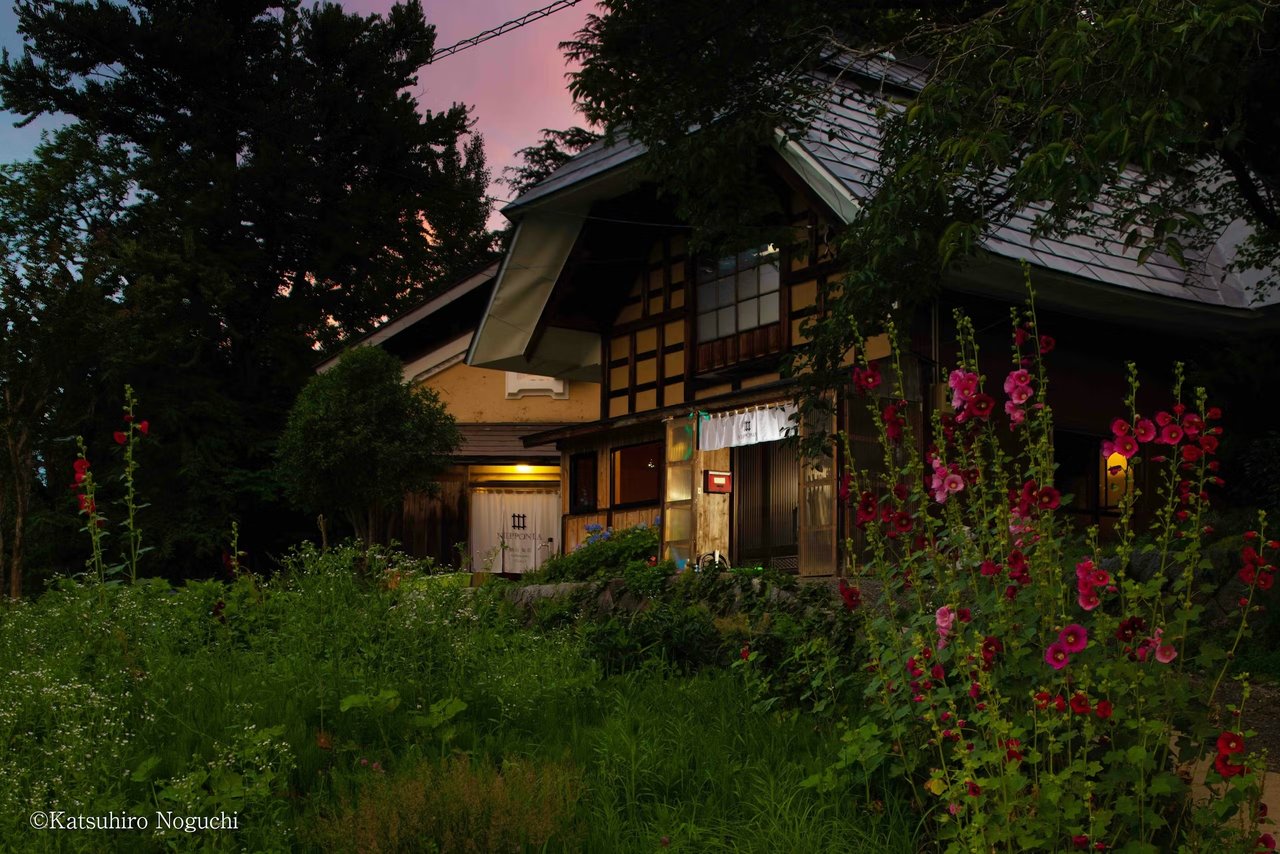
The idea here is to stay as though you lived in the village. Narayama, deep in the snow country of Nishiaizu in Fukushima, is a settlement of just two households — and guests staying a single night are received as residents of it. HIJIRI is a 60-square-metre maisonette converted from a naya (a farm barn) built more than 120 years ago, designed around the image of a mountain ascetic’s cave retreat. There is no television and no clock.
The food is the centrepiece: kyodo-shoku, regional home cooking, catered by women of the village. Rice from the Okugawa area is considered among the finest-tasting in Japan, and it arrives alongside dishes made from what this valley grows. This is not a restaurant menu. It is what these households have cooked for generations, and you cannot order it anywhere else.
After dinner there are stars, a sea of cloud below the ridgeline, and terraced fields. Two more houses sit in the same village: NIPPONIA Narayama Village -MITSUKINO-, another barn conversion with a double-height living room (up to 5 guests), and NIPPONIA Narayama Village -KAYA-, a restored kura — the thick-walled storehouse where miso, soy sauce and pickles were once kept (up to 5 guests). Both from ¥50,600.
▶︎ Whole house, up to 4 guests (base rate covers 4)
▶︎ Food: kyodo-shoku catering by local women (¥7,780 per person for the dinner and breakfast set)
▶︎ Experience: staying as a resident of a two-household village
▶︎ Access: 26 min by bus from Nozawa Station
- Rate guide: from ¥50,600 per night (weekday, up to 4 guests)
- 2 guests: approx. ¥25,300 per person
- 4 guests: approx. ¥12,650 per person
MAHORA Nishinoya (Myoko, Niigata) | Niigata Wagyu around a sunken hearth
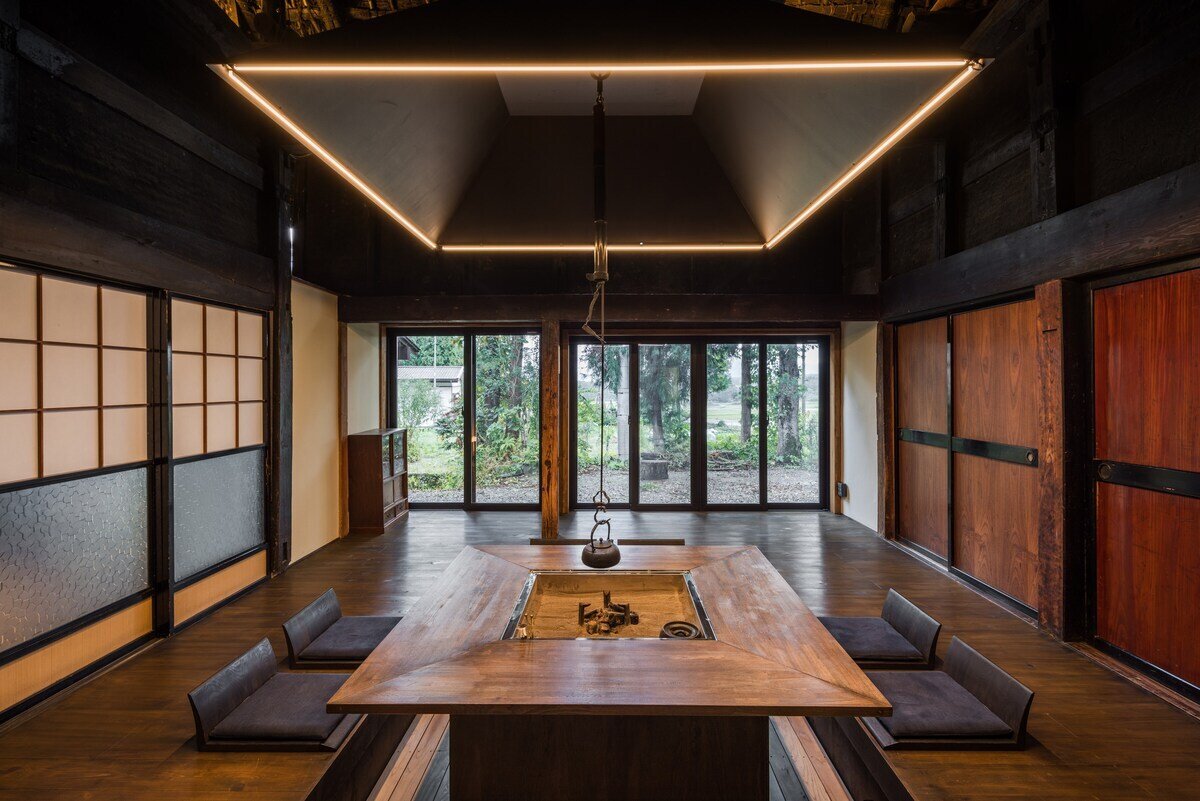
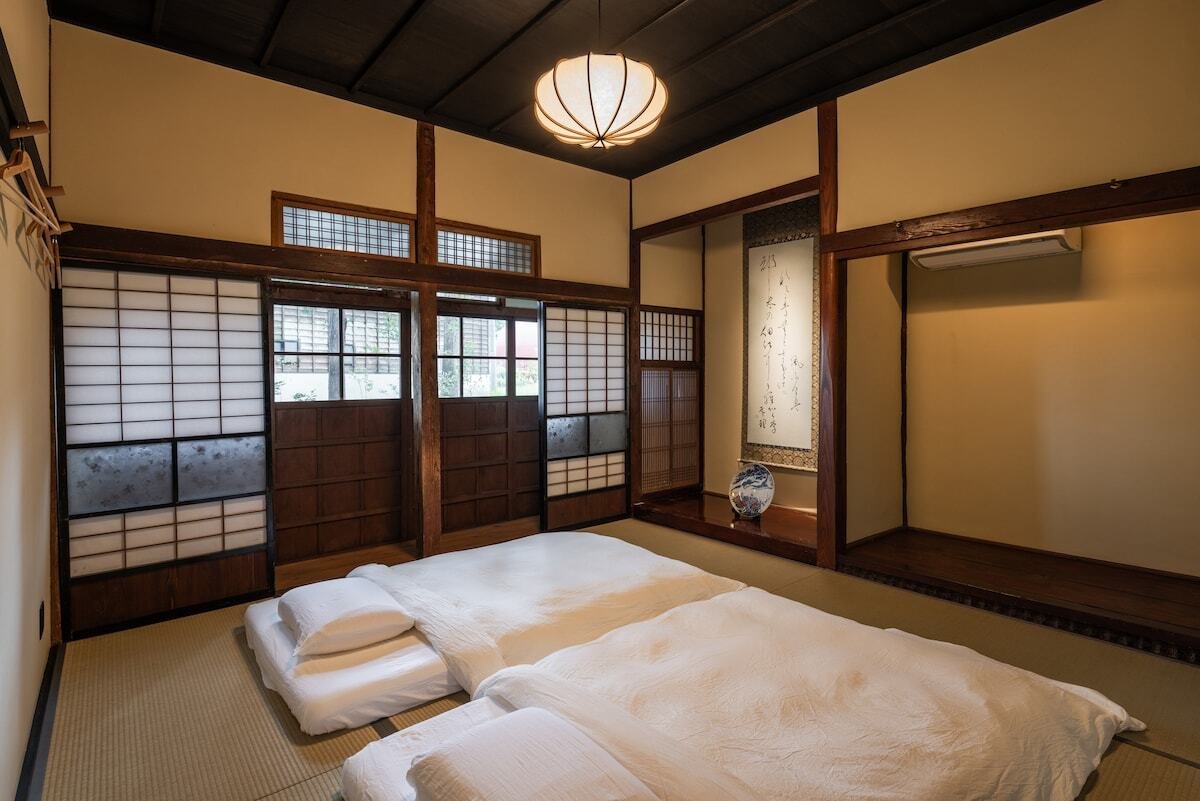
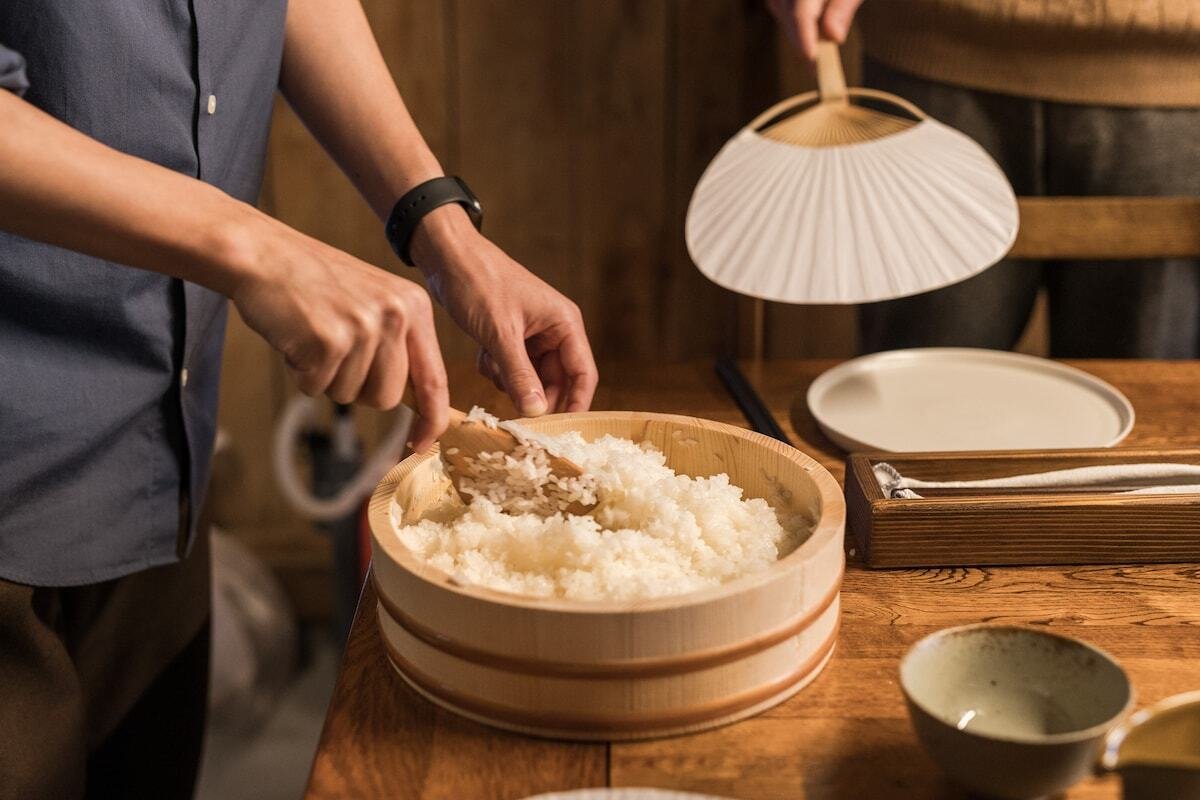
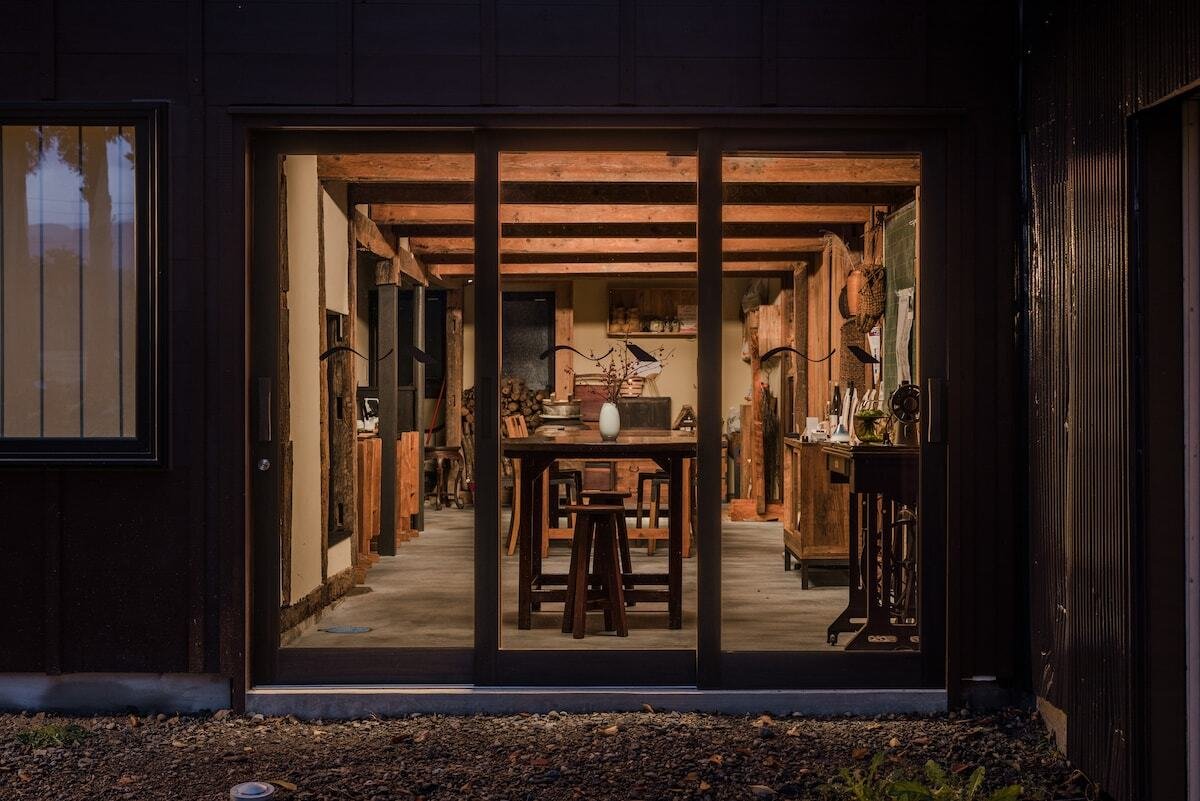
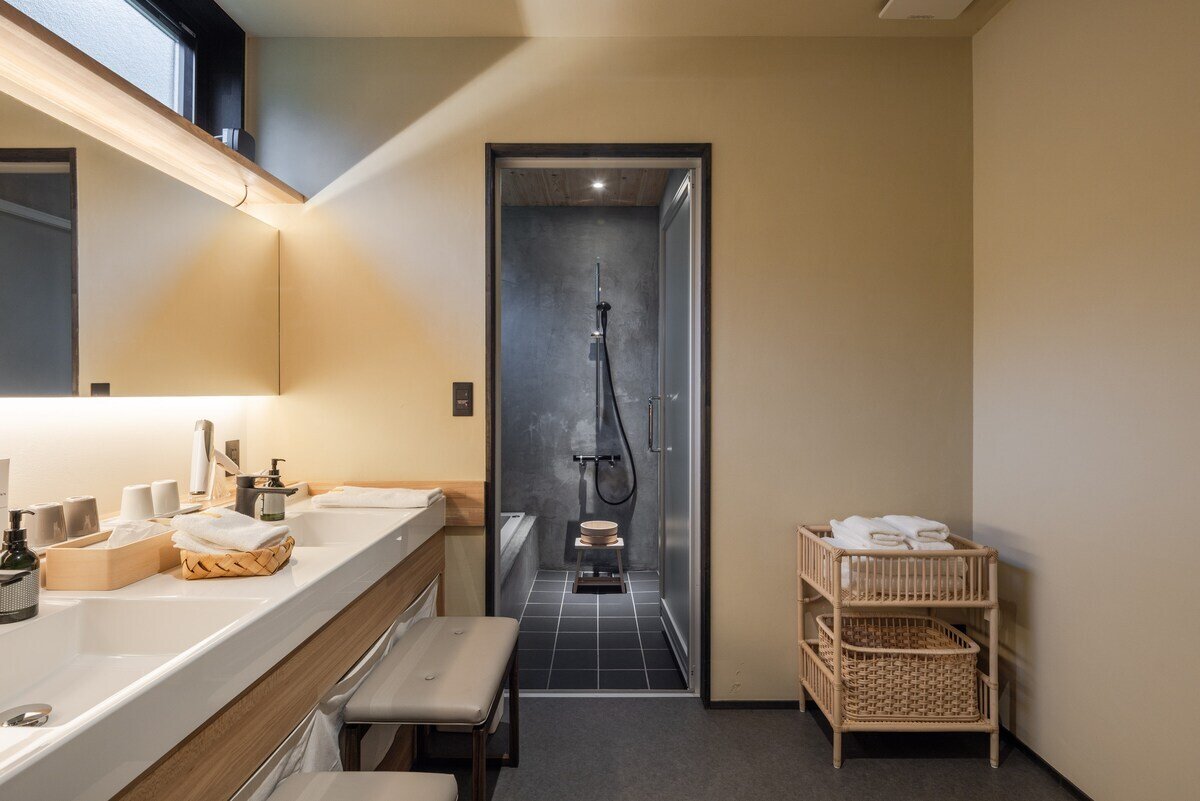
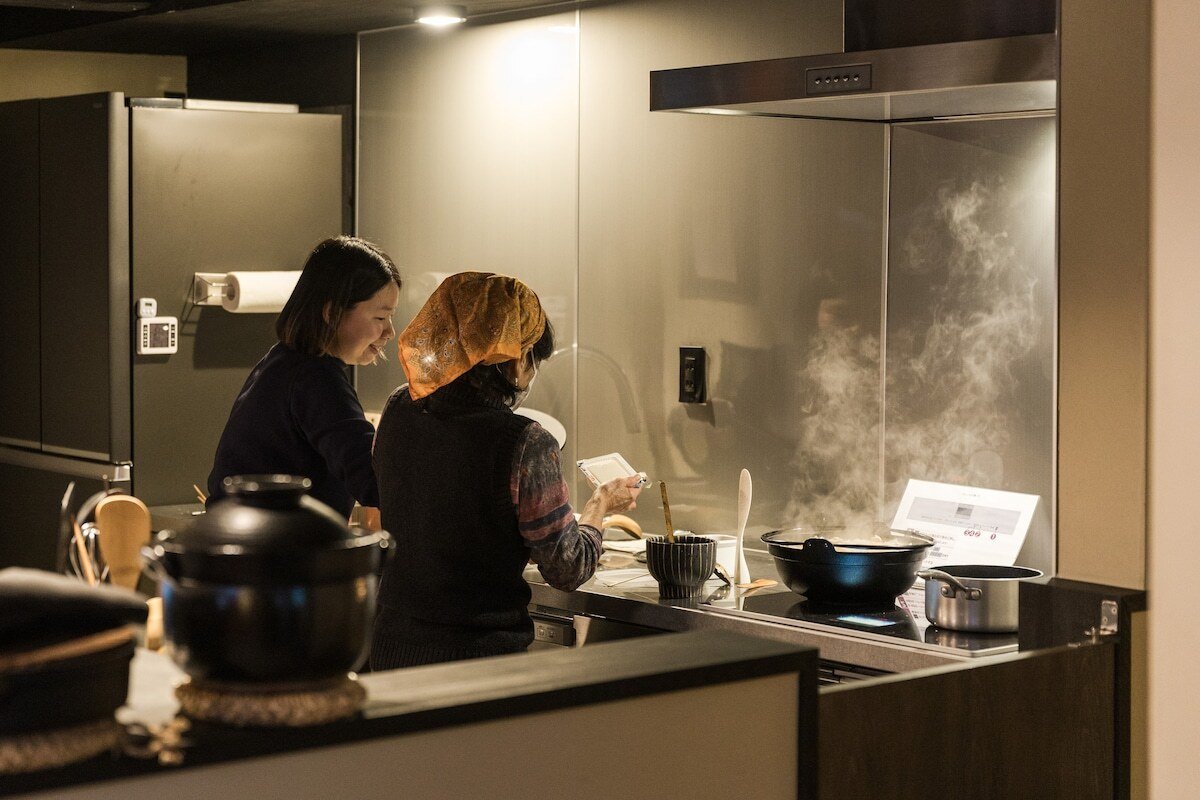
At this hearth, you can stretch your legs out underneath it. MAHORA Nishinoya, in Myoko in Niigata, is a 120-year-old kominka rented whole, and its irori was built by a local craftsman in the hori-kotatsu style — the floor is dug out around it, so you sit with your legs down in the well rather than folded beneath you. The kitchen has a traditional doma earthen floor and is fully equipped for cooking.
The food to book here is Niigata Wagyu beef, served as shabu-shabu or sukiyaki — a hot pot eaten around the hearth on a snow country evening. There is also a session where you cook regional dishes together with a local woman, so the recipes travel home with you. Other options include making kumiko coasters, the fine interlocking woodwork of Japanese joinery, and a kimono dressing and photo session.
The house also has a small library called Tandokuan. On a quiet night with snow piling up outside, finishing a book you started months ago turns out to be its own kind of luxury.
▶︎ Whole house, up to 8 guests (base rate covers 2)
▶︎ Food: Niigata Wagyu shabu-shabu or sukiyaki (¥12,648 per person); cooking regional dishes with a local woman (¥18,400 per group)
▶︎ Experience: hori-kotatsu style irori hearth, the Tandokuan library, kumiko woodwork, kimono photo session
▶︎ Access: 15 min by taxi from Joetsu-Myoko Station (Hokuriku Shinkansen)
- Rate guide: from ¥75,900 per night (weekday, base rate covers 2 guests)
- 2 guests: approx. ¥37,950 per person
- 6 guests: approx. ¥25,300 per person
- ¥18,975 per additional guest from the third person
- 3% discount per night on stays of 6 to 12 nights
Sadomari -Izumi no ie- (Sado Island, Niigata) | Seafood on a UNESCO World Heritage island
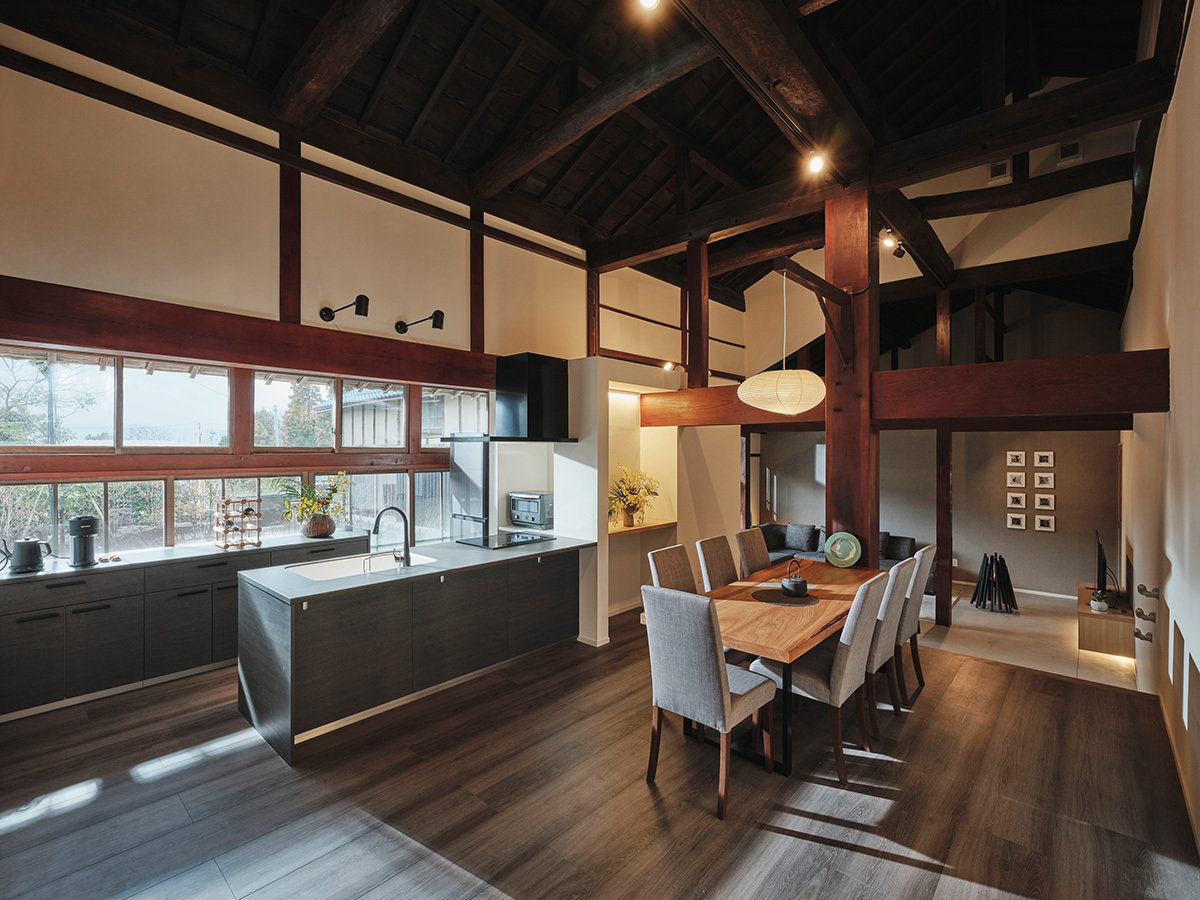
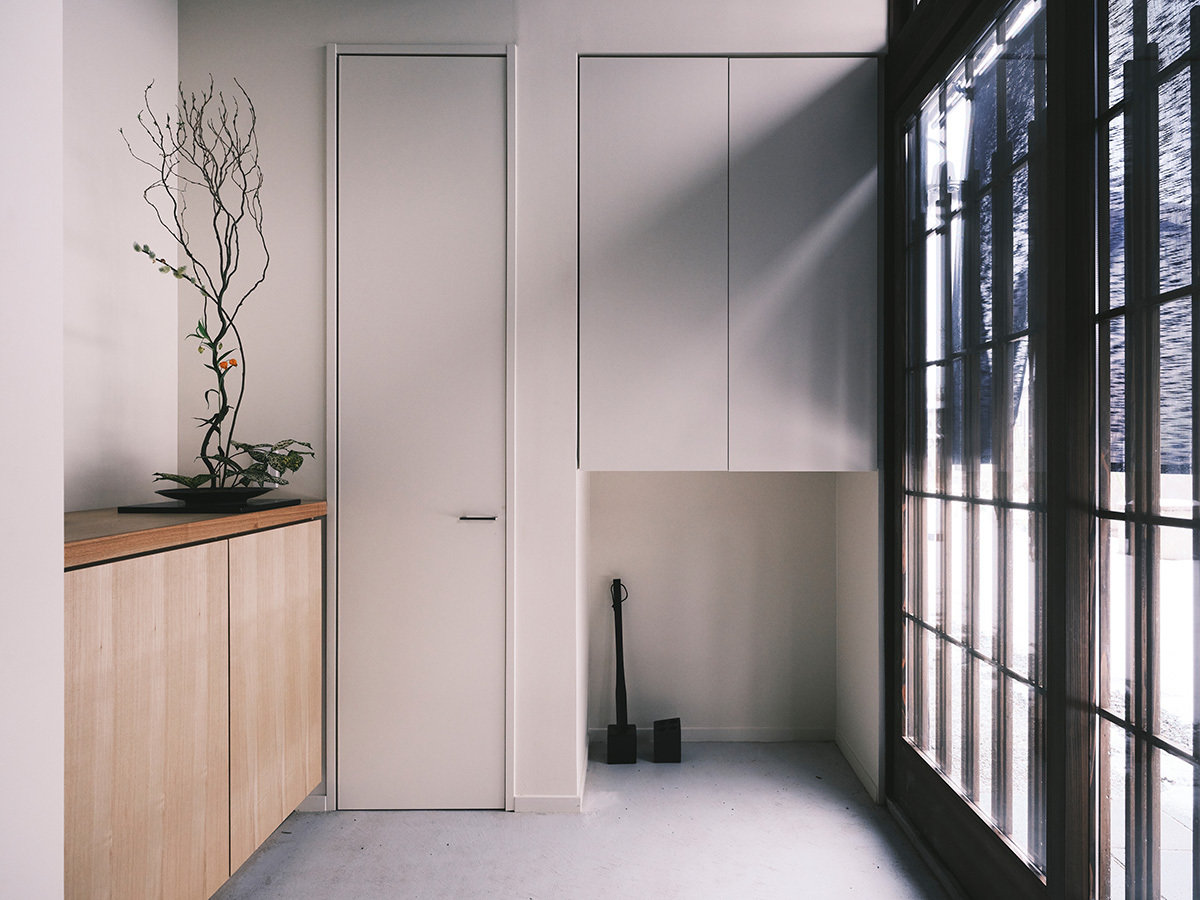
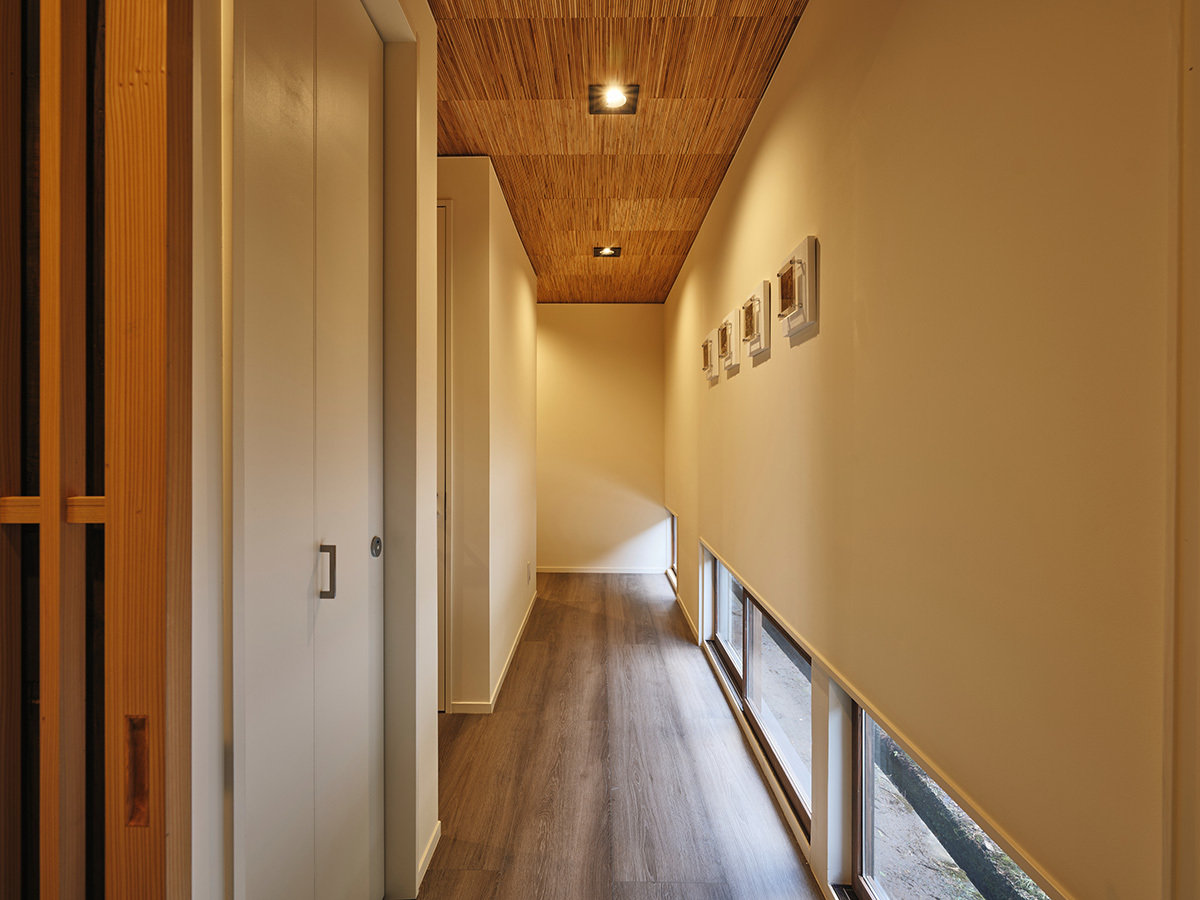
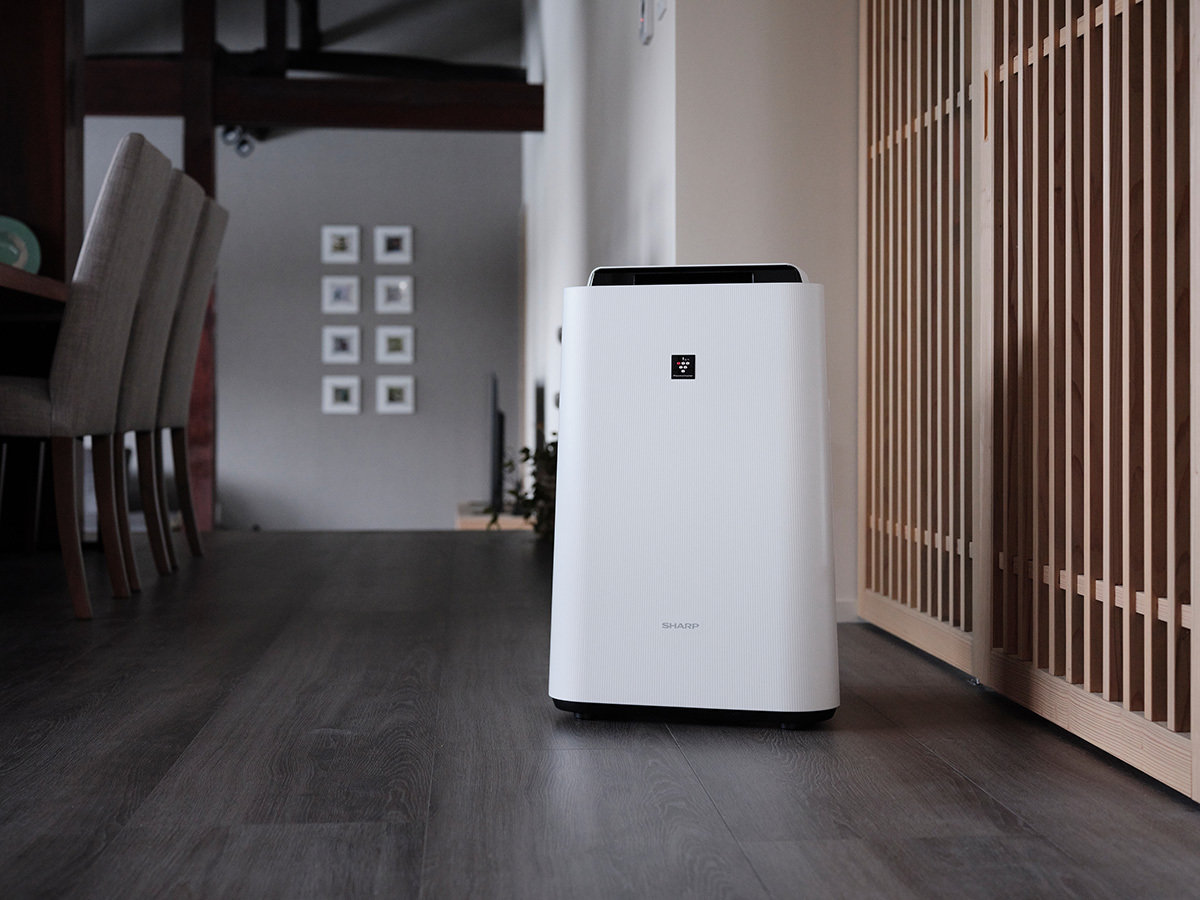
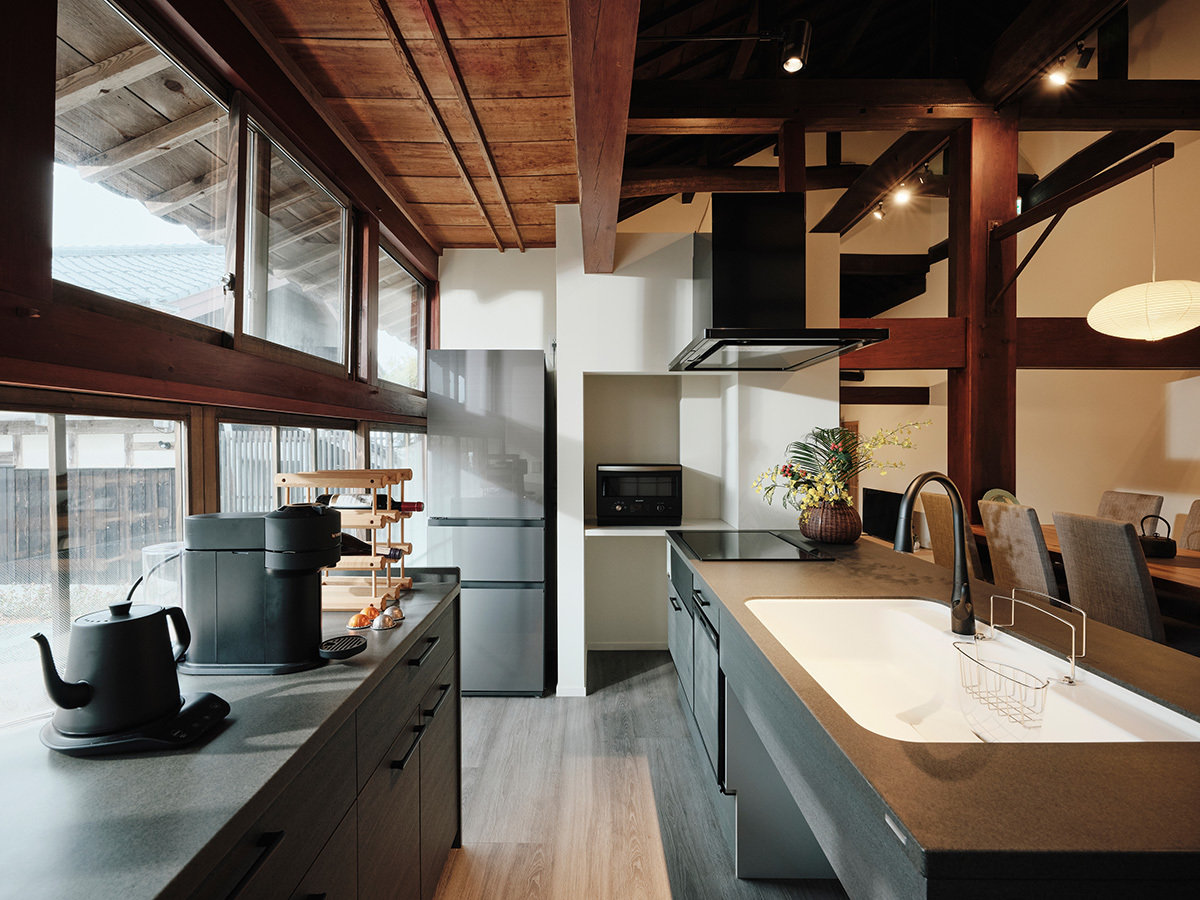
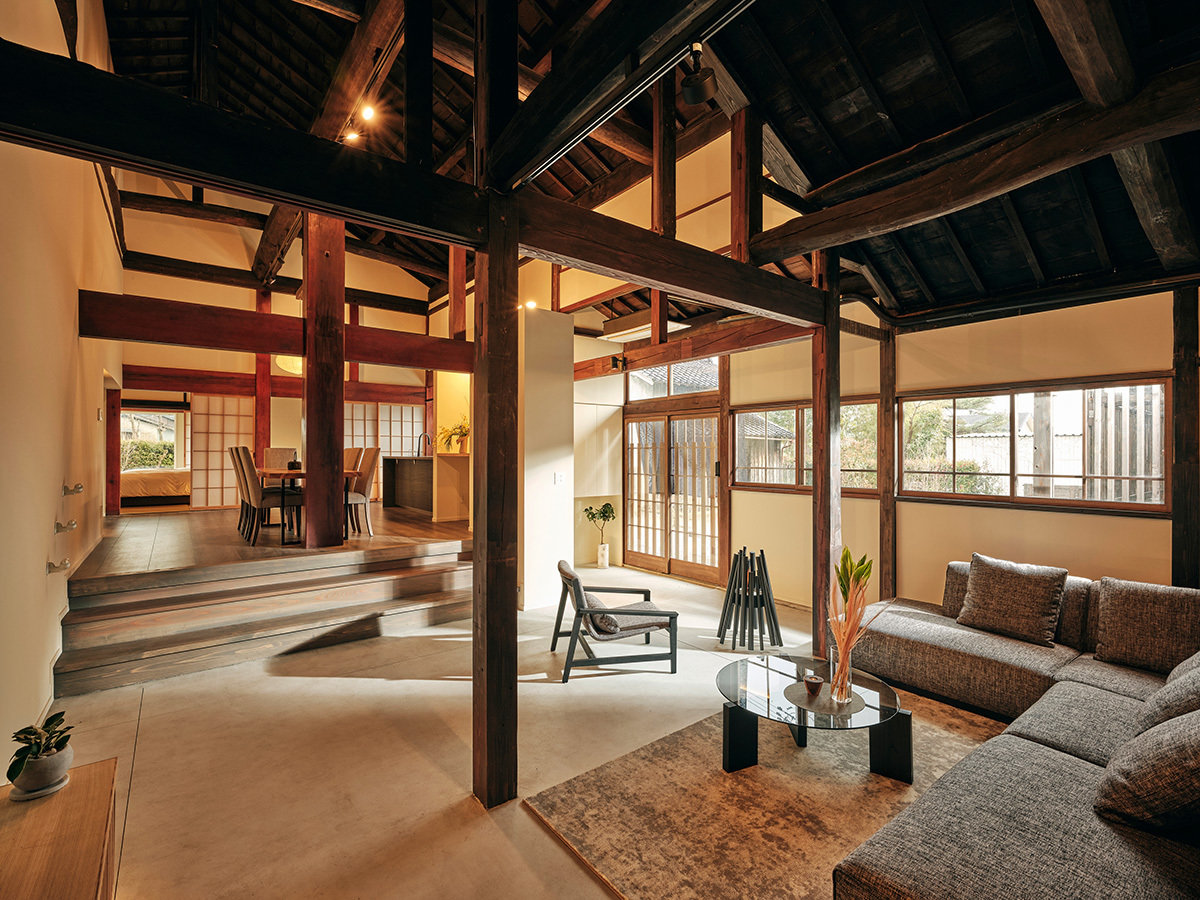
The gold mines of Sado Island were inscribed as a UNESCO World Heritage site in 2024, and visitor numbers have been climbing since. Izumi no ie was designed by the internationally active architect Jun Watanabe under the idea of “kominka meets luxury”. The roof truss beams and the daikokubashira central pillar are original; everything around them has been rebuilt for the way people live now.
What you eat here comes out of the sea around the island. Groups of five or more can pre-order a platter of Sado sashimi cut from whatever is in season. Otherwise, our suggestion is to shop for it yourself: winter on Sado means fat kanburi yellowtail and beni-zuwai red snow crab, and the kitchen here is generous enough to break down a whole fish in. Walking into a local fishmonger and asking what came in that morning is, in itself, the experience of living here for a few days rather than visiting.
There is a second house under the same name. Sadomari -Yamato no ie- dates from the early Meiji era, some 150 years ago, and was the birthplace of Shuho Nagano, the physician who first performed smallpox vaccination on Sado. From ¥63,250 for up to 6 guests, sleeping up to 9 — the better choice for larger groups.
▶︎ Whole house, up to 7 guests (base rate covers 4)
▶︎ Food: seasonal Sado sashimi platter (pre-order, 5 guests minimum); island-ingredient hors d’oeuvres and pizza delivery
▶︎ Experience: a kominka restored by architect Jun Watanabe; the Sado gold mines World Heritage site
▶︎ Access: approx. 30 min by bus from Ryotsu Port, then 5 min on foot
- Rate guide: from ¥57,500 per night (weekday, base rate covers 4 guests)
- 2 guests: approx. ¥28,750 per person
- 4 guests: approx. ¥14,380 per person
- ¥10,926 per additional guest from the fifth person
2. Luxury kominka with experiences you cannot have anywhere else
Gokayama Gassho-no-Sato (Nanto, Toyama) | Sleep inside a UNESCO World Heritage farmhouse
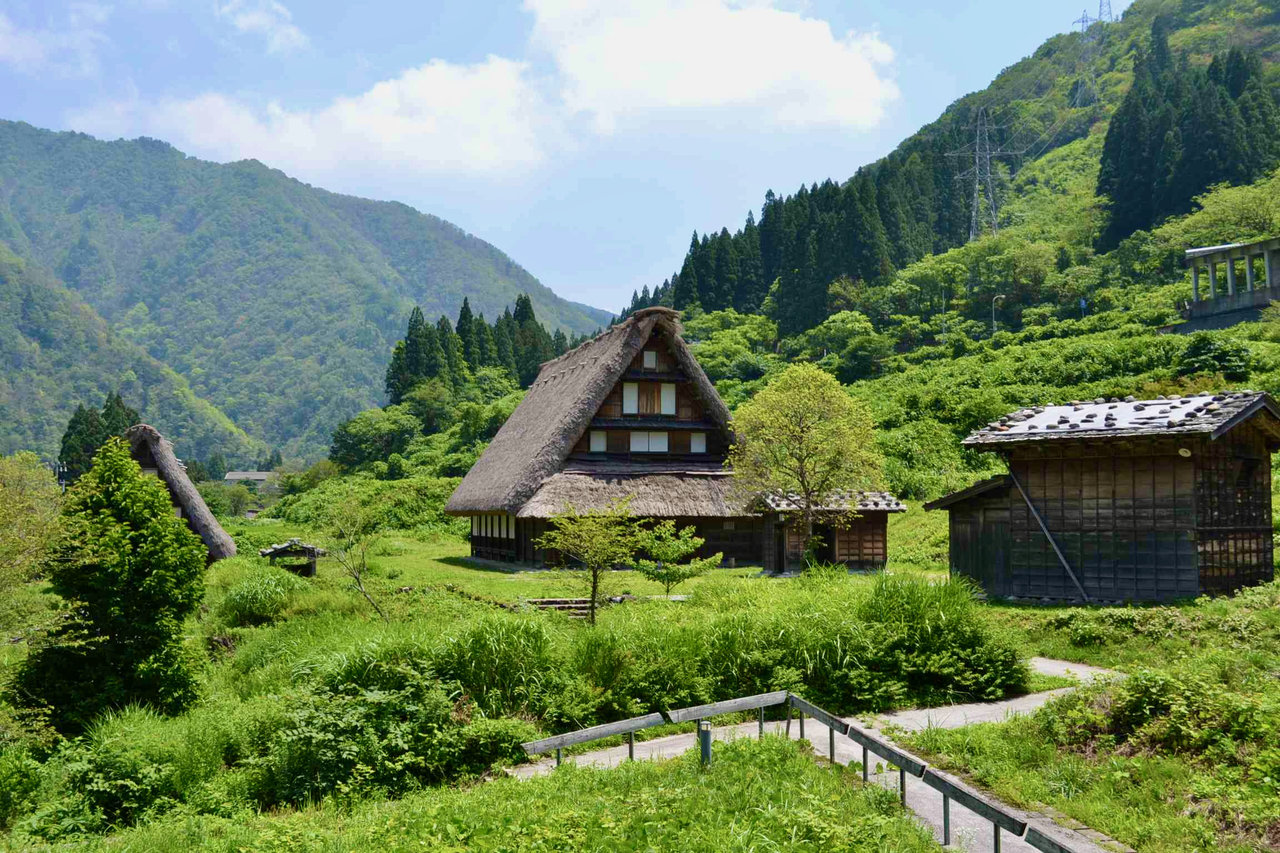


This one is a World Heritage site you can sleep in. The Suganuma settlement in Gokayama, Toyama, was inscribed by UNESCO in 1995 alongside Shirakawa-go, and Gokayama Gassho-no-Sato stands a five-minute walk from it. The houses available to rent are gassho-zukuri — steeply pitched thatched farmhouses, named because the roof frame resembles two hands pressed together in prayer — built between the late Edo period and the Taisho era. Three of them, the former Nitta, Arai and Matsuyomon residences, now operate as accommodation.
The thing to do here is grill over the irori. In the evening you light the charcoal and cook iwana, a mountain char, skewered upright beside the embers and left to take its time. That slow waiting turns out to be the densest part of the day. Around you: the steep thatch, the thick soot-darkened beams. A modern kitchen and bathroom have been fitted, but nothing that made the house what it is has been taken away.
Plenty of places let you look at gassho-zukuri houses. Very few let you spend a night inside one. The quiet of the village after the day visitors have gone is something only guests get to see. If you are planning to visit the neighbouring World Heritage village too, see Things to Do in Shirakawa-go.
▶︎ Whole house, up to 15 guests (base rate covers 5)
▶︎ Food: charcoal grilling over the irori (iwana char); full kitchen for self-catering
▶︎ Experience: a UNESCO World Heritage gassho-zukuri house to yourselves; Suganuma settlement 5 min on foot
▶︎ Access: approx. 60 min by car from Toyama Airport
- Rate guide: from ¥75,572 per night (weekday, up to 5 guests)
- 2 guests: approx. ¥37,790 per person
- 5 guests: approx. ¥15,110 per person
- ¥7,558 per additional guest from the sixth person
Tetsu-juro, the former Oguni residence (Fukusaki, Hyogo) | Built in 1601, and you can help repair its walls

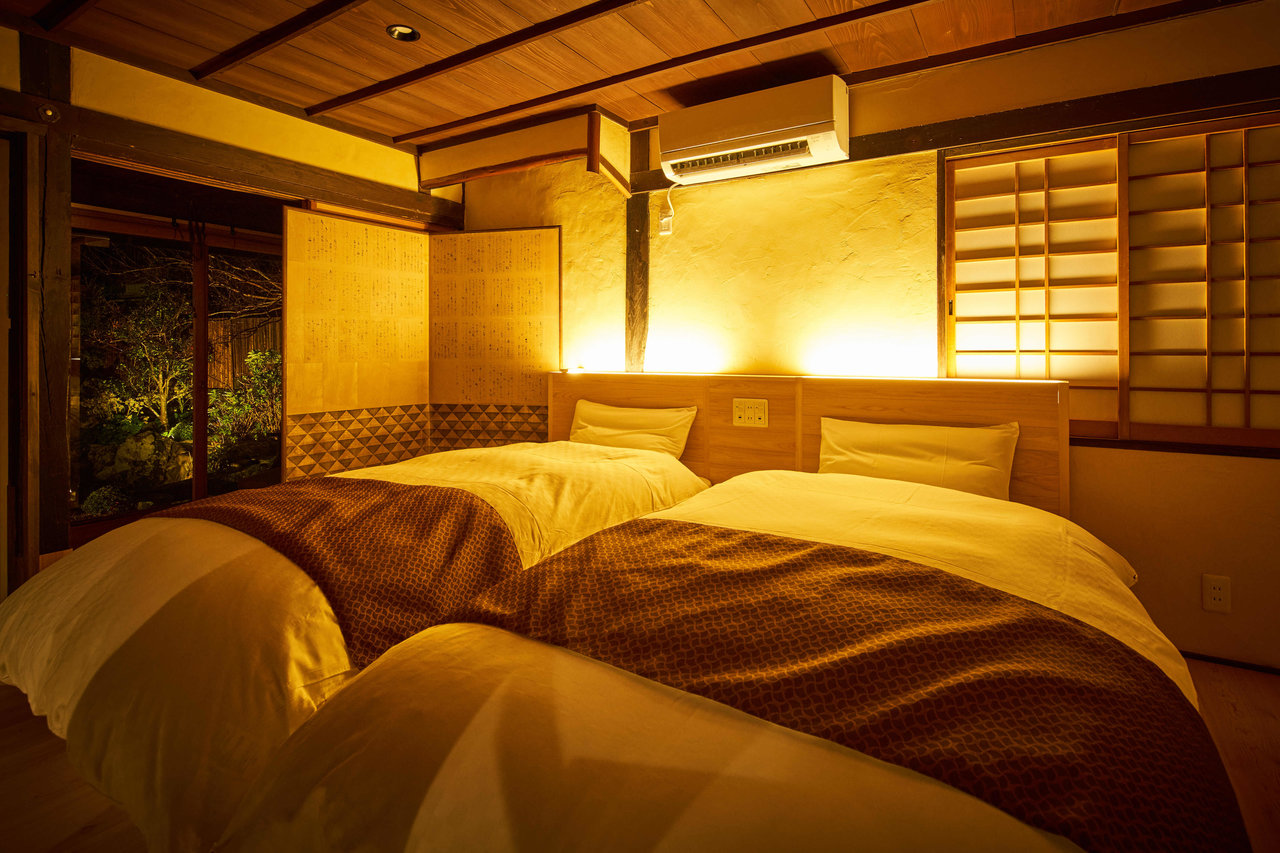
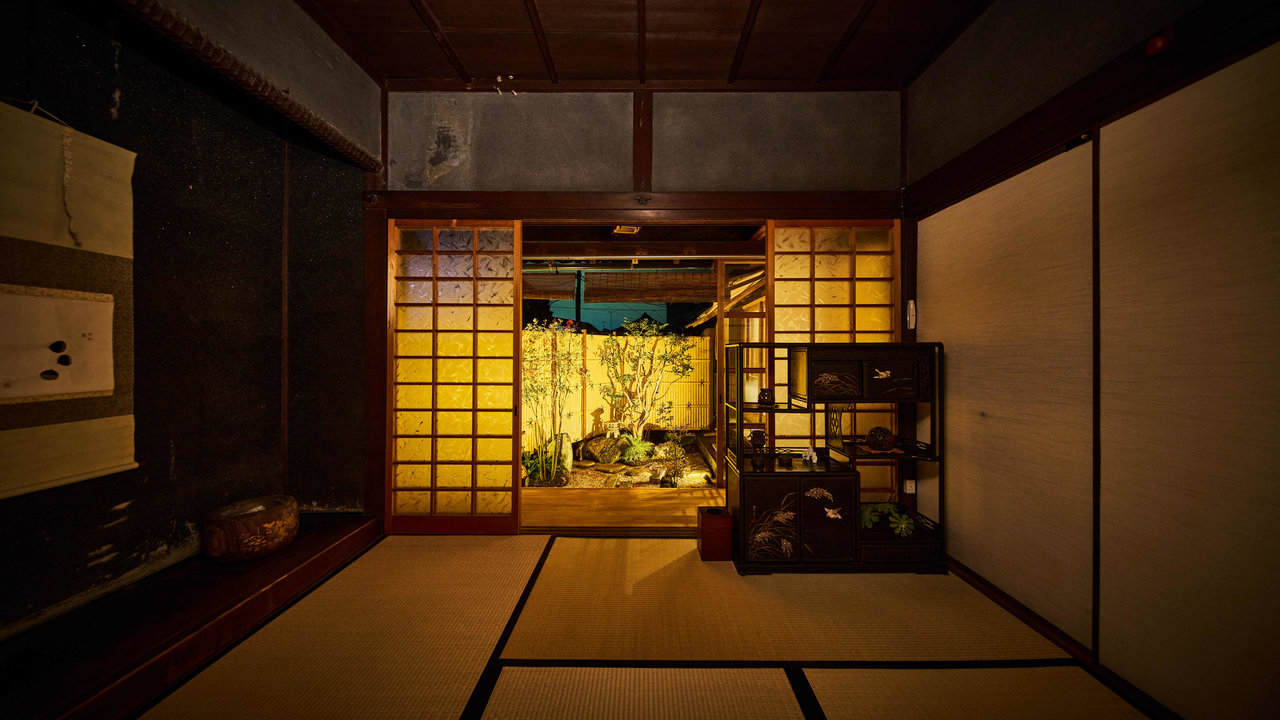
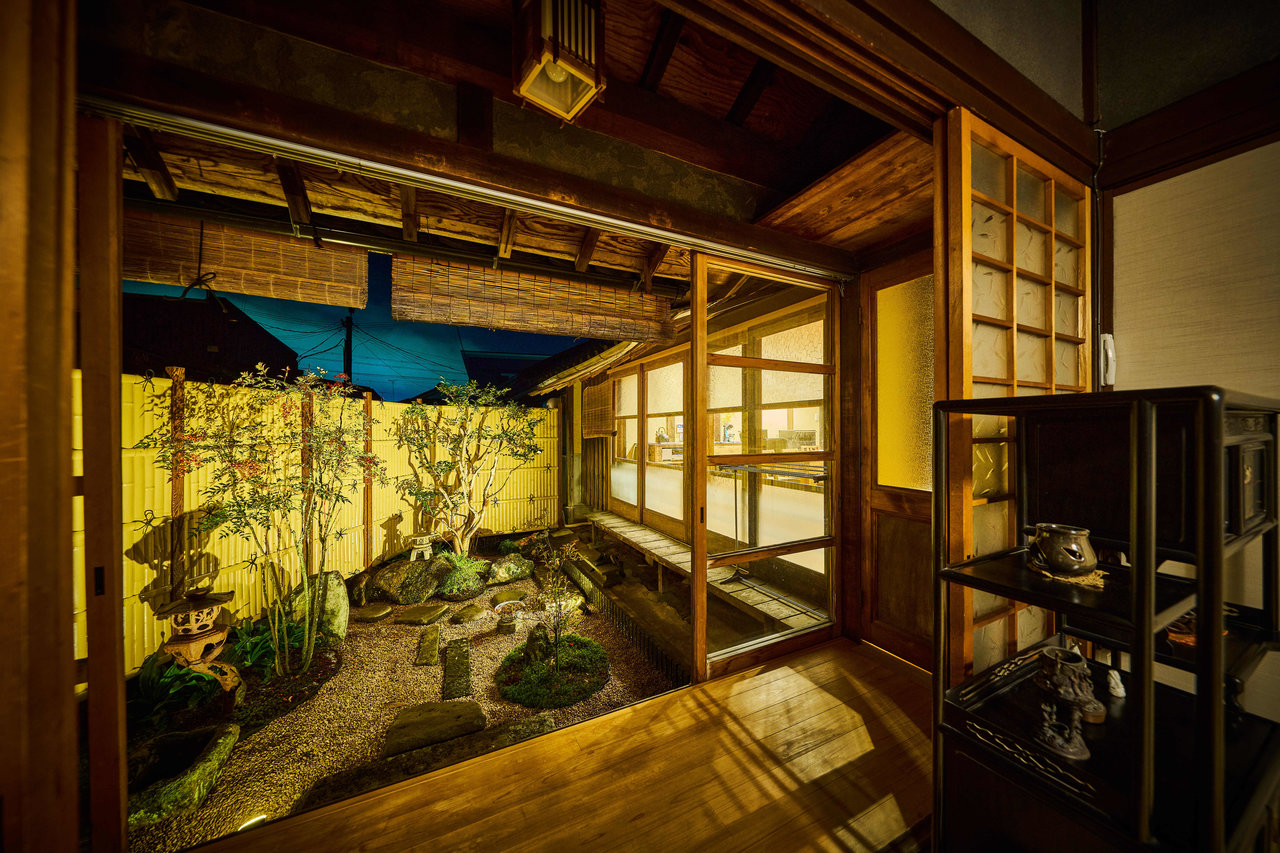
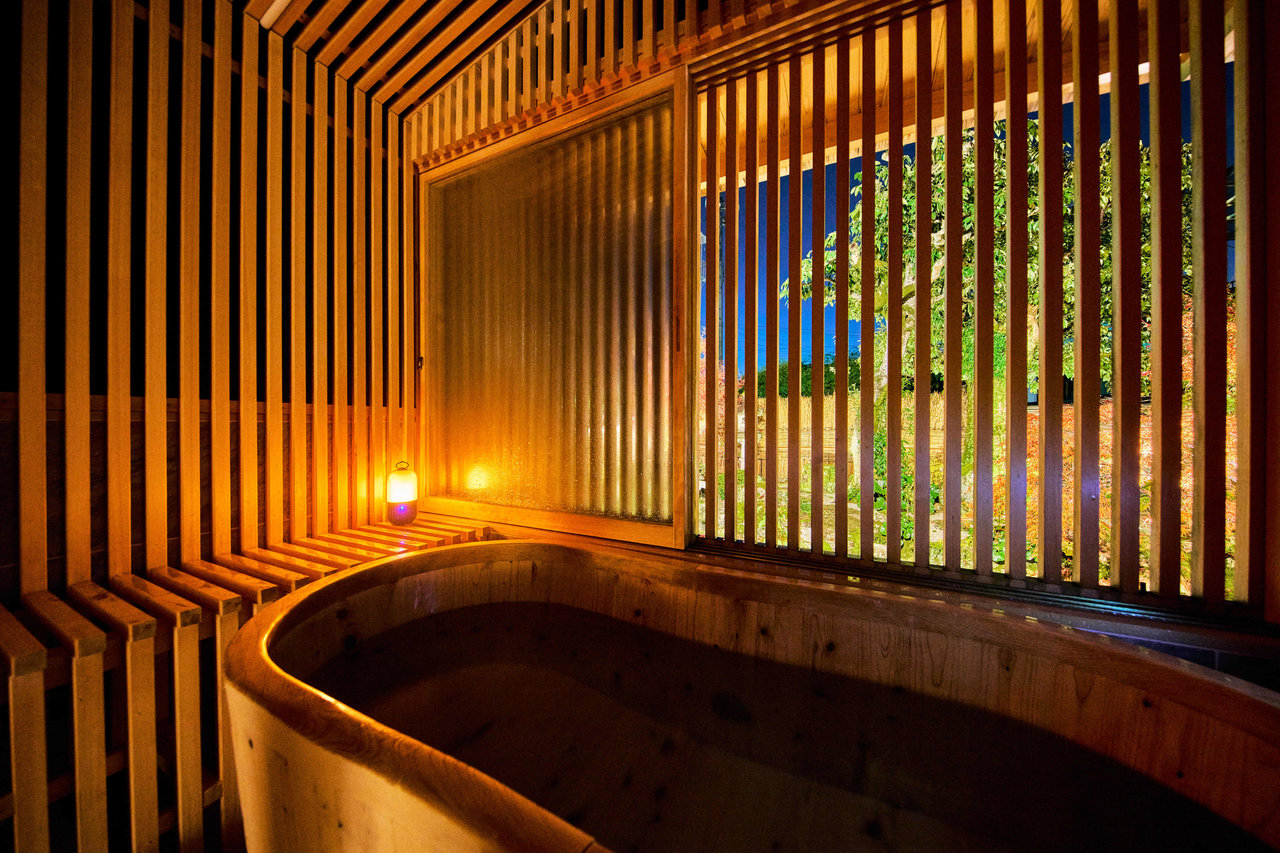
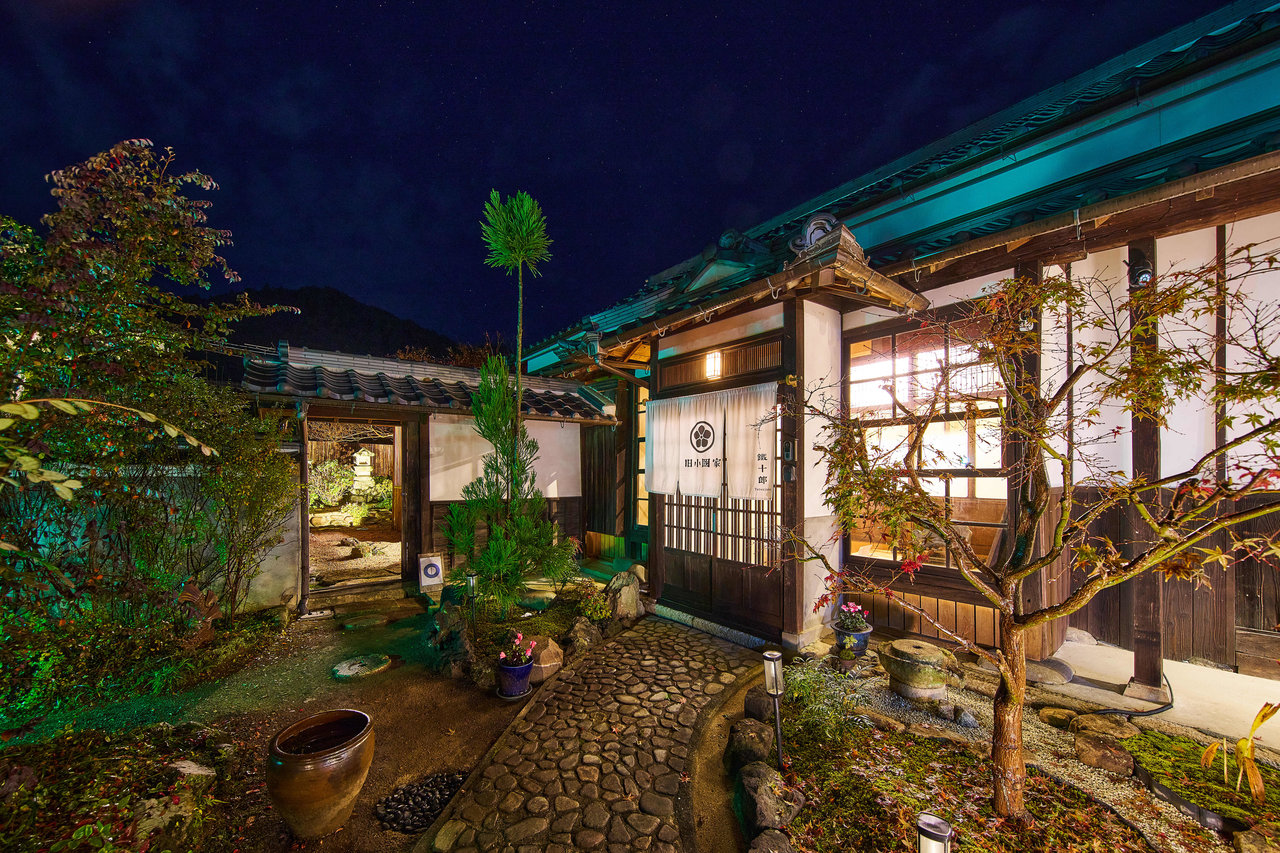
This house was already standing eight years before Himeji Castle was built. Tetsu-juro, in Fukusaki in Hyogo, has a main building dated to 1601 and is a Registered Tangible Cultural Property. It takes its name from Tetsujuro Oguni, born in this house, who defended local farmers during the Bantan uprising. From the Meiji into the Showa era the building served the area as a medical practice, and the medical texts and house-call instruments from that time are still on display inside.
What is on offer here only makes sense in this house. Kimono dressing, tea ceremony, ikebana flower arrangement — and, most unusually, a session repairing the earthen tsuchi-bei walls. You take on a small part of the work that keeps a 400-year-old building upright. Of everything in this guide, it is the clearest way to feel what it means that staying here is what preserves the place.
▶︎ Whole house, up to 8 guests (base rate covers 2)
▶︎ Food: full kitchen for self-catering; BBQ available
▶︎ Experience: earthen wall repair (¥2,530), tea ceremony (¥4,554), ikebana (¥5,060), kimono dressing (¥6,957) — all per person
▶︎ Access: approx. 25 min by train from JR Fukusaki Station to Himeji; Himeji Castle approx. 25 min by car
- Rate guide: from ¥71,978 per night (weekday, base rate covers 2 guests)
- 2 guests: approx. ¥35,990 per person
- 8 guests: approx. ¥22,090 per person
- ¥17,457 per additional guest from the third person
- 10% discount per night on stays of 6 nights or more
Yukinoya Furusawa-tei (Tokamachi, Niigata) | 150 years old, in the heart of snow country
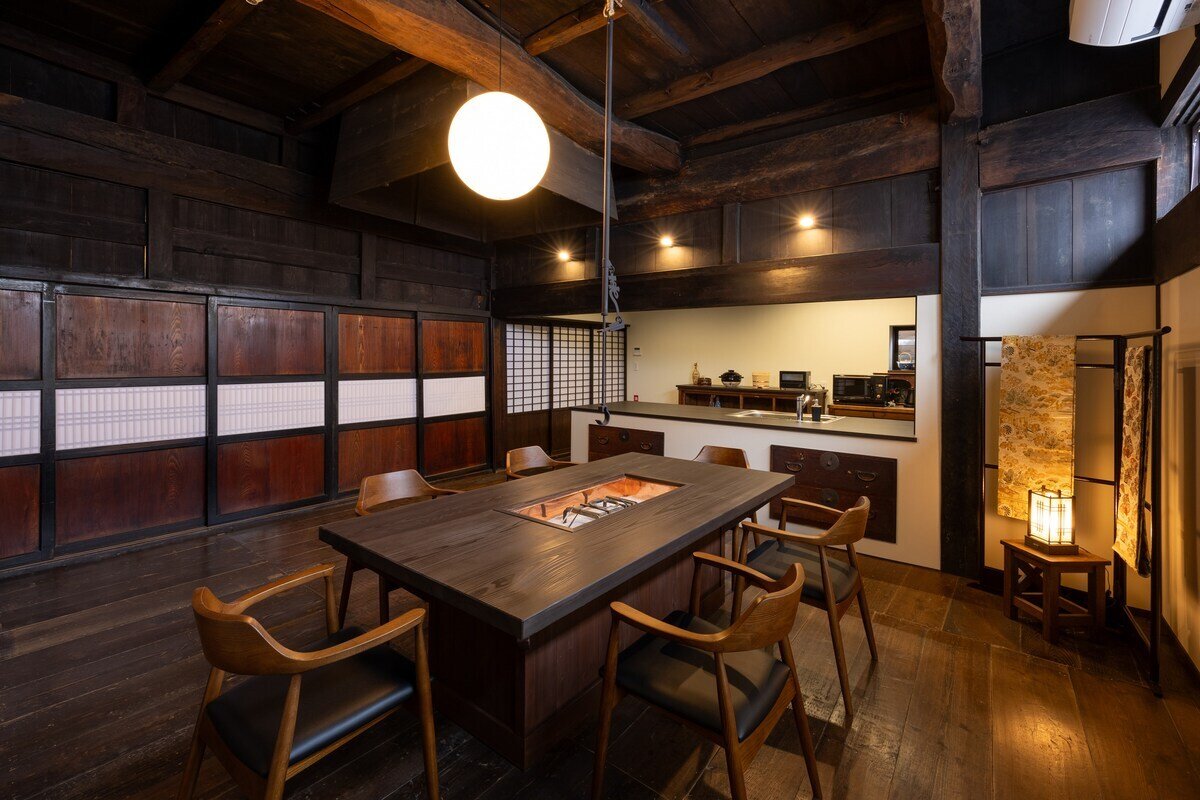
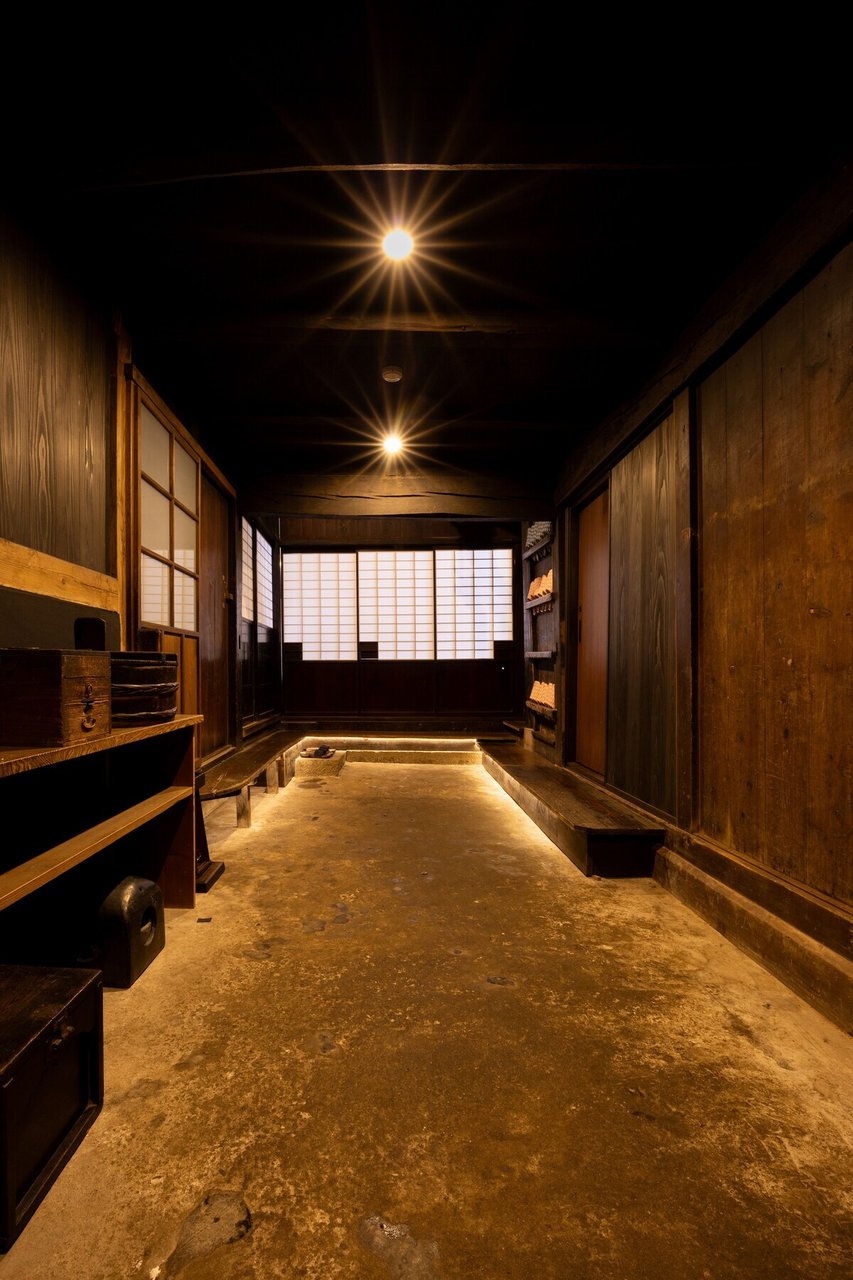
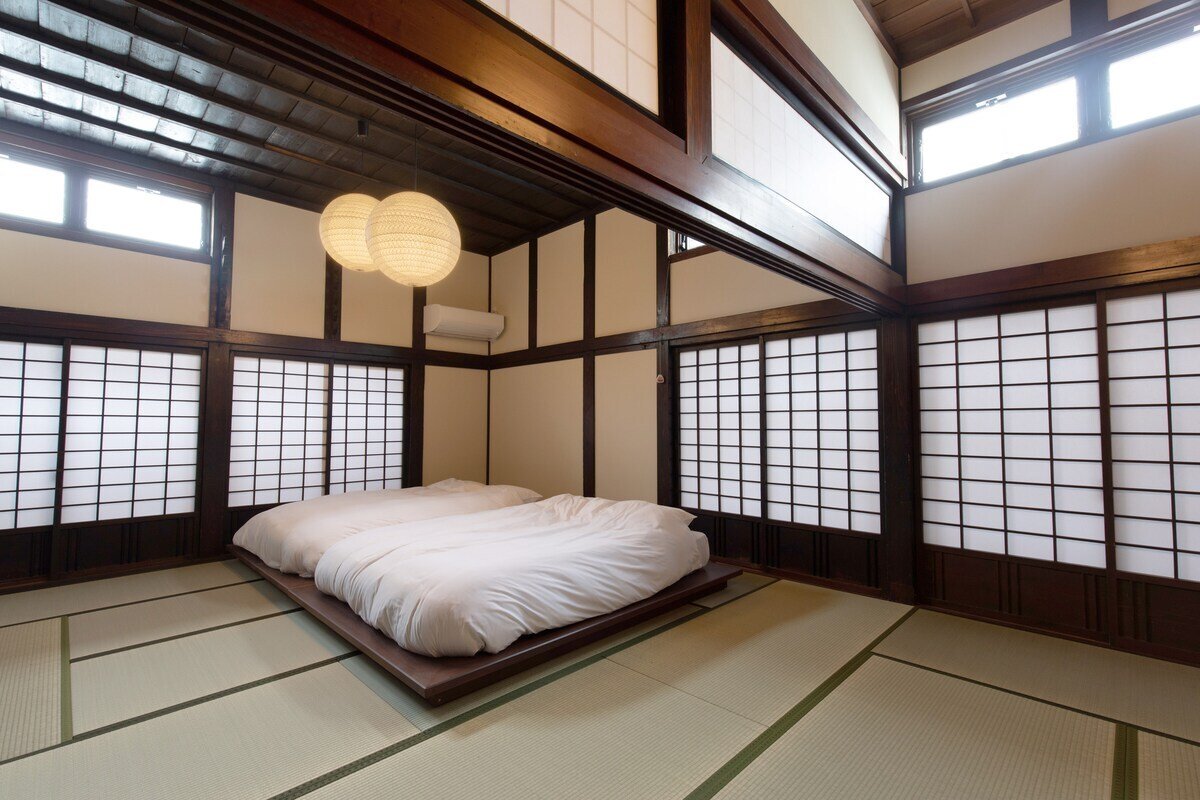
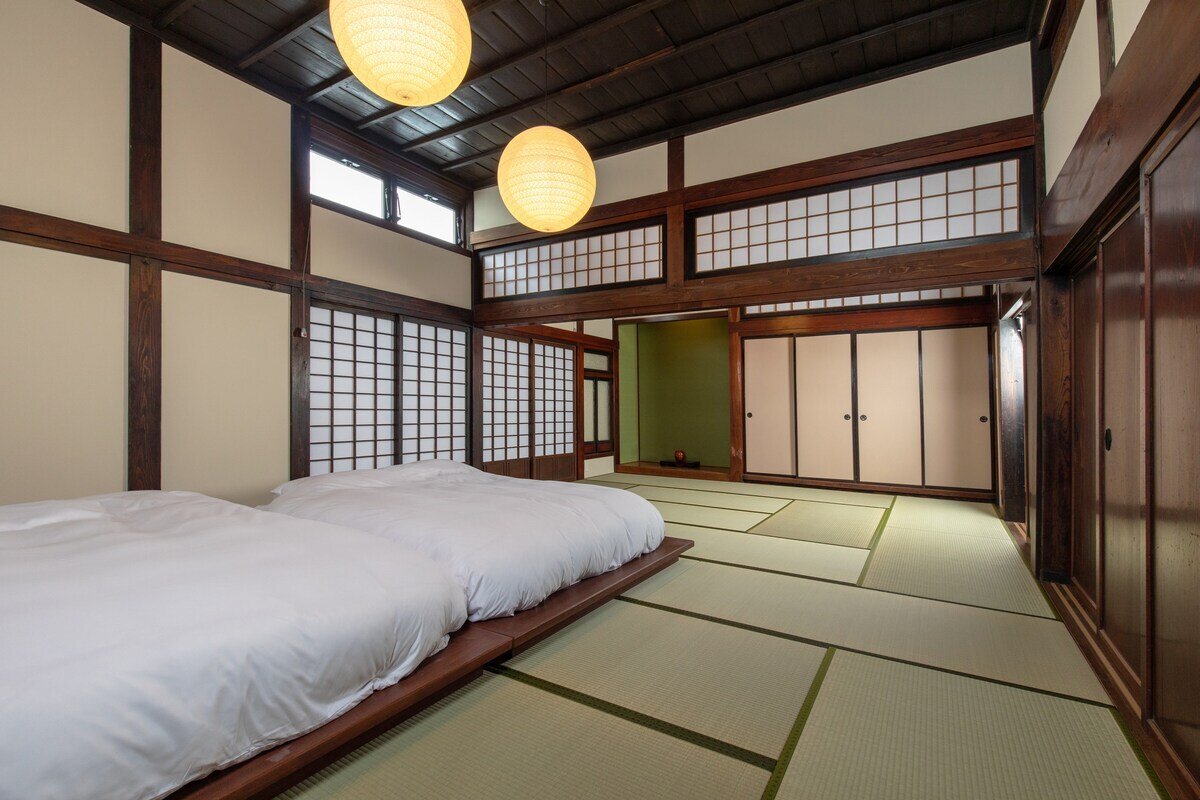
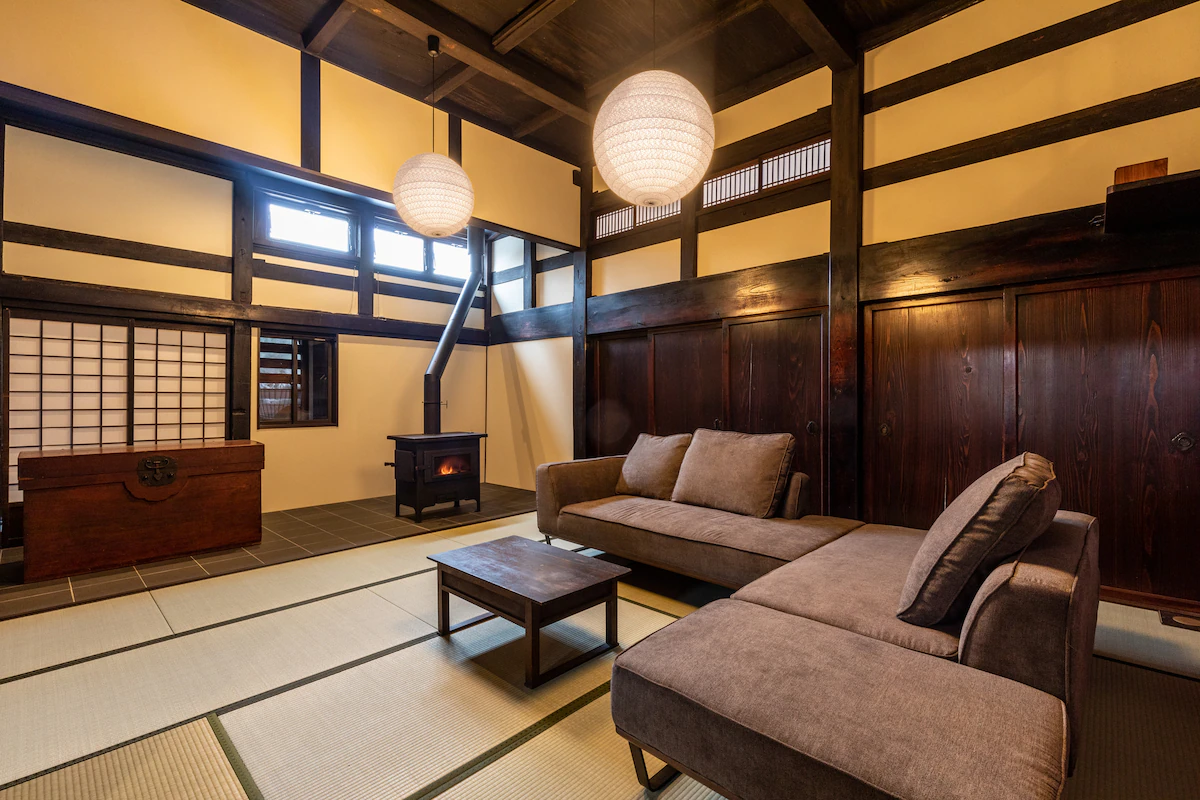
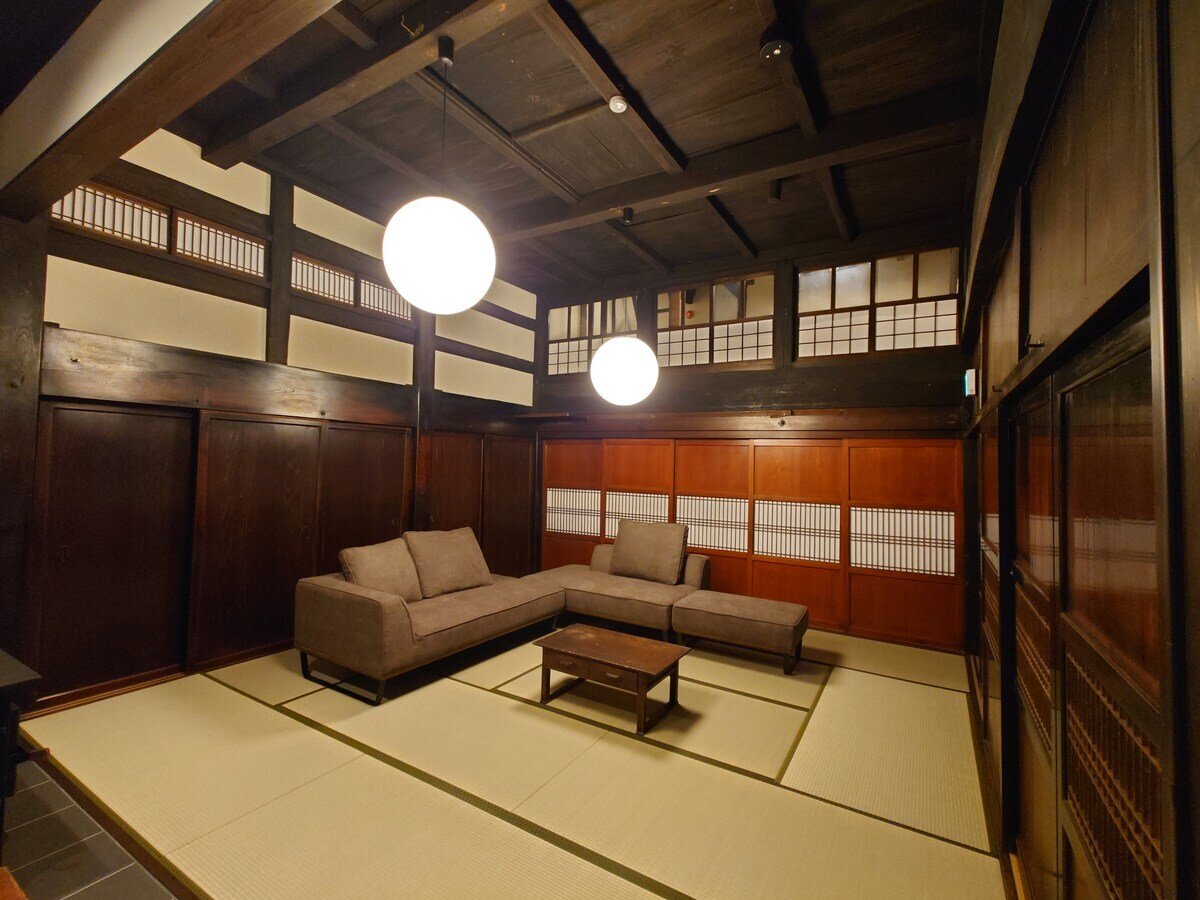
This house has watched over its patch of land since the end of the Edo period, some 150 years. Yukinoya Furusawa-tei in Tokamachi, Niigata, is 199 square metres let to one group at a time. Repairs have been made where they were needed, but as much of the original as possible has been left in place — which means the traces of the people who lived here are still visible in it.
What changes with the seasons here is the programme of village activities. Trekking through the tanada terraced rice fields, making sasa-dango (rice dumplings steamed in bamboo leaves), weaving straw sandals. All of them came out of daily life in Tokamachi, and the hours spent with local people tend to become the part of the trip you remember. Inside there is a dining table with a hearth set into it and a wood-burning stove in the living room. The way a house is built in one of the snowiest inhabited regions on earth is, in itself, accumulated knowledge.
▶︎ Whole house, up to 10 guests (base rate covers 2; cleaning fee ¥9,200 separate)
▶︎ Food: breakfast using local ingredients; self-catering at the hearth-side dining table
▶︎ Experience: terraced rice field trekking, sasa-dango making, straw sandal weaving (varies by season)
▶︎ Access: 15 min by car from Tokamachi Station (free pick-up for up to 7 guests, request by 3 days before check-in)
- Rate guide: from ¥63,250 per night (weekday, base rate covers 2 guests; cleaning fee ¥9,200 separate)
- 2 guests: approx. ¥36,230 per person (cleaning fee included)
- 10 guests: approx. ¥16,450 per person (cleaning fee included)
- ¥11,500 per additional guest from the third person
Bonus: sleeping in a castle
One last place, at a different price point altogether. It is not a kominka, but on the measure of “you cannot do this anywhere else” it holds its own against every house above. Worth knowing about for an anniversary — or a proposal.
Hirado Castle “Kaijyu Yagura” (Hirado, Nagasaki) | A night inside one of Japan’s Top 100 Castles


The Kaijyu Yagura turret at Hirado Castle in Nagasaki is the first permanent castle stay among Japan’s Top 100 Castles. One group per night, 119 square metres across two floors, entirely yours. The bathroom is the astonishing part: glazed on three sides, so you lie in the bath looking out over the whole Hirado Strait. The same water the lords of this castle looked at, with nobody else in the frame.
The options are what only a castle can offer. Private access to the castle keep, a performance of Hirado kagura with a Shinto blessing, tea ceremony in the Chinshin-ryu school, kimono dressing, horse riding, a barrel sauna. Each of them is available only to people staying the night.
▶︎ Whole building, up to 5 guests (base rate covers 2)
▶︎ Experience: private castle keep (¥110,001 per group), Hirado kagura and blessing (¥110,001 per group), Chinshin-ryu tea ceremony, kimono dressing, horse riding, barrel sauna
▶︎ Highlight: the first permanent castle stay among Japan’s Top 100 Castles; bathroom glazed on three sides
- Rate guide: from ¥330,001 per night (weekday, base rate covers 2 guests)
- 2 guests: approx. ¥165,000 per person
- 5 guests: approx. ¥99,000 per person
- ¥55,000 per additional guest from the third person
We have written about this castle in full detail here:
▶ Stay in a Japanese Castle: An Unforgettable Stay at Hirado Castle in Nagasaki
Ready to book a luxury kominka for a night?
Eating food cooked by the women of a two-household village. Re-plastering an earthen wall that has stood for four hundred years. Grilling a river fish over charcoal and sitting with the quiet while it cooks. Having an entire old Japanese house to yourselves for one night.
None of it is available off a shelf. It exists because someone lives there and gives it their time — and because part of what you pay keeps the building standing another hundred years. Staying is what preserves it. That is folded into the price of a luxury kominka, too.
If it is your first time booking one, How to Book a Kominka in Japan walks through the process step by step.