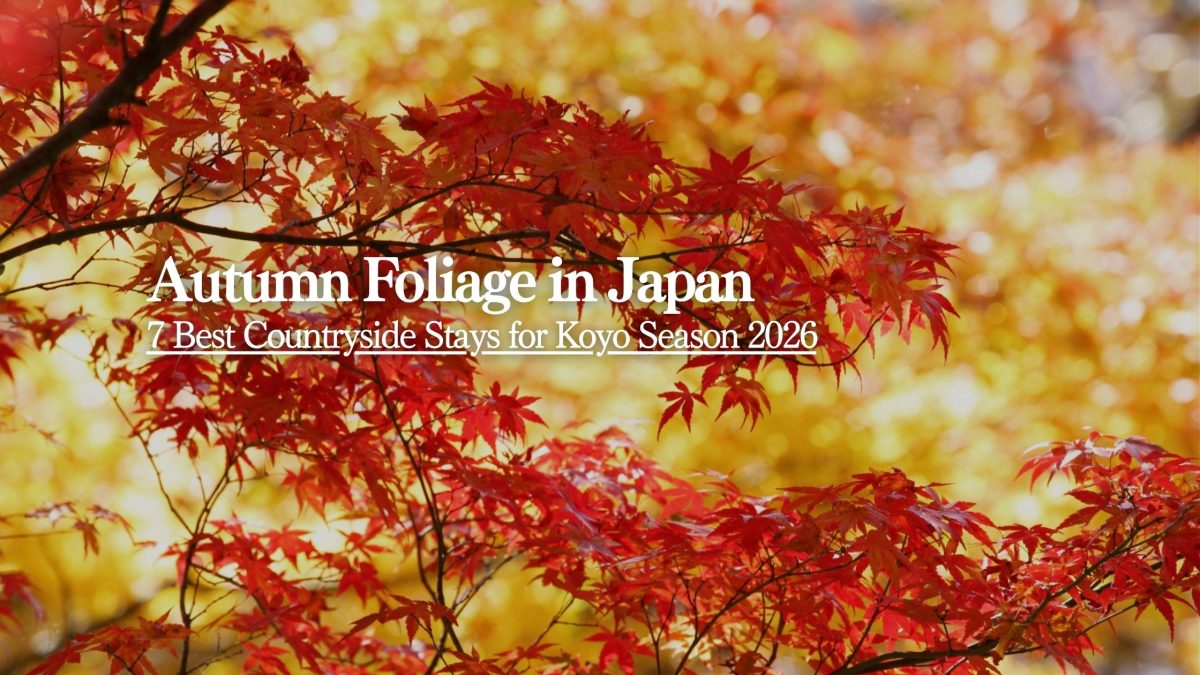

Every autumn, Japan transforms into one of the world’s most breathtaking natural spectacles. Hillsides ignite in crimson and gold, mountain roads vanish beneath canopies of blazing maples, and quiet valleys fill with the scent of cool, earthy air. For travellers searching for the perfect Japan autumn foliage accommodation, the answer isn’t a city hotel with a window view — it’s waking up inside the foliage itself, deep in the Japanese countryside.
STAY JAPAN connects you with hand-picked rural stays across the country: traditional farmhouses, mountain retreats, forest villas, and family-run guesthouses where the koyo season unfolds right outside your door. Whether you’re planning to chase autumn leaves across Tohoku, lose yourself in the ancient gorges of Shikoku, or linger over cider and harvest meals in Aomori’s apple country, you’ll find the ideal base here.
This guide covers our top six countryside stays for koyo 2026, a regional timing calendar, practical travel tips, and everything you need to plan an unforgettable autumn journey through rural Japan.
Table of Contents
What is Koyo? Japan’s Legendary Autumn Foliage Season
Koyo (紅葉) literally means “red leaves,” but in practice it refers to the entire autumn colour phenomenon — the turning of maples (momiji), ginkgos (icho), and deciduous oaks that sweeps through Japan from October into December each year.
The koyo front moves like a slow wave. It typically begins in Hokkaido in late September, then descends through the mountains of Tohoku and the Japan Alps through October, finally reaching western Honshu, Shikoku, and Kyushu in November. Unlike cherry blossom season, which can feel rushed and crowded, the koyo season lingers. Each region has its own peak window, giving you multiple chances to catch perfect colour depending on when and where you travel.
Timing depends on elevation and latitude. High mountain areas — the volcanic peaks of Zao in Miyagi, the Iya Valley in Tokushima, the slopes above Hanamaki in Iwate — tend to peak two to three weeks before the lowland towns below them. This means a mountain stay in mid-October can feel like standing inside a burning painting, even as the cities below remain green.
What makes koyo special isn’t just the colour — it’s the quietness. Autumn in the countryside is harvest time. Persimmons hang from eaves, sake breweries begin their season, and country roads are scattered with fallen ginkgo leaves. Experiencing koyo from a rural guesthouse rather than a tourist bus connects you to a Japan that most visitors never see.
Why Stay in the Countryside for Koyo Season?
City ryokan and resort hotels offer comfortable foliage views, but staying in the countryside puts you at the heart of the experience. Here’s why we recommend a rural base for your koyo trip:
- Proximity to the best viewing spots. Remote valleys, volcanic highlands, and ancient gorges — the most dramatic foliage is almost always away from urban centres. A countryside stay means the colour is minutes, not hours, away.
- Early morning magic. Morning mist over autumn valleys is one of Japan’s most photographed scenes — and you only get it if you’re already there. Staying local means you’re up before the day-trippers arrive.
- Harvest-season food. Autumn is matsutake mushroom, chestnuts, sweet potatoes, and new-harvest rice. Rural guesthouses and farm stays serve meals tied directly to the season and the land.
- Onsen under autumn skies. Many mountain stays feature natural hot springs surrounded by turning foliage — a combination called koyo-onsen that’s one of Japan’s quintessential autumn pleasures.
- Fewer crowds. Popular koyo spots like Nikko and Arashiyama can feel overwhelming in peak season. Rural alternatives offer equivalent or superior colour without the shoulder-to-shoulder crowds.
- Genuine connection. Staying with local hosts — farmers, fishermen, craftspeople — gives you stories and memories that no hotel can match. This is the STAY JAPAN difference.
For more on the world of traditional rural accommodation in Japan, read our guide to What is Kominka? — the centuries-old farmhouses that form the backbone of rural Japan’s accommodation scene.
Our Top 6 Countryside Stays for Japan Autumn Foliage
We’ve selected these six properties for their exceptional koyo access, authentic rural character, and the quality of the autumn experience they offer. You’ll find everything from UNESCO World Heritage thatched farmhouses to mountain forest villas with private onsen. This guide leans particularly into Tohoku (Miyagi, Aomori, Iwate) — Japan’s most underrated and consistently spectacular koyo region — while also spanning the Japan Alps and Kyushu for readers planning a wider autumn journey. Browse our full range of seasonal properties on the STAY JAPAN featured stays page.
Gokayama Gassho-no-Sato — A UNESCO Heritage Farmhouse in the Heart of Koyo Country, Toyama
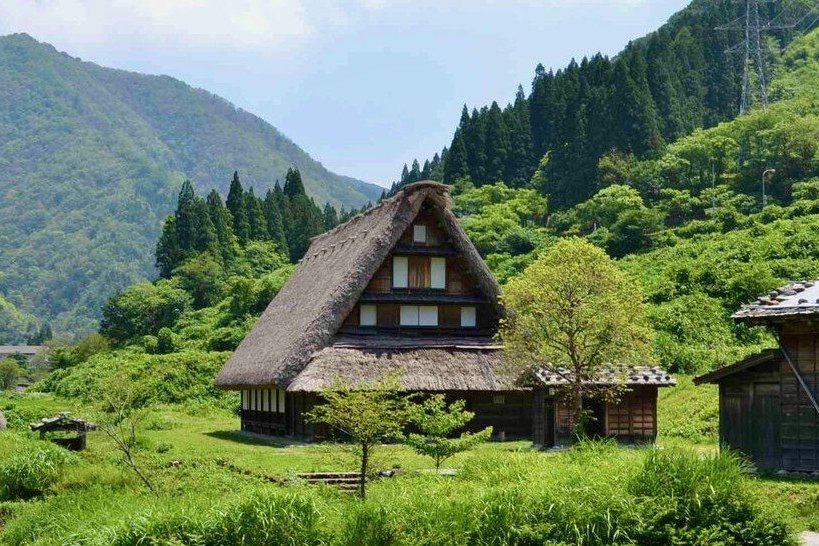
Few places in Japan place you inside autumn colour quite as completely as Gokayama (五箇山), a remote mountain valley in Toyama Prefecture whose steep-roofed thatched farmhouses — designated UNESCO World Heritage sites — date back centuries. The Shogawa River gorge that cuts through the valley turns a blazing patchwork of crimson, amber, and gold each November, framing the ancient farmhouses in a scene that looks more like a painting than a photograph.
The Gokayama Gassho-no-Sato is a complete private rental of a real gassho-zukuri (thatched farmhouse), sleeping up to 15 guests in a building that has stood through hundreds of winters in the mountains. Evenings centre on the irori hearth — the sunken charcoal fire at the heart of every traditional Japanese farmhouse — where charcoal-grilled iwana (mountain fish) and seasonal mountain vegetables are cooked over embers. The surrounding Suganuma hamlet (a short walk away) is one of Japan’s most perfectly preserved historic villages, and essentially deserted after the day-trippers leave. ⚠️ Book early — this World Heritage farmhouse is in very high demand for autumn.
Autumn highlights:
- UNESCO World Heritage thatched farmhouse — entire building, private rental
- Gokayama/Shogawa gorge koyo, peak November
- Irori hearth experience with charcoal mountain fish cooking
- Suganuma hamlet — a virtually crowd-free historic village after dark
Best for: Groups, cultural travellers, families seeking a once-in-a-lifetime traditional autumn stay
Location: Nanto City, Toyama Prefecture
ZAO Forest House 843 w/ONSEN — Gaia Resort, Miyagi Prefecture
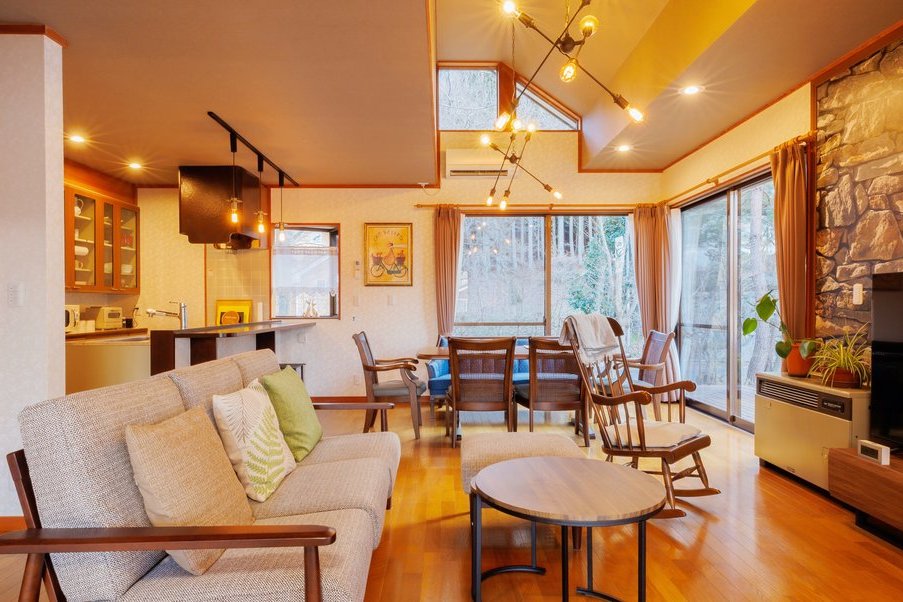
This remarkable property carries a distinction unique in Tohoku: it is the region’s first certified Albergo Diffuso — an Italian concept of immersive village-style hospitality that integrates guests into the local community rather than simply accommodating them. Set within the Gaia Resort forest, the three-bedroom house sleeps up to eight guests and includes a private onsen, high-speed Wi-Fi, and full kitchen facilities. October is the optimal time to visit, when the surrounding beech and maple forest ignites in gold and red. Mornings here are extraordinary — mist drifts through the trees, and the only sounds are birdsong and the wind. For travellers interested in Tohoku’s rural accommodation culture, this property pairs beautifully with a read of our Best Kominka Stays in Tohoku guide.
Autumn highlights:
- Forest immersion at peak koyo, October
- Private onsen within a forest setting — tattoo-friendly
- Albergo Diffuso concept — community-integrated stays
- Zao Echo Line koyo drive, peak mid-October (Note: Echo Line closes for winter from early November — plan drives for October)
Best for: Groups up to 8, forest retreat seekers, cultural travellers
Location: Zao-machi, Miyagi Prefecture
Old Private House Guest House Norakaze — Yamaga, Kumamoto Prefecture
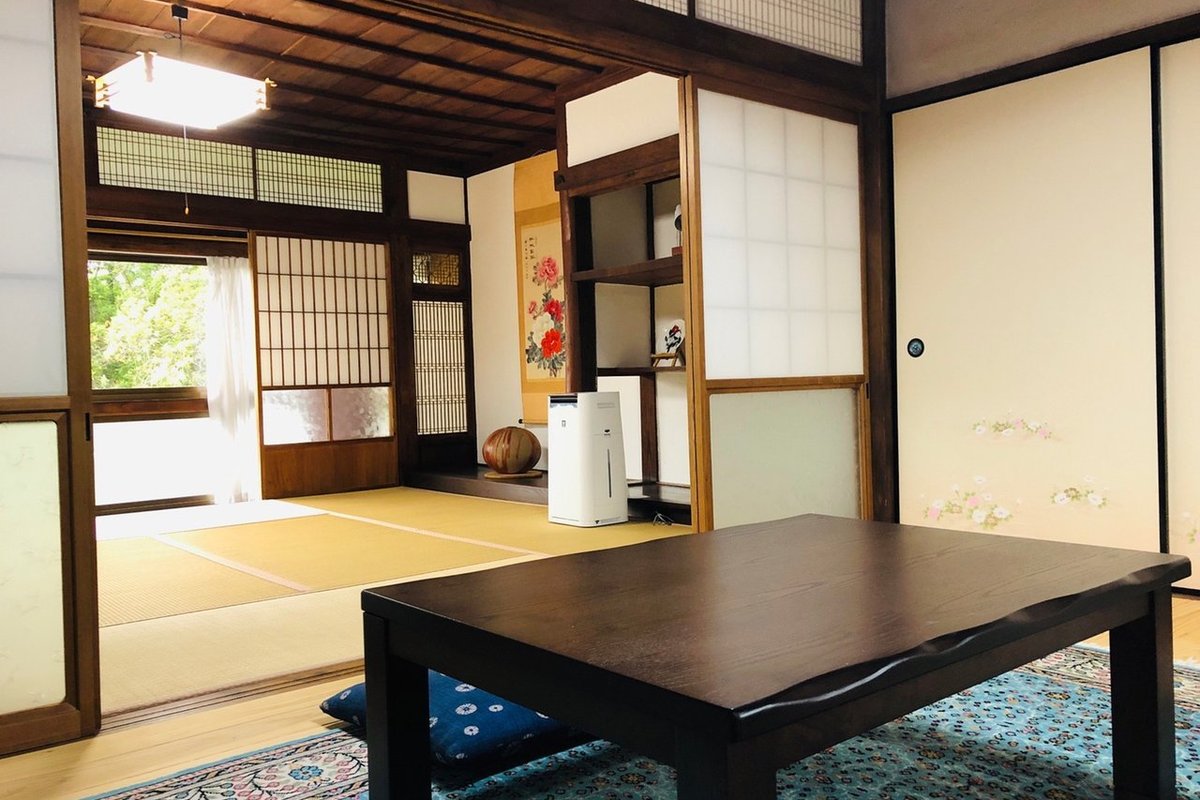
Norakaze is a rare find: a 100-year-old private farmhouse (kominka) in the foothills south of the Aso caldera, run by a family who still farms the surrounding land without pesticides. Staying here is an immersive farm stay experience — you can help harvest organic vegetables, collect eggs from the free-range chickens that roam the grounds, and sit down to a farm-to-table dinner that changes with the season. Autumn brings a particularly rich table: sweet potatoes, mountain mushrooms, and the new-harvest rice that Kumamoto is famous for. The property’s goemon buro — a traditional iron cauldron bath — is an unforgettable evening ritual. The area is also home to the Kikuka wine harvest, and the southern flanks of Aso offer some of Kyushu’s most underrated foliage.
Autumn highlights:
- Organic vegetable harvest experience with the farming family
- Farm-to-table autumn meals (mushrooms, sweet potato, new rice)
- Traditional goemon buro iron bath
- Aso southern highland koyo, November peak
Best for: Families, foodies, travellers seeking authentic farm stay (nouhaku) experiences
Location: Yamaga City, Kumamoto Prefecture
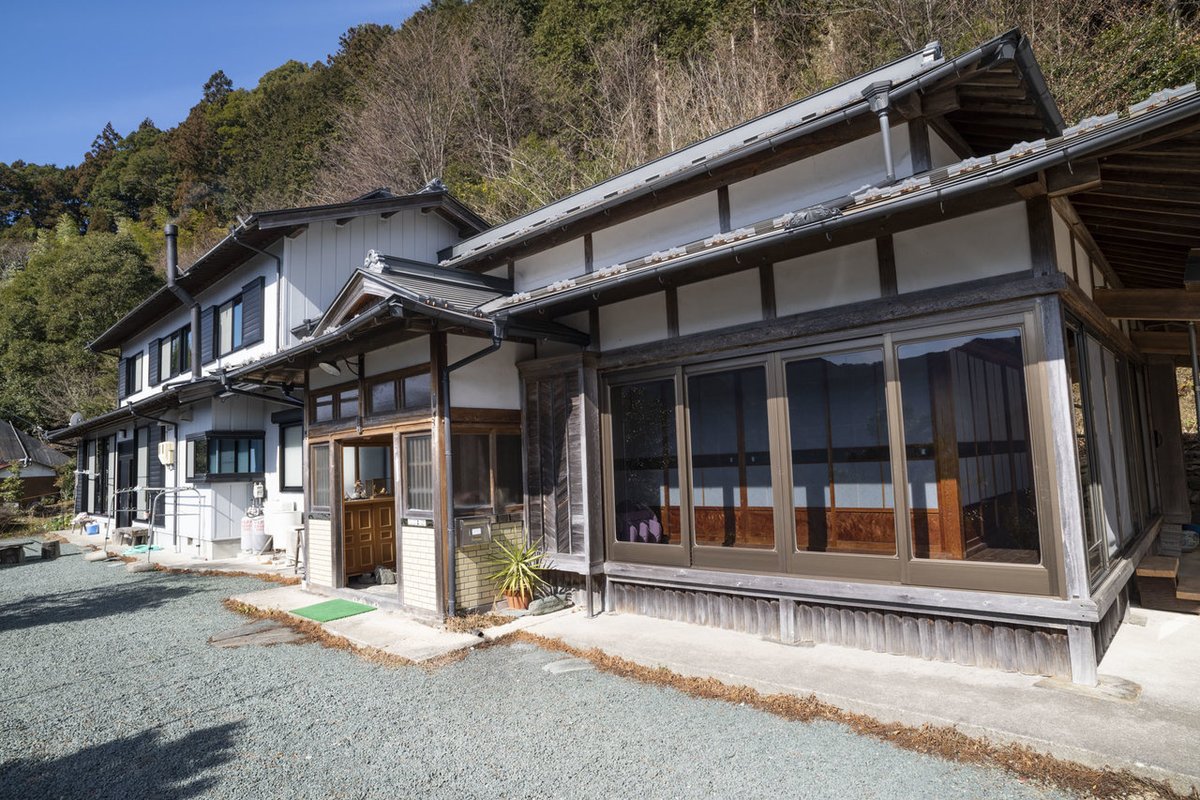
Kumo no Ue no Yado — “The Sky Lodge” Above the Clouds, Miyoshi, Tokushima Prefecture
⚠️ Book early — limited availability for Autumn 2026.
Few places in Japan earn the “hidden gem” description as honestly as the Iya Valley. Carved by rivers over millennia into sheer limestone gorges, Iya is one of Japan’s three great hikyō — remote, secret landscapes — and it is devastatingly beautiful in autumn. This mountain lodge sits high above the valley floor, at an elevation where autumn mornings frequently produce the famous sea-of-clouds (unkai) effect: a white mist ocean filling the gorge below, with mountain peaks rising above it. October transforms the surrounding hillsides into layered curtains of crimson, orange, and amber. The nearby Kazurabashi — a vine bridge designated an Important Intangible Folk Cultural Property — is one of Japan’s most iconic koyo photography locations. The lodge also offers local cooking experiences and agricultural activities, connecting guests to the rhythm of this remote valley.
Autumn highlights:
- Sea-of-clouds (unkai) phenomenon from the lodge
- Iya Valley koyo — one of Japan’s most dramatic gorge foliage settings
- Kazurabashi vine bridge visit (Important Intangible Folk Cultural Property)
- Local cooking and agricultural experiences
Best for: Photographers, nature lovers, off-the-beaten-path seekers
Location: Miyoshi City, Tokushima Prefecture
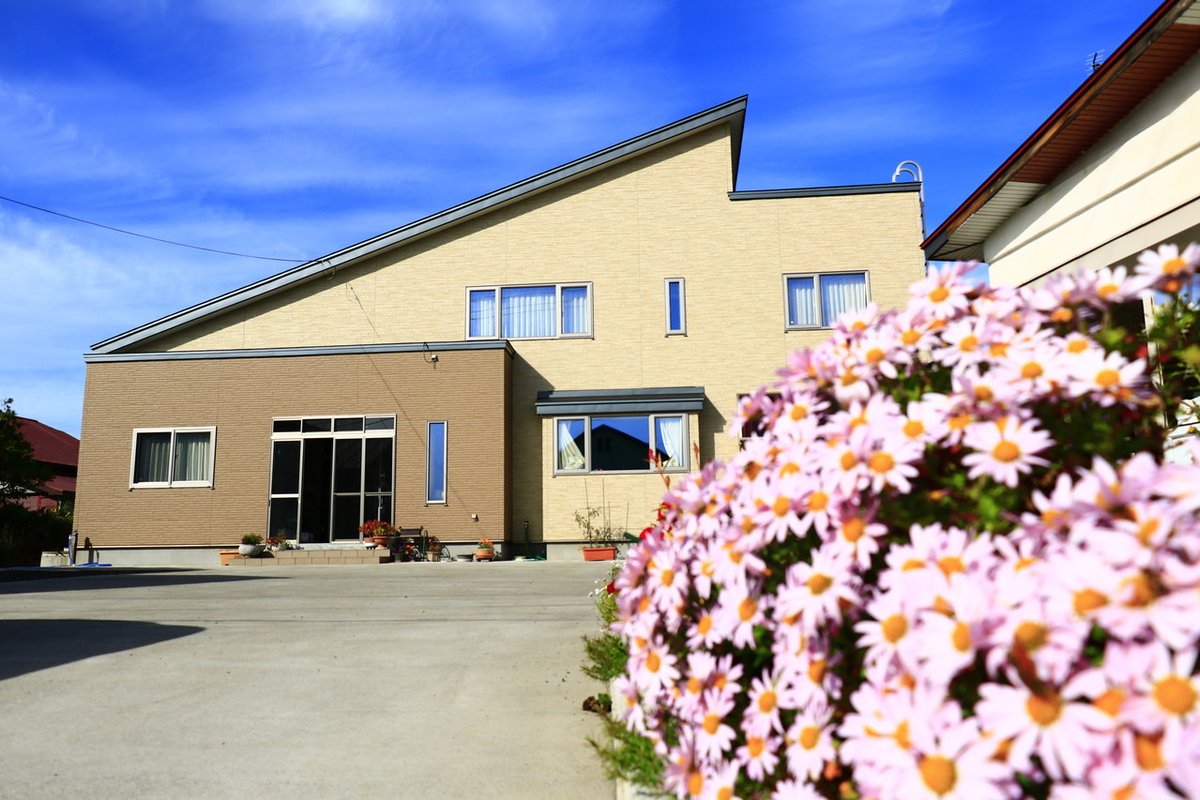
Apple Heart Farm Stay — Hirosaki, Aomori Prefecture
⚠️ Book early — limited availability for Autumn 2026.
Hirosaki in October is two experiences in one: Japan’s most famous apple harvest and one of the country’s most celebrated koyo settings. Hirosaki Castle, surrounded by moats and more than 2,500 trees, turns a blazing red and gold from mid to late October — a spectacle sometimes ranked among Japan’s three great foliage destinations. Apple Heart is a working apple farm stay (nouhaku) where you stay with the farming family, walk the orchard rows, and pick fruit straight from the branch. The hosts provide transfers, making it easy to reach the castle and surrounding viewpoints. Aomori’s autumn table is extraordinary: fresh-pressed cider, apple pies, Tsugaru-style home cooking, and the crisp mountain air that makes every meal feel like a celebration. For those planning a longer trip through the region, our guide to Tohoku Autumn Stays covers the full seasonal itinerary.
Autumn highlights:
- Apple orchard harvest experience with the farming family
- Hirosaki Castle koyo — peak mid to late October
- Host-provided transfers to local koyo viewing spots
- Aomori apple-season food culture: cider, pies, Tsugaru home cooking
Best for: Families, agricultural experience seekers, Tohoku koyo travellers
Location: Hirosaki City, Aomori Prefecture
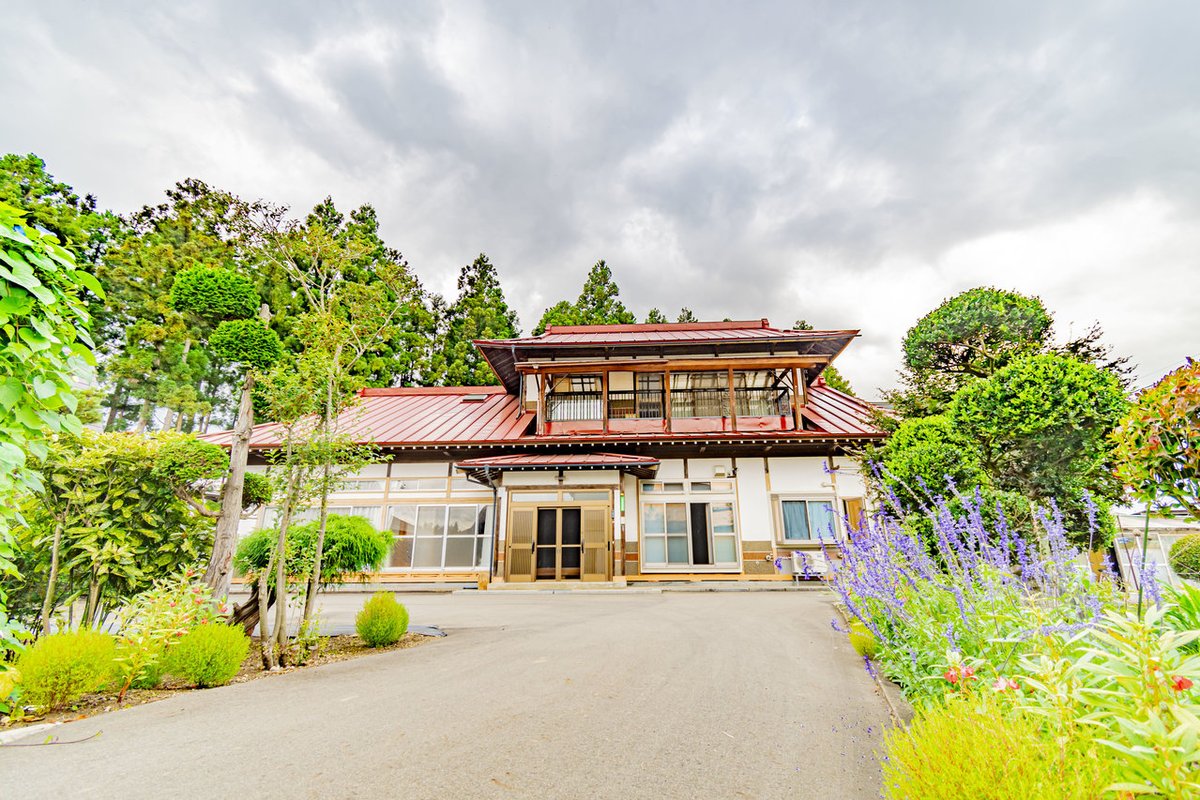
Minpaku Kiitekune-ya — Hanamaki, Iwate Prefecture
⚠️ Book early — limited availability for Autumn 2026.
Hanamaki is the hometown of Kenji Miyazawa — Japan’s most beloved rural poet and author, whose works celebrate the landscapes, seasons, and farming life of Iwate with a tenderness that still resonates today. Staying at Kiitekune-ya, a warm and welcoming farm stay (nouhaku) guesthouse, feels like stepping into one of his stories. The hosts are a farming family who open their home to guests and share the rhythms of rural Tohoku life: mountain vegetable picking, local onsen, and evening meals prepared with ingredients from the surrounding countryside. Hanamaki Onsen-kyo (the hot spring village) is nearby, and the surrounding Kitakami highlands offer beautiful beech forest koyo in October. It’s a restorative, unhurried base for travellers who want to move at the pace of the Japanese countryside.
Autumn highlights:
- Farm stay experience with local Iwate farming family
- Hanamaki Onsen-kyo — forest hot spring bathing
- Kitakami highland beech forest koyo, October
- Kenji Miyazawa literary heritage — museums and monuments nearby
Best for: Couples, solo travellers, literary and nature enthusiasts
Location: Hanamaki City, Iwate Prefecture
Japan Autumn Foliage Season Guide: When and Where to Go
Regional Koyo Peak Timing Chart
| Region | Prefecture Examples | Koyo Peak | Notes |
|---|---|---|---|
| Tohoku (Highlands) | Aomori, Iwate, Miyagi | Early–Mid October | Zao, Towada-Hachimantai, Hakkoda. Earliest in mainland Honshu. |
| Tohoku (Lowlands) | Miyagi, Fukushima | Mid–Late October | Castle towns, river valleys. 2–3 weeks behind highlands. |
| Kanto & Nikko | Tochigi, Gunma | Mid–Late October | Nikko peaks around October 20–30. Avoid weekends. |
| Japan Alps | Nagano, Gifu | Early–Mid October | High-altitude spots (Kamikochi, Tateyama) peak very early. |
| Tokai & Kinki | Shizuoka, Mie, Shiga | Late October–Mid November | Lake Biwa, Ise region. |
| Shikoku | Tokushima, Kochi | Late October–Early November | Iya Valley gorges — spectacular but undervisited. |
| Kyushu | Kumamoto, Oita | Mid–Late November | Aso highlands, Yufuin. Latest peak on Honshu/Kyushu. |
Practical Tips for Your Japan Koyo Trip
- Book early. Rural accommodation in Japan books out during peak koyo, especially in Tohoku. Aim to secure your stay by August or September for October travel.
- Travel mid-week. Japanese domestic tourists converge on popular koyo spots on weekends. Mid-week stays offer calmer roads, easier parking, and more thoughtful host time.
- Layer up. Mountain mornings during koyo season can drop to near-freezing. Pack layers even if daytime temperatures feel mild.
- Use public transport strategically. Scenic railways (Iya Valley’s Oboke–Koboke gorge, Tohoku’s Kitakami line) offer stunning foliage views with none of the driving stress.
- Follow the koyo zensen (foliage front forecast). Japan Meteorological Corporation releases annual koyo forecasts — check them in September for up-to-date regional timing.
- Stay flexible. Koyo peaks can shift by a week or more depending on the year’s temperatures. A flexible itinerary lets you follow the colour, not the calendar.
For a full countryside travel plan, see our Japan Without Tokyo: A 2-Week Countryside Itinerary and the 7-Day Rural Japan Itinerary for route inspiration.
Frequently Asked Questions About Japan Autumn Foliage
When is the best time to visit Japan for autumn foliage?
The koyo season runs from early October through late November, depending on the region. Tohoku and the highlands of central Honshu peak first — typically in the first two weeks of October — while Kyushu and western Japan peak last, often in mid-November. If you can only travel in one window, mid-October is the most versatile timing, catching Tohoku at peak and the Japan Alps just past their height.
What is the difference between koyo and momiji?
Koyo (紅葉) is the broad term for autumn foliage — the entire phenomenon of leaves changing colour. Momiji (紅葉, same characters, different reading) more specifically refers to Japanese maple trees (Acer palmatum) and their distinctive red leaves. In common usage, “koyo” describes the season and the spectacle; “momiji” describes the maple tree itself. Both words are used in autumn travel contexts, often interchangeably.
Is it hard to travel to rural Japan without speaking Japanese?
It’s easier than you might think. Many STAY JAPAN hosts communicate in English or via translation apps, and rural transportation — trains, local buses, and scenic roads — is generally well-signed. STAY JAPAN’s booking platform is fully in English, and our 7-Day Rural Japan Itinerary provides a step-by-step framework for first-time rural travellers.
What should I pack for a countryside koyo stay in Japan?
Comfortable walking shoes or light hiking boots, warm layers (mornings and evenings get cold in October), a rain layer, and a camera or phone with ample storage. If you’re planning onsen visits, a small towel is useful, though most properties provide them. In remote areas, convenience stores may be sparse — bring snacks and a reusable water bottle.
Are farm stay experiences available during koyo season?
Absolutely. Autumn is one of the best seasons for farm stays (nouhaku) in Japan — it’s harvest time, and many rural hosts welcome guests to participate in picking apples, sweet potatoes, vegetables, and other seasonal produce. Properties like Apple Heart Farm Stay in Hirosaki, Norakaze in Kumamoto, and Kiitekune-ya in Hanamaki all offer hands-on harvest experiences during the koyo season.
Start Planning Your Koyo Season Now
Japan’s autumn foliage season rewards those who plan ahead. The best rural stays fill quickly, the most dramatic colour is away from the crowds, and the memories made at a farmhouse table or a forest onsen outlast any highlight reel of famous temples.
You’ll find all six properties above — and dozens more rural retreats across Japan — on STAY JAPAN. Browse by region, season, and property type to build an autumn itinerary that’s entirely your own.
Explore all countryside stays on STAY JAPAN →
Browse our featured seasonal collections →
Related Articles:


