

Tohoku — Japan’s northern heartland of rice fields, ancient forests, and thousand-year-old legends — transforms into something extraordinary come autumn. Between September and November, the region’s mountains ignite with crimson and gold, harvest festivals fill the valleys, and the hot springs that dot the landscape feel more inviting than ever. While the rest of Japan races to Kyoto for koyo season, Tohoku offers something rarer: stunning autumn color without the crowds, alongside rural stays that offer experiences you simply cannot find anywhere else.
If you’ve already discovered traditional kominka (old farmhouses) in Tohoku through our Best Kominka Stays in Tohoku guide, this companion piece takes you further. Here, we’re spotlighting six remarkable rural accommodations that go beyond the classic farmhouse — a hot spring cottage in the foliage-laden Zao mountains, a folklore storyteller’s inn in the legendary valley of Tono, a centuries-old merchant’s house in a sake-brewing town, a Matagi (mountain hunter) farmhouse deep in Akita’s wild interior, a log-house retreat nestled among Tsugaru apple orchards with views of Mt. Iwaki, and a two-house village sanctuary in Fukushima’s pristine highland countryside.
Each of these properties is bookable exclusively on STAY JAPAN, Japan’s specialist platform for authentic rural accommodation.
Why Tohoku in Autumn?
Tohoku’s autumn season — typically mid-September through early November depending on elevation — consistently delivers some of Japan’s most spectacular foliage displays. The Zao Mountains in Miyagi turn vivid red and orange from early October, peaking in mid-October. The beech forests of the UNESCO-listed Shirakami Sanchi in Aomori are at their most glorious in mid-October. And in the Tono basin of Iwate, golden rice paddies are harvested under clear blue skies, with mountain ridgelines blushing purple and crimson as the season deepens.
Beyond the leaves, autumn is when Tohoku’s culinary heritage comes alive. Matsutake mushroom hunting, rice harvests, apple and chestnut picking, fresh-pressed sake, and coastal seafood at its seasonal peak are all part of the picture. For travelers seeking authenticity over Instagram backdrops, Tohoku in autumn is as close to the “real Japan” as travel gets.
Importantly, autumn is the best time to book ahead. September through November sees stronger demand at rural accommodation — especially with inbound visitors discovering Tohoku’s advantages over more crowded circuits. We recommend booking 6–8 weeks in advance.
What Makes These Stays “Beyond the Traditional Farmhouse”?
Traditional kominka farmhouses are a wonderful introduction to rural Japan — but Tohoku holds something rarer still. The six properties in this guide don’t simply offer a farmhouse to sleep in. Each carries a distinct character, story, or specialization that transforms the stay into something irreplaceable.
Some are indeed historic farmhouses — but a farmhouse where the host is a certified Tono Monogatari storyteller performing beside an open hearth, or an ancient homestead that served as the base of Japan’s last Matagi mountain hunters, is a fundamentally different experience from a simple farm stay. Others are not farmhouses at all, but places even more unexpected. What they share: each one gives you access to a Tohoku-specific story that cannot be replicated anywhere else.
- Certified Albergo Diffuso onsen retreat: private hot spring cottage in the Zao highlands, Italy’s rural tourism award — the first in Tohoku
- Heritage merchant’s machiya: a lacquer-plaster warehouse in a nationally designated sake-brewing preservation district
- Folklore storyteller’s kominka: a heritage farmhouse in legendary Tono where evenings unfold with certified Tono Monogatari storytelling around the hearth
- Matagi community homestead: a one-group farmhouse in the last living Matagi hunting territory in Japan
- Tsugaru apple orchard hideaway: a private log house on 6,600 m² of orchard grounds, framed by Mt. Iwaki’s autumn silhouette
- NIPPONIA village sanctuary: a two-building hamlet revival in Fukushima’s pristine highland countryside
Our Top 6 Picks for Autumn 2026
1. Private Cottage with Dog Run — Zao Cottage aiaiai — Miyagi
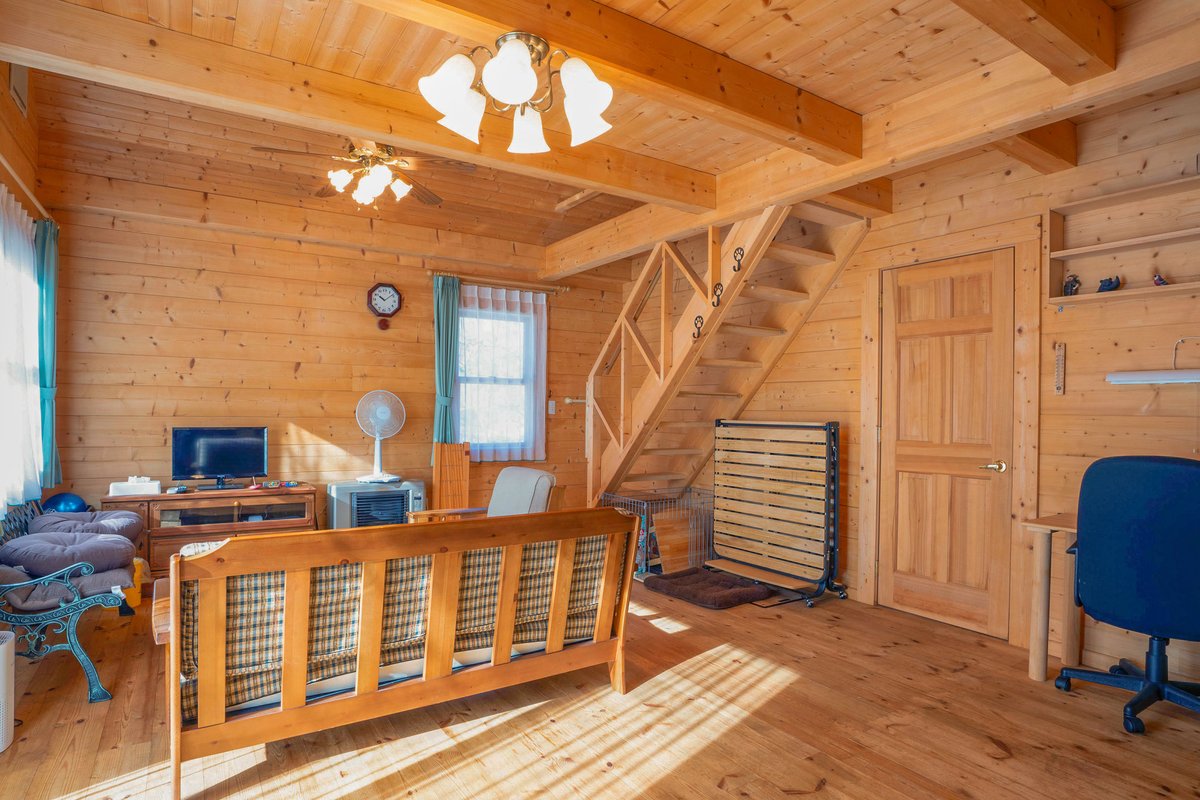
Nestled in the mountains of Zao — one of Tohoku’s most beloved autumn foliage destinations — this distinctive log-house cottage carries an unusual distinction: it holds the Albergo Diffuso certification, a prestigious Italian rural tourism award that Zao Cottage aiaiai became the first property in Tohoku to receive. The name “aiaiai” reflects the owner’s philosophy of love (ai) for family, for guests with disabilities, and for dogs — three pillars that shape every detail of the design.
The cottage features a private natural hot spring bath, allowing guests to soak in mineral-rich onsen water on their own timeline, with mountain views through the steam. An adjacent private dog run means four-legged companions can enjoy the alpine air freely while you relax.
Zao’s autumn foliage season peaks in late October, when the crater lake “Okama” (the Pot) is encircled by blazing color and the surrounding highland trails transform into walkable galleries of red maple and golden birch. The cottage sits in the heart of this landscape.
- Location: Zao-machi, Miyagi Prefecture — approx. 75 min by car from Sendai
- Best for: Couples, pet-friendly trips, families with young children
- Autumn highlights: Zao crater lake foliage, private onsen soaks, dog run
2. Machiya Yado Tsuruya — Murata-machi, Miyagi
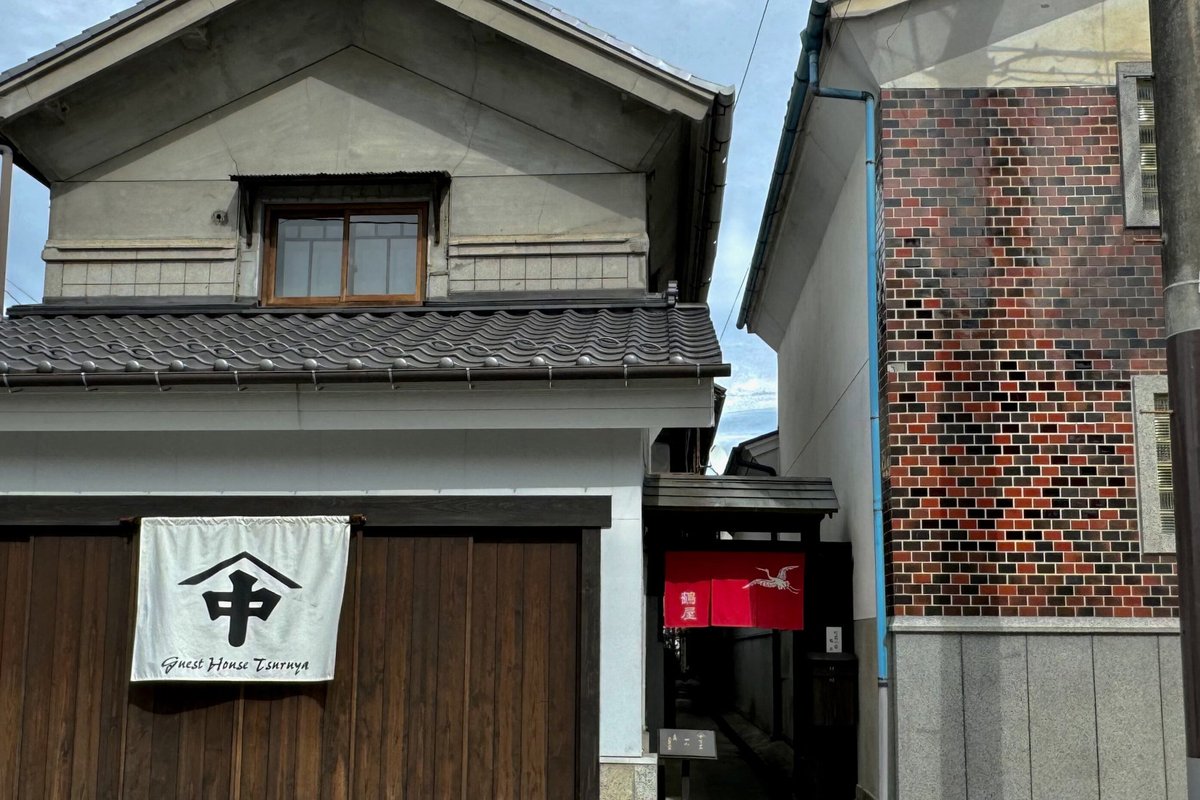
While most of Tohoku’s historic stays take you to rural farmhouses, Murata-machi offers a completely different time: a merchant’s world. Known locally as “Michinoku’s Kyoto,” Murata-machi is a small town in Miyagi designated as a National Important Traditional Buildings Preservation District — its streets lined with elegant kura (merchant storehouses) dating from the Edo and Meiji periods, when the town prospered as a center of safflower trade and sake brewing.
Machiya Yado Tsuruya is set within this preserved townscape: a nuriyu-zukuri (lacquered-plaster warehouse style) building originally constructed in 1921, now carefully renovated into a one-group-only private accommodation. Directly next door stands the brewery of Kenkon-ichi, one of Miyagi’s most celebrated sakes, and a short walk away is the nationally designated Yamasho Kinenkan (former Onuma residence), a preserved merchant mansion open to visitors.
In autumn, Murata-machi hosts craft markets and sake events that bring the historic streets to life. Guests at Tsuruya step outside to find themselves in the heart of it all.
- Location: Murata-machi, Miyagi Prefecture — approx. 35 min by car from Sendai
- Best for: History enthusiasts, couples, sake lovers
- Autumn highlights: Local harvest sake events, merchant district walks, koyo day trips
3. Lien Tono — Storyteller’s Inn — Tono, Iwate
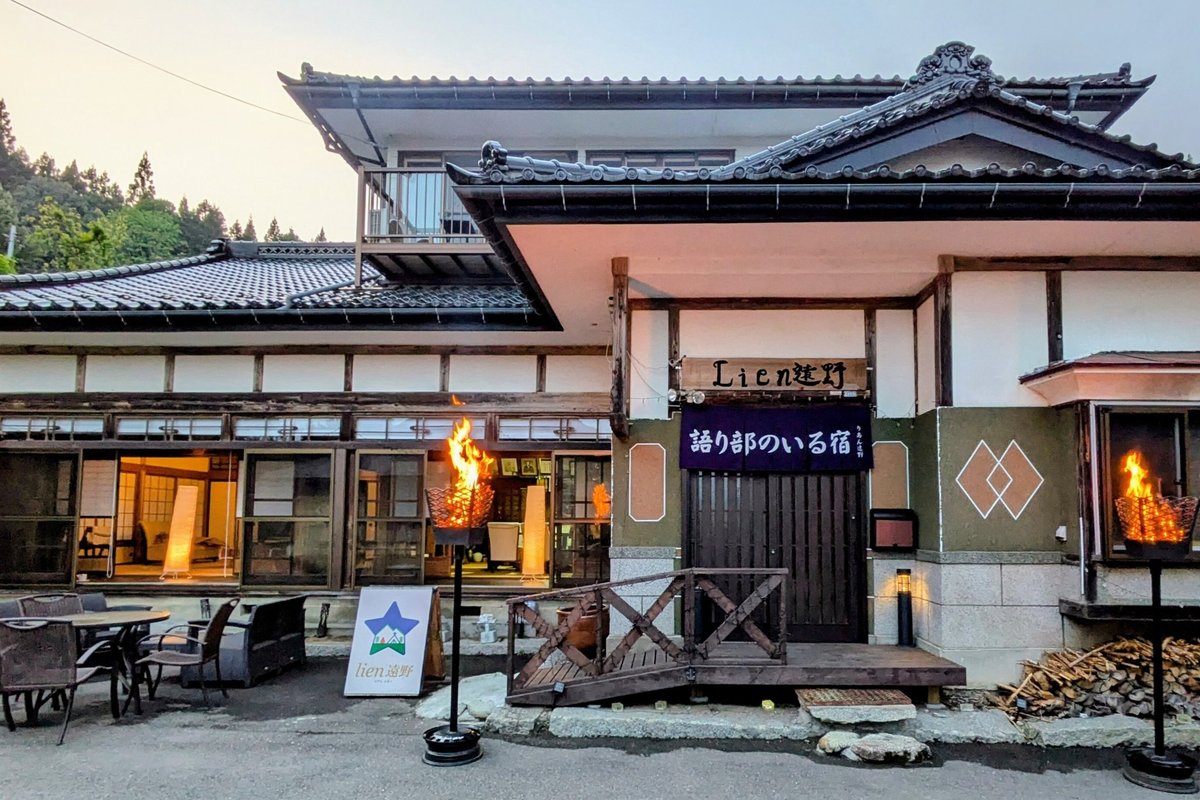
There is perhaps nowhere in Japan where the boundary between the natural world and the spirit world feels thinner than in Tono. This river valley in the heart of Iwate Prefecture is the setting for Tono Monogatari (“The Legends of Tono”), a landmark 1910 collection of folk tales by Kunio Yanagita that introduced the world to Japan’s kappa (water spirits), zashikiwarashi (household spirits), and other legendary beings said to still inhabit the old farmhouses, forests, and ponds of the valley. Travelers come from across Japan — and the world — to feel the atmosphere that inspired this foundational work of Japanese folklore.
Lien Tono is the ideal base. The host is a certified Tono folklore storyteller (katarbe), and evenings here unfold around an open hearth where guests listen to tales drawn directly from Tono Monogatari, translated by the host with quiet intensity. The private rental — suitable for up to 10 guests — occupies an entire farmhouse building, with a wood-fired outdoor sauna and stargazing under mountain skies as the night deepens.
In autumn, Tono’s rice paddies turn to burnished gold before harvest, red dragonflies fill the air, and the surrounding mountains soften into rust and amber. It is deeply, unmistakably Japanese — and deeply, unmistakably Tohoku.
- Location: Tono City, Iwate Prefecture — approx. 60 min by car from Shin-Hanamaki Station (Tohoku Shinkansen)
- Best for: Travelers interested in Japanese folklore and culture, groups, couples
- Autumn highlights: Folklore storytelling evenings, harvest season landscapes, sauna under autumn stars
4. Ryogetsusha Farm — Matagi no Sato, Akita
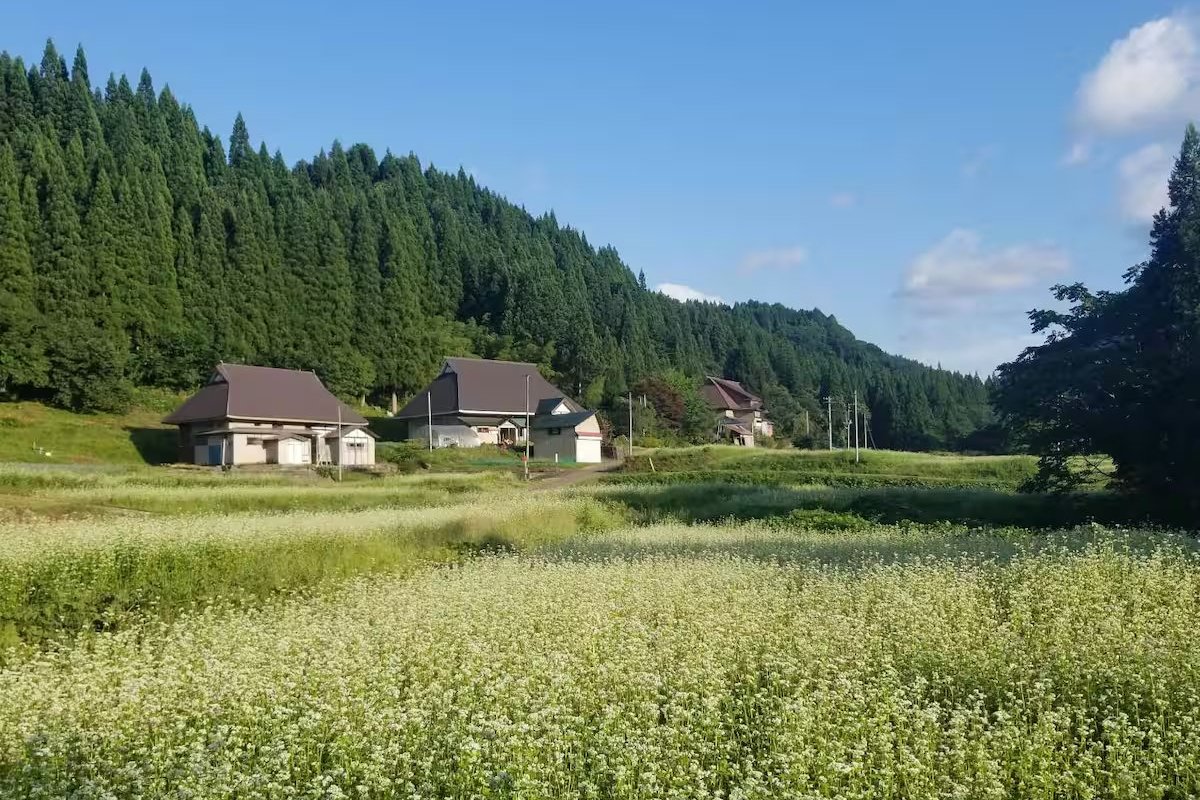
To understand autumn in Tohoku at its most elemental, you need to go deeper into the mountains — to the territory of the Matagi. These traditional mountain hunters, whose practices date back centuries, inhabit the deep forest regions of Akita and Yamagata, tracking bear, wild boar, and mountain birds through seasons defined by the rhythms of the natural world. The Ani district of Kitaakita City in Akita is one of the last living Matagi communities in Japan.
Ryogetsusha Farm — “Ryogetsusha” meaning “farm of the hunting moon” — is a farmhouse B&B in this extraordinary landscape, operated on a strictly one-group-per-day basis. The 120-year-old kominka, long abandoned, has been restored to a welcoming but unadorned simplicity. Guests here hike the mountain trails where Matagi have hunted for generations, kayak and paddleboard on nearby Ani Lake, cast lines in the mountain streams, and sit with the owner to learn how this deep-forest culture has survived into the modern age.
In autumn, the Ani forests are among the most spectacular in northern Japan — an immense sea of color that extends in every direction with almost no sign of human habitation.
- Location: Kitaakita City (Ani district), Akita Prefecture — approx. 90 min by car from Odate-Noshiro Airport
- Best for: Nature enthusiasts, cultural travelers, those seeking remote wilderness
- Autumn highlights: Matagi cultural immersion, mountain forest foliage, lake and river activities
5. Private Cottage Hideaway — Apple Orchards & Mt. Iwaki, Aomori
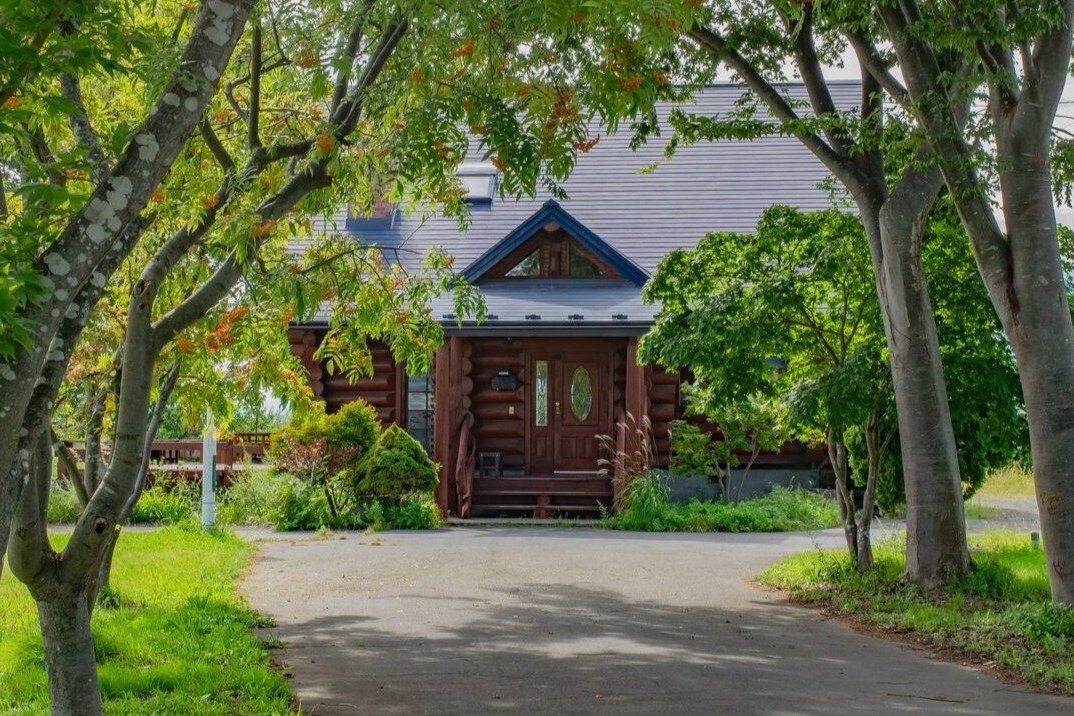
In the apple-growing heartland of Tsugaru — the fertile basin that has made Aomori one of Japan’s most celebrated apple-producing regions — this secluded log house sits amid orchard rows with a clear view toward Mt. Iwaki, the volcanic peak locals call the “Tsugaru Fuji.” With a soaring vaulted ceiling, wide wraparound deck, and a wood-burning stove at the heart of the living room, the Cottage Hideaway is designed for the restorative kind of countryside stay that only complete privacy can offer.
The entire compound — over 6,600 m² of private grounds — is reserved exclusively for one group at a time, accommodating up to six guests. There are no neighbors within sight, no shared facilities, and no scheduled check-in time pressure: just orchard air, mountain light, and the kind of quiet that cities forget exists.
In autumn, the surrounding orchards enter their harvest peak, with apple trees heavy with red and golden fruit stretching toward Mt. Iwaki’s ridge. The mountain’s own forests turn rust and amber as September deepens, making the view from the tatami room and upper terrace one of the most quietly spectacular in Aomori. Evenings gather naturally around the stove — Tsugaru apple juice in hand, dinner prepared in the fully equipped kitchen, the stars gradually filling a sky unobstructed by city light.
- Location: Inakadate-mura, Minamitsugaru-gun, Aomori Prefecture — approx. 20 min by car from Hirosaki
- Best for: Families, groups of friends, couples seeking pure countryside immersion
- Autumn highlights: Apple harvest season, Mt. Iwaki foliage views, wood-stove evenings, Tsugaru culinary culture
6. NIPPONIA Narayama Village -HIJIRI- — Nishiaizu, Fukushima
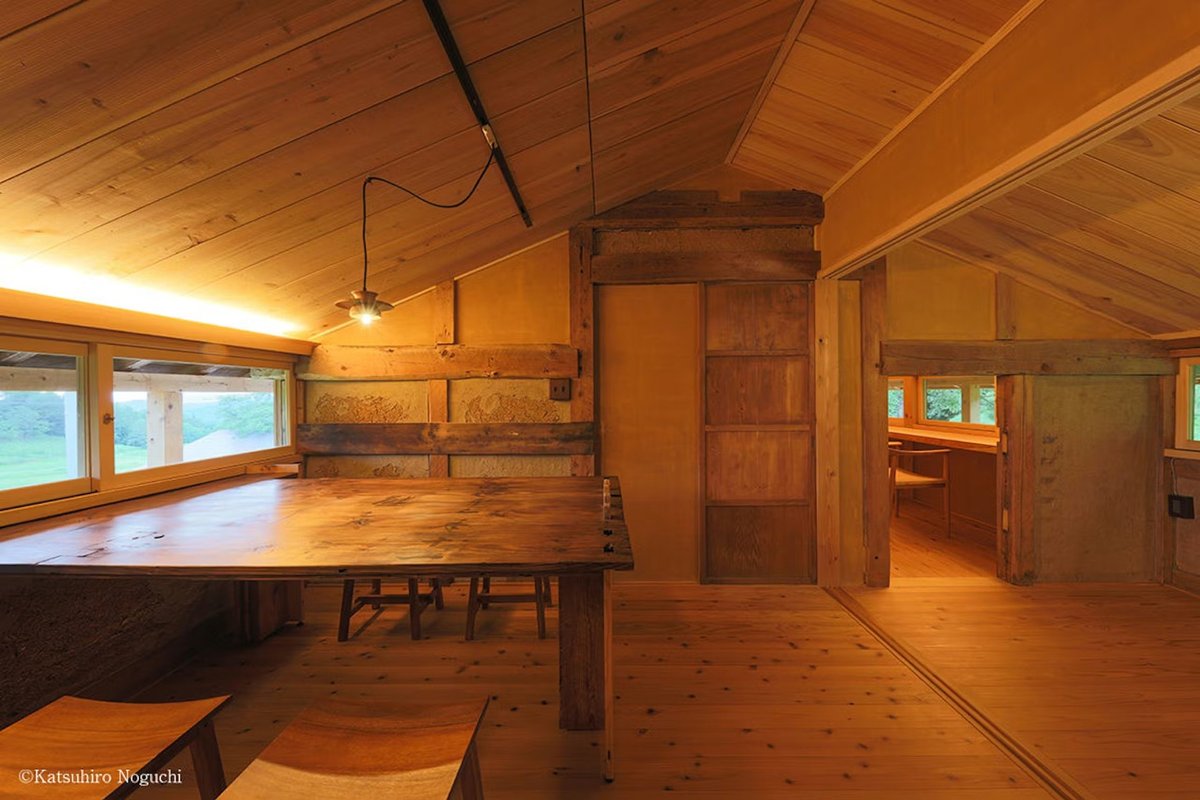
There are villages in rural Japan where the last residents have left, leaving behind farmhouses and storehouses to slowly decay. And then there are villages like Narayama in Nishiaizu, Fukushima — where a visionary preservation initiative called NIPPONIA has stepped in to give the old buildings a new purpose: welcoming travelers who want to know what it feels like to live, rather than simply stay, in the Japanese countryside.
Narayama village contains just two NIPPONIA properties, each renovated from 120-year-old kura (storehouses) and agricultural buildings. HIJIRI, the property listed here, is a two-story maisonette with an entire building for your sole occupancy. Surrounding the property are nothing but rice terraces, mountain ridgelines, and open sky. From the upper floor, guests can watch morning fog roll through the valley, observe the seasonal rhythms of rice cultivation, and, on clear nights, experience some of the darkest skies in the Aizu region.
Nishiaizu is part of the broader Aizu cultural zone — famous for its role in the 1868 Boshin War and for the castle town of Aizuwakamatsu — making it an ideal base for exploring both the natural and historical dimensions of Fukushima.
- Location: Nishiaizu-machi, Yama-gun, Fukushima Prefecture — approx. 60 min by car from Aizuwakamatsu
- Best for: Couples, travelers seeking deep rural immersion, NIPPONIA brand fans
- Autumn highlights: Rice harvest terrace views, cloud sea mornings, stargazing, Aizu history day trips
Tips for Planning Your Tohoku Autumn Trip
Tohoku’s autumn season is one of Japan’s best-kept secrets for international travelers. Here’s how to make the most of it:
- Time your visit by elevation. High-altitude areas like Zao see color from mid-October, while lower valleys like Tono and Murata peak from late October into early November. Plan your itinerary across elevations for a longer foliage window.
- Book early. Unlike Kyoto, Tohoku doesn’t fill up six months in advance — but the one-group-per-day properties (Ryogetsusha Farm, Tono, Tsuruya) do sell out. Aim for 6–8 weeks ahead.
- Rent a car. Most of these properties are in areas not easily served by public transit. Renting a car at Sendai Airport or Shin-Aomori Station unlocks the full Tohoku experience. Note that the Tohoku Expressway links most major cities.
- Pair properties along a route. Miyagi’s Zao and Murata-machi → Iwate’s Tono → Akita’s Ani district makes a logical road trip arc. Aomori’s Tsugaru region and Fukushima’s Nishiaizu work as standalone excursions.
- Bring layers. Temperatures in mountain areas can drop to 5–10°C (41–50°F) at night by late October — pack a warm fleece or light down jacket. The private onsen at Zao Cottage aiaiai and the wood stove at the Tsugaru Cottage Hideaway are especially welcome once the chill sets in.
- Explore harvest experience stays and stargazing properties for more rural picks across Japan.
Frequently Asked Questions
When is autumn foliage season in Tohoku?
Tohoku’s foliage season typically runs from mid-September (high-altitude peaks like Zao and Mt. Iwaki) through late November (lower valleys). October is generally the peak month across most of the region, with colors lingering into early November in warmer coastal areas.
Is Tohoku safe for international travelers without Japanese language skills?
All six properties listed here have English-language accommodation pages on STAY JAPAN, and English-speaking staff or communication tools are available. That said, rural Tohoku is not as visitor-infrastructure-heavy as Tokyo or Kyoto — a translation app and advance preparation will make your trip smoother.
How do I get to Tohoku from Tokyo?
The Tohoku Shinkansen links Tokyo with Sendai (approximately 90 minutes), Shin-Hanamaki (about 2h30min), and Shin-Aomori (about 3h). From these hub stations, car rental is the most practical way to reach the rural properties in this guide.
What makes Tohoku different from Kyoto for autumn foliage?
Tohoku offers comparable or superior foliage intensity to Kyoto, but without the crowds, the queues, or the inflated seasonal prices. Rural accommodation in Tohoku is also more likely to involve authentic local food, cultural encounters, and experiences that feel genuinely immersive rather than curated for tourism.
Can I combine these stays with other STAY JAPAN properties?
Absolutely. We recommend pairing a Tohoku autumn journey with our 14-Day Japan Rural Itinerary for a multi-region perspective, or exploring our Nouhaku Japan guide if you’re interested in agricultural homestay experiences across the country.
Ready to Experience Tohoku This Autumn?
Japan’s northern heartland is waiting — with its forests on fire, its harvest tables laden, and its centuries-old stories ready to be told beside the evening hearth.
Browse all STAY JAPAN properties in Tohoku at en.stayjapan.com, or explore our curated feature collections:


