Multi-Generational Japan Trip: Best Countryside Stays for the Whole Family (2026)
There’s a particular kind of travel magic that only happens when three generations share the same space. Grandparents recall a Japan they recognise from childhood stories; parents watch their children run barefoot through rice paddies; grandchildren encounter their first irori hearth, wide-eyed at a technology that predates the internet by five centuries. Japan’s rural countryside — with its thatched farmhouses, harvest seasons, and deeply rooted hospitality — is perhaps the finest setting in the world for this kind of intergenerational travel.
STAY JAPAN connects multi-generational families with authentic rural stays across the country: entire-house kominka rentals large enough for the whole family, farm inns where hosts cook alongside guests, and private countryside retreats where the pace is deliberately slow. Whether you’re planning a milestone family reunion, a birthday celebration trip for grandparents, or simply a holiday that works for ages six to seventy-six, this guide is for you.
Below, you’ll find six exceptional stays — from the thatched-roof mountains of Tohoku to the karst plains of Kyushu — each chosen specifically for their capacity to welcome, engage, and genuinely delight guests of every generation.
Table of Contents
- Why Japan’s Countryside Is Perfect for Multi-Generational Travel
- What to Look for in a Multi-Generational Japan Stay
- Our Top 6 Multi-Generational Countryside Stays in Japan
- Tips for Planning a Multi-Generational Japan Trip
- Frequently Asked Questions About Multi-Generational Japan Travel
- Ready to Book Your Family Reunion in Rural Japan?
- Related Articles
Why Japan’s Countryside Is Perfect for Multi-Generational Travel
Multi-generational travel comes with a specific set of challenges: activities must work for a wide age range, accommodation needs to be both spacious and comfortable for older guests, and the overall pace should allow for rest as well as exploration. Japan’s rural farmhouses solve all three — often better than purpose-built resorts.
- Entire-house rentals mean real togetherness. Many kominka on STAY JAPAN are booked exclusively by one group. No strangers at breakfast, no crowded pool. Just your family, a rambling old farmhouse, and evenings gathered around the irori.
- Farm experiences scale beautifully across ages. Grandchildren learn where food comes from by pulling carrots from the ground. Grandparents find deep resonance in watching crops they knew in their youth. Parents discover they can actually slow down for once.
- Japanese hospitality is inherently multigenerational. Host families who operate rural minpaku often have their own children and grandparents present — the warmth they extend to guests mirrors how Japanese rural families have always welcomed visitors: with food, patience, and genuine curiosity.
- Capacity for large groups. Several properties on STAY JAPAN accommodate 10–15 guests, making them ideal for extended family reunions that would need multiple hotel rooms elsewhere. A single thatched farmhouse for everyone is far more memorable — and often more affordable per person.
- Seasonal rhythms give everyone something. Summer brings fireflies and river play. Autumn delivers harvest season and crimson maples. The pace of a rural Japanese calendar offers experiences that no theme park can replicate — and that grandparents, in particular, tend to cherish most deeply.
For a deeper look at what to expect on arrival at a traditional farmhouse, read our guide: Japanese Farmhouse Stay: What to Expect on Your First Visit. And if you’re new to kominka as a concept, start with What Is a Kominka? A Guide to Traditional Japanese Farmhouses.
What to Look for in a Multi-Generational Japan Stay
Not every rural property suits every family configuration. When searching STAY JAPAN for a multigenerational trip, keep the following criteria in mind:
- Capacity: Aim for properties that accommodate your full group size — even if some members might share rooms. Booking an entire house for 8–15 guests is almost always the right call for multi-gen family travel.
- Accessibility: Check whether older guests or those with limited mobility can manage the property. Some farmhouses have steep staircases or traditional floor layouts that may be challenging. A few STAY JAPAN listings offer barrier-free access.
- Meals and communal spaces: Properties with large communal kitchens or hosts who offer home-cooked meals are ideal. The dining experience — everyone eating together — is often the emotional centrepiece of a multi-gen Japan trip.
- Activities for all ages: Look for farm work, nature walks, and craft experiences that span ages. Weeding rice paddies is genuinely fun for a seven-year-old and a seventy-year-old alike. Fishing, foraging, and fire-making tend to be universally compelling.
- Host engagement: Hosts who actively invite guests into the rhythm of their daily lives — cooking, tending the garden, explaining local culture — transform a rural stay from accommodation into an actual family memory.
Not sure how to book a kominka once you’ve found the right one? Our step-by-step guide walks you through the whole process: How to Book a Kominka in Japan: A Step-by-Step Guide (2026).
Our Top 6 Multi-Generational Countryside Stays in Japan
Each property below was selected for its capacity to welcome multiple generations, its range of shared activities, and its availability across the 2026 travel season. All are bookable directly through STAY JAPAN in English.
| Property Name | Location | Max Guests | Best Feature for Families |
|---|---|---|---|
| Southern Miyagi Kominka | Miyagi | 10 | Irori hearth & BBQ garden |
| Yamakoshi Farm Inn Santayu | Niigata | 14 | Rice terrace views & farm food |
| Log Cottage Hata | Mie | 12 | Barrier-free & ocean kayaking |
| Aramaki Farm Inn | Kyoto | 10 | 170-year history & private sauna |
| Kominka Stay oniwa | Nagasaki | 7 | Heritage pottery & kamado cooking |
| Yamanoie Suimura HIRAODAI | Fukuoka | 15 | Largest group capacity & karst nature |
Family Kominka Stay in Southern Miyagi: Irori, Bonfire & BBQ
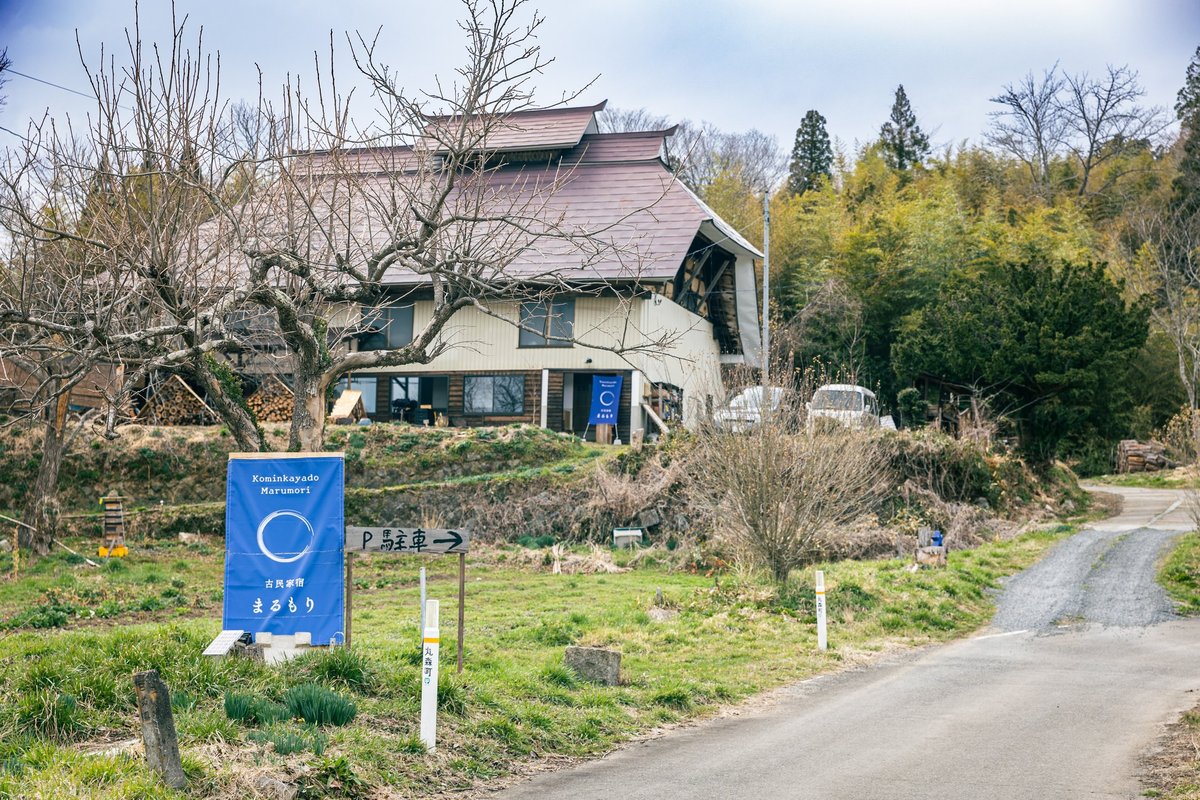
Set near the Fukushima border at the very southern tip of Miyagi Prefecture, this rustic kominka was built as a traditional farmhouse and retains every feature that makes that heritage worth experiencing: a wide-burning irori open hearth, a wood-burning stove, atmospheric attic sleeping spaces, and a garden where bonfire and BBQ evenings come naturally. The owner lives next door and will happily show guests how to start a fire, split wood, or cook over coals — practical skills that delight grandchildren and resonate deeply with grandparents. With a maximum capacity of 10, it’s a perfect base for an extended family reunion, where evenings unfold around firelight and no one has to leave the table until they want to.
Best for: Multi-gen family reunions, bonfire evenings, slow rural immersion
Highlights: Irori hearth + woodstove, BBQ garden, owner guidance on traditional skills, up to 10 guests
View & Book →
Yamakoshi Farm Inn Santayu — Family Farm Stay, Niigata
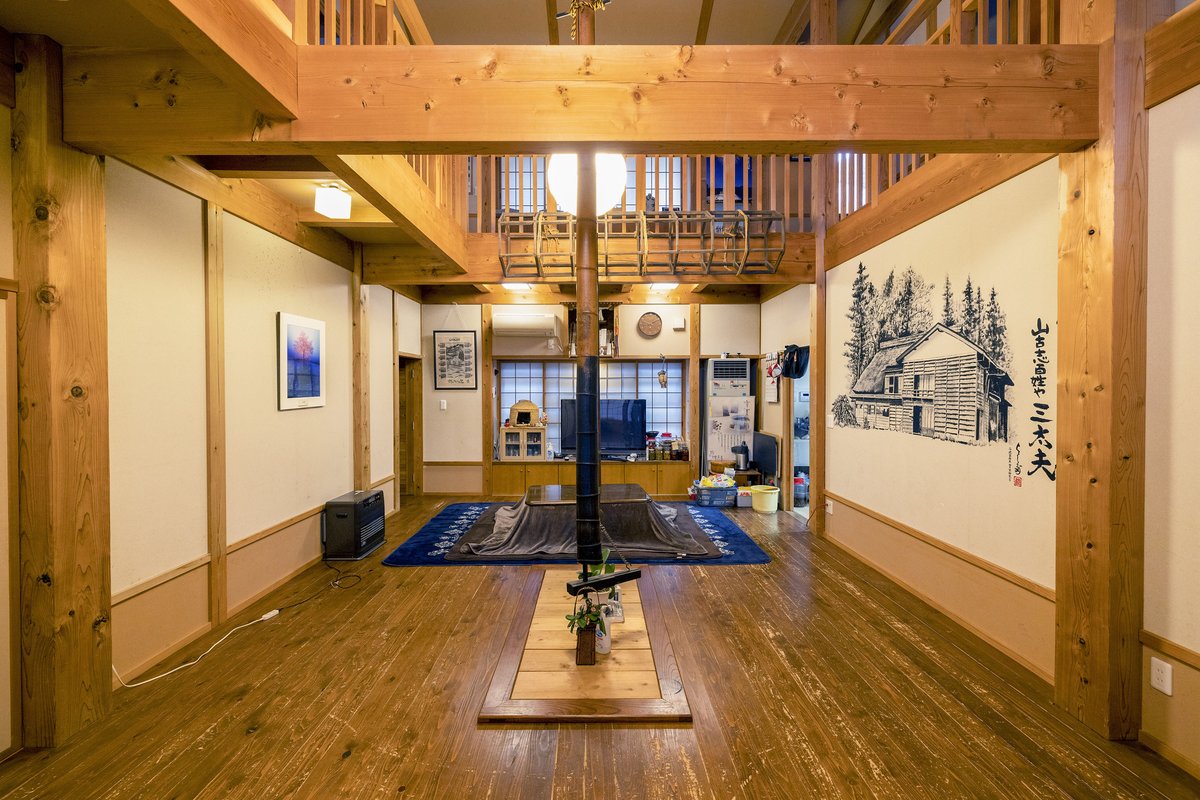
Yamakoshi, a village on the mountainous fringes of Niigata’s Nagaoka City, is often described as one of Japan’s most complete examples of original rural landscape — terraced rice paddies climbing steep hillsides, traditional farmhouses nestled against forest slopes, and a community still shaped by the rhythms of agriculture. Santayu accommodates up to 14 guests and is run by a host family who pride themselves on two things: the views and the table. Their creative country cooking — built around seasonal Yamakoshi rice, fresh mountain vegetables, and local fish — turns mealtimes into genuine celebrations. For families with grandparents who remember rural Japan, or grandchildren encountering it for the first time, this is a destination of quiet but lasting significance.
Best for: Large multi-gen family groups, rice terrace scenery, family-scale country cooking
Highlights: Up to 14 guests, iconic Yamakoshi rice terrace landscape, farm activities available, seasonal cuisine
View & Book →
Log Cottage Hata — Barrier-Free Family Stay, Ago Bay, Mie
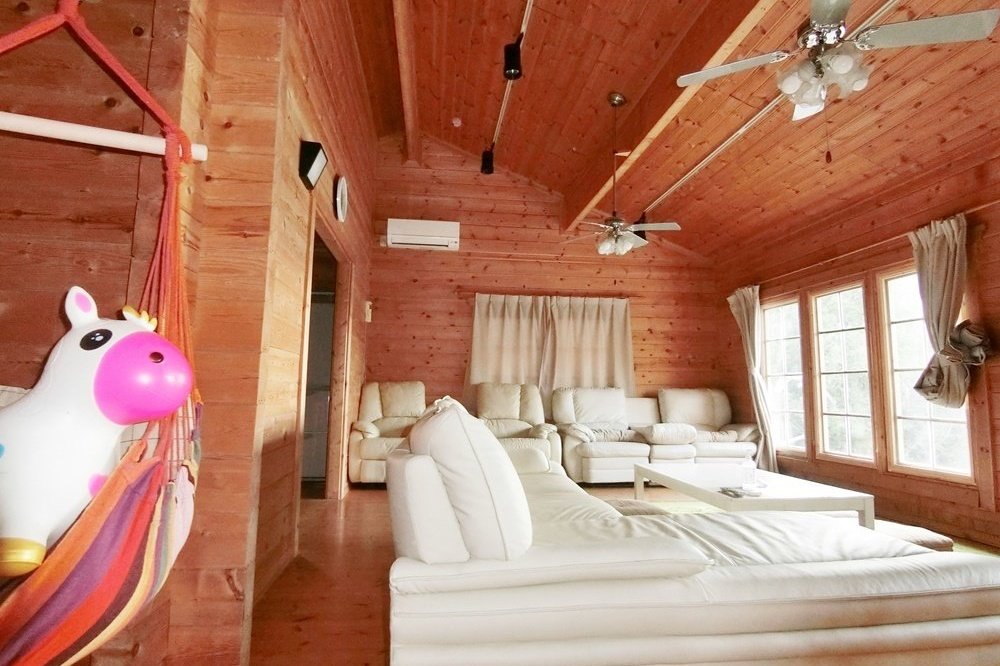
For families where accessibility matters — perhaps because grandparents have mobility limitations — Log Cottage Hata is a rare find: a barrier-free, single-floor rural cottage set within the Ise-Shima National Park, overlooking the tranquil Ago Bay. The property sleeps up to 12 guests, includes five kayaks for guest use, a sauna, and a south-facing BBQ terrace sheltered from the wind that works year-round. The surrounding coastline and hillside forests are gently explorable on foot. Younger children can kayak or clamber on the rocky shore; grandparents can sit with a drink and watch the sunset dip into the bay. This is the kind of place where generational differences disappear because the setting holds everyone’s attention equally.
Best for: Barrier-free accessibility, families with elderly guests, water activities and nature
Highlights: Barrier-free single floor, up to 12 guests, 5 kayaks free, sauna, Ago Bay views, Ise-Shima National Park
View & Book →
Aramaki Farm Inn — Historic Kominka for Families, Kyoto
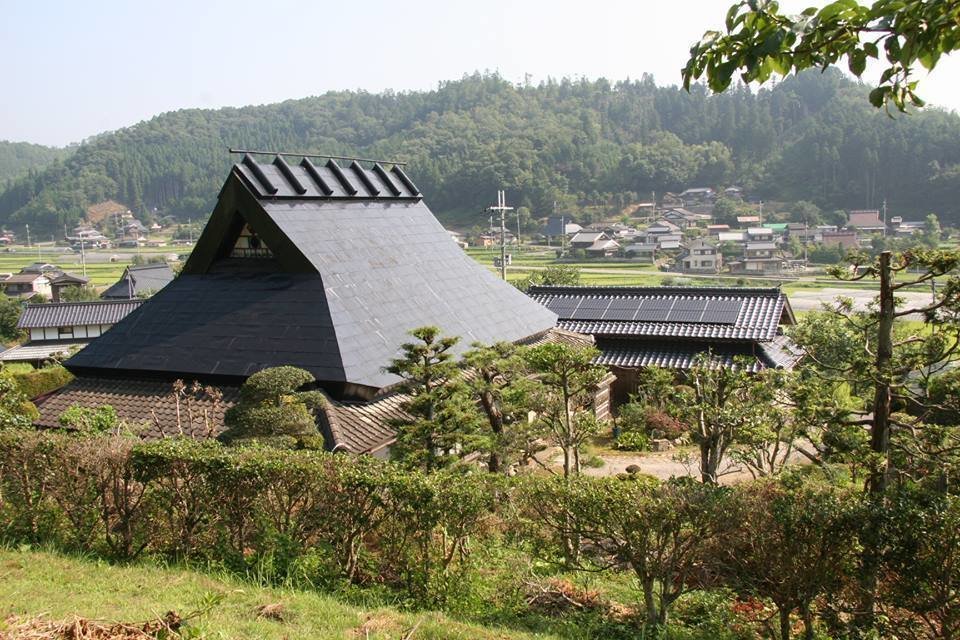
Hidden in the high plateau country of central Kyoto Prefecture — far from the temple crowds and closer to the sound of wind through bamboo — Aramaki Farm Inn is a 170-year-old thatched kominka that has been the home of the Aramaki family for generations. The current host lives in the main house; guests stay in the historic building itself, cooking from the garden outside, warming by the irori in autumn, and discovering what a genuine Edo-period farmhouse looks and smells like. In summer, fireflies appear in the surrounding paddies. With capacity for up to 10 and breakfast included, this is an ideal property for a family seeking both the cultural depth of Kyoto and the total absence of tourist traffic. The home also features a small sauna — a quietly excellent addition for the adults in the group after a day of country walking.
Best for: Cultural depth, Edo-period kominka, families seeking authentic host connection
Highlights: 170-year thatched kominka, host family on-site, irori, sauna, fireflies in summer, breakfast included
View & Book →
Kominka Stay oniwa — Family Retreat in Nagasaki’s Rice Terrace Village
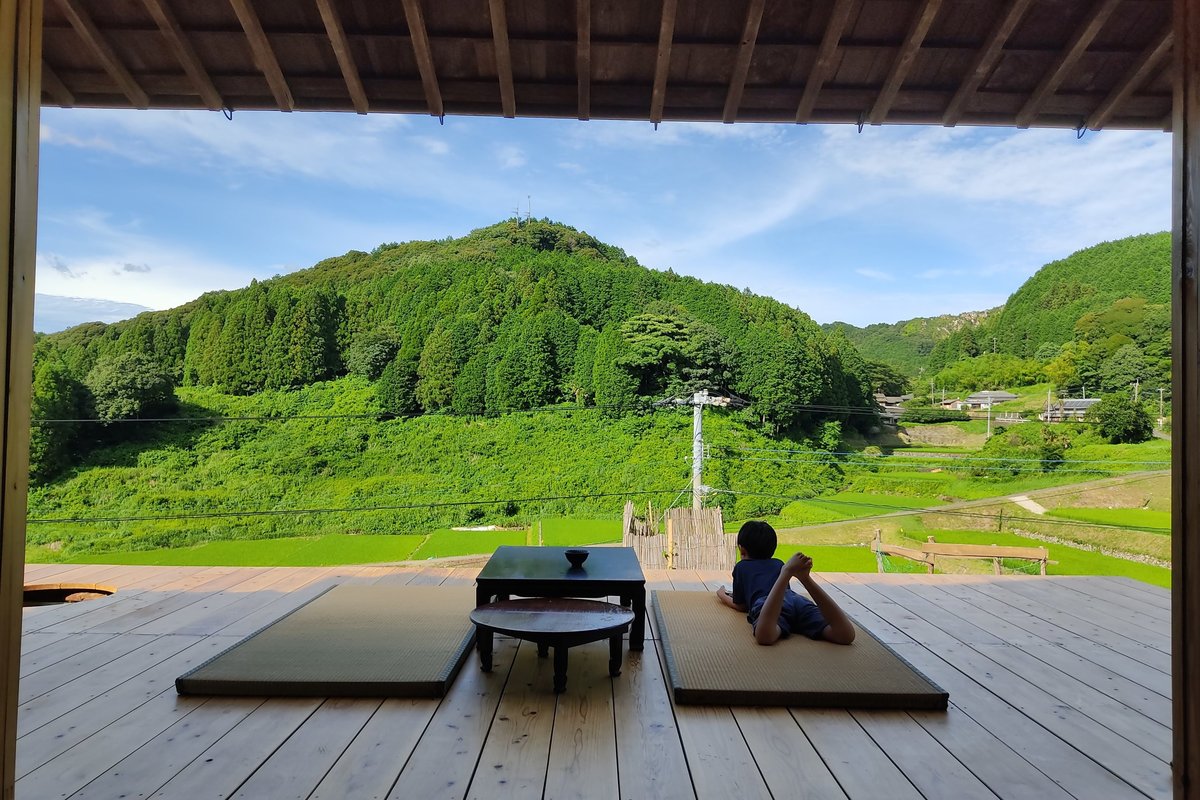
In the pottery-village hills of Hasami, Nagasaki — surrounded by a landscape that appears on the list of Japan’s 100 most beautiful rice terraces — the couple who run oniwa spent two years hand-restoring a 1,000-square-metre kominka property before welcoming their first guests. The result is somewhere between living heritage site and private family retreat. Meals are cooked together around the irori, with fresh game, seasonal vegetables, and kamado-steamed rice at the centre of every evening. Grandchildren learn to cook with fire; grandparents recognise in the kitchen something of the Japan they carry in memory. At seven guests maximum, it’s a more intimate choice — best suited to three-generation families where everyone knows each other well and values depth over scale.
Best for: Intimate family gatherings, heritage pottery culture, communal irori cooking
Highlights: 1,000-sqm kominka estate, irori and kamado cooking together, 100 most beautiful rice terraces, 1-group-per-day exclusivity
View & Book →
Yamanoie Suimura HIRAODAI — Large Family Reunion Stay, Kitakyushu, Fukuoka
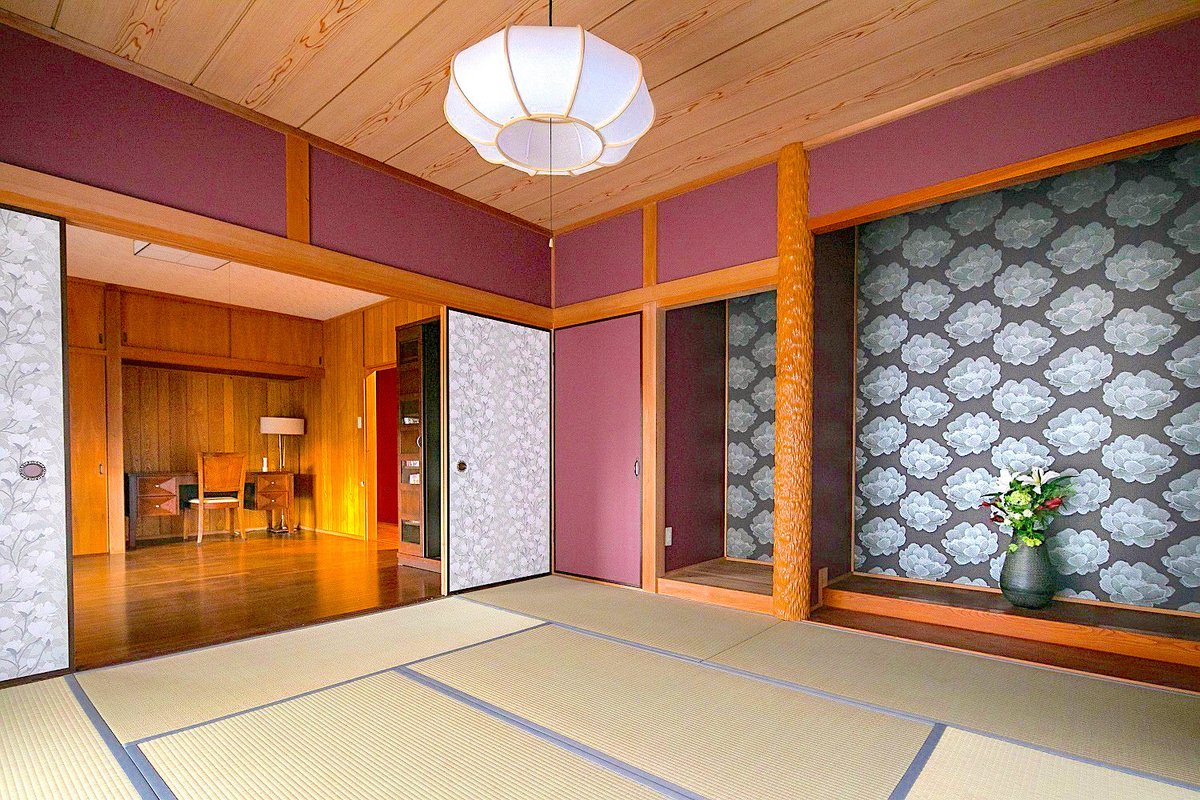
For the largest family gatherings — the full extended clan, including cousins and aunts who don’t often travel together — HIRAODAI offers the kind of scale that makes a genuine reunion possible. Set in the rolling karst landscape of the Hiraodai Plateau near Kitakyushu, this entire-house rental sleeps up to 15 guests and places your family in one of Kyushu’s most distinctive natural environments: a limestone plateau dotted with ancient cave systems, wildflower meadows, and panoramic mountain views. The property requires a minimum two-night stay, and the surrounding area rewards exploration in every direction. This is the rare Japan countryside property where fifteen people can all sleep under the same roof without anyone feeling crowded — and where the scale of the setting matches the occasion of the reunion itself.
Best for: Large extended family reunions, unique karst landscape, Kyushu exploration base
Highlights: Up to 15 guests, Hiraodai karst plateau, minimum 2-night stay, entire private house, Kitakyushu gateway
View & Book →
Tips for Planning a Multi-Generational Japan Trip
Multi-generational travel requires more logistics than a solo or couple trip. These tips will help you plan a countryside Japan holiday that works for grandparents, parents, and grandchildren alike. For more detailed planning help, see our Best Japan Stays for Families with Kids guide and our full introduction to kominka.
- Book early for large groups. Properties that accommodate 10+ guests are the least common inventory on any platform. Summer and autumn — the most popular seasons for multi-gen travel — fill up three to six months in advance. Santayu (14 guests) and HIRAODAI (15 guests) in particular are best reserved as early as possible.
- Check accessibility carefully for older guests. Before confirming, review the listing photos and description for stair counts, floor layouts, and bathroom type. Properties like Log Cottage Hata (barrier-free, single floor) were designed with accessibility in mind. If you’re unsure, message the host directly — most are very forthcoming about the practicalities.
- Plan at least one shared activity that everyone can join. Irori cooking, rice harvesting, fire-starting, or a gentle forest walk are universally accessible in a way that kayaking or mountain hiking is not. Choosing one communal activity per day and leaving the rest as free time is the most reliable multi-gen formula.
- Discuss food needs with the host before arrival. Older guests may have dietary restrictions; young children may have food preferences. Japan’s rural hosts are generally flexible and deeply caring about food — give them a week’s notice and they will adapt beautifully.
- Pack for rural Japan’s specific conditions. Insect repellent (essential in summer), extra slippers, cash (rural Japan remains largely cash-based), and a small gift from home for the host family. The gift — or omiyage — is a gesture grandparents and hosts alike will understand instantly.
- Consider your arrival and departure logistics. Most kominka require a rental car. If grandparents don’t drive, consider hiring a car with a driver for at least the last leg of the journey, or booking a property near a train station that offers host pick-up. Plan this before — not after — booking.
Frequently Asked Questions About Multi-Generational Japan Travel
How many people can typically stay in a STAY JAPAN rural property?
Properties on STAY JAPAN range from 2-person retreats to entire farmhouses sleeping 15 or more. For multi-generational groups, search with your total guest count and filter for entire-house rentals. Properties like Yamakoshi Farm Inn (up to 14) and HIRAODAI (up to 15) are specifically designed for large groups. Use the guest-count filter on STAY JAPAN’s search page to surface properties that fit your family size — and always check the listing details rather than relying on the headline number alone, as some properties count children differently.
Are Japan’s rural farmhouse stays suitable for elderly guests?
Many are, though it varies by property. Traditional kominka often have low-rise futon sleeping rather than beds, and some have internal staircases or tatami floors that may require care. That said, several STAY JAPAN listings are designed with accessibility in mind — Log Cottage Hata, for instance, is fully barrier-free on a single floor. When booking for a group that includes elderly guests with mobility considerations, read the listing carefully, look at every available photo, and send a message to the host explaining your needs before confirming. The level of care and adaptation that Japan’s rural hosts extend to guests with specific needs is consistently impressive.
What is the best season for a multi-generational Japan countryside trip?
For families with school-age grandchildren, late July and August align with Japan’s summer holiday window — and the rural calendar is at its most alive, with golden rice fields, fireflies, and harvest festivals. However, August in Japan is extremely hot and humid, with temperatures regularly exceeding 35°C (95°F) in many regions. For multi-generational groups that include elderly guests, this level of heat carries real health risks, and sightseeing should be planned around the cooler hours of the morning and evening.
For most multi-generational groups — especially those travelling with grandparents — late September through November is the optimal window. Temperatures drop to a comfortable range, autumn foliage transforms the countryside into extraordinary colour, and harvest season continues well into October. You’ll find fewer crowds, more accommodation availability, and a pace that suits all ages far better than the peak summer heat. Spring (late April–May) is equally excellent if your family can travel during or just after Golden Week.
How do I find STAY JAPAN properties that include meals for large groups?
On each STAY JAPAN listing page, the description and host notes will specify whether meals are available and at what cost. Properties like Yamakoshi Farm Inn Santayu and Kominka Stay oniwa offer host-cooked meals as a core part of the experience — often included in the base price or available as an optional add-on per guest. When booking for a large multi-generational group, send a message to the host after confirming your reservation to discuss meal arrangements, dietary needs, and any special occasions (a grandparent’s birthday, for example). Japan’s rural hosts respond to this kind of care with remarkable effort and warmth.
Ready to Book Your Family Reunion in Rural Japan?
The stays above are all available to book in English through STAY JAPAN — and all offer something that no hotel chain can replicate: the rare, unhurried experience of an entire rural Japanese property shared by the people you love most. Before you go, don’t forget to use your summer discount. Valid for first-time STAY JAPAN bookings only, but only until August 31, 2026.