Escape the Golden Route. This 14-day journey takes you north to south through Japan’s rural heartland — from Tohoku’s volcanic hot springs to Kyushu’s UNESCO Geopark highlands — with a private farmhouse stay at every stop.
Japan’s classic travel loop — Tokyo, Hakone, Kyoto, Osaka — is spectacular. But if you’ve experienced it once, or if you’d rather skip the crowds entirely on your first trip, rural Japan is a revelation.
This 14-day Japan travel itinerary was designed for travelers who want to slow down. Not “slow” in the sense of doing less — but slow in the sense of arriving somewhere, staying two full nights, and having one complete day to actually explore. No 5 AM check-outs. No rushing between tourist sites. Just Japan at the pace it was built for.
Across 14 days, this route takes you through five distinct regions: Tohoku, Hokuriku, the Japanese Alps, the Setouchi coast, and Kyushu. At each stop, you’ll sleep in a private rural accommodation booked through STAY JAPAN — Japan’s leading platform for authentic farmhouse stays and traditional rural rentals. The properties range from a volcanic highland villa with a natural hot spring bath to a 106-year-old kominka crafted by a flag-maker’s family on the edge of the Seto Inland Sea.
Why Plan a Rural Japan Itinerary?
Japan’s travel infrastructure is famous for its efficiency — and so are its most popular tourist routes. The train from Kyoto to Osaka takes 15 minutes. The queue for Fushimi Inari starts before sunrise. And the hotel corridors of Shinjuku hum with round-the-clock activity.
Rural Japan offers something fundamentally different. In the satoyama valleys of Nagano, the terrace-farm highlands of Oita, and the quiet kiln towns of the Setouchi coast, the pace slows down naturally. Meals come from the garden. Evenings are quiet enough to hear the wind in the cedar trees. And the moments travelers most often describe as their “real Japan” — a conversation over an irori hearth, a mountain sunrise with no one else around — are far more likely here than in the country’s most photographed spots.
Furthermore, 14 days is exactly the right length for this kind of travel. It allows two full nights at each stop, with transit time built in as a journey in itself — a scenic train ride through mountain passes rather than a day “lost” to travel. According to recent inbound travel trend data, “slow travel” and authentic cultural immersion are among the fastest-growing categories in Japan tourism. This itinerary delivers both.
What Makes STAY JAPAN Different?
STAY JAPAN is Japan’s premier platform for private rural accommodations — traditional farmhouses, kominka, one-building rentals, and agricultural stays hosted by Japanese locals.
Here’s what sets it apart from mainstream booking platforms:
- Only authentic local properties: Every listing is owned and operated by a Japanese individual or family. You’re staying in someone’s home or community space — not a commercial hotel unit.
- English-friendly booking: STAY JAPAN’s English site provides detailed property descriptions, making the booking process smooth for international visitors.
- Genuinely unique stays: From a hot-spring villa in the Zao mountains to a 106-year-old koinobori craftsman’s house on the Setouchi coast, these properties exist nowhere else.
- Built-in cultural exchange: Many hosts share stories, local recommendations, seasonal activities, and sometimes meals — as part of their hospitality, not a paid upsell.
- Direct support for rural Japan: Booking through STAY JAPAN puts money directly into local communities and supports sustainable rural tourism.
- Verified countryside experience: All listings represent the real character of Japan’s satoyama, coastlines, mountains, and farming districts.
Your 14-Day Route: At a Glance
| Days | Region | Destination | Accommodation |
|---|---|---|---|
| 1–2 | Kanto | Tokyo | City hotel or urban guesthouse |
| 3–4 | Tohoku | Zao, Miyagi | Four Seasons Oasis MIYAGI ZAO |
| 5–6 | Hokuriku | Tonami, Toyama | Hanaya Estate |
| 7–8 | Chubu | Komagane, Nagano | Satoyama Farmhouse hana |
| 9–10 | Chugoku | Bizen, Okayama | Noboriya |
| 11–12 | Kyushu | Bungo-Ono, Oita | Waki |
| 13–14 | — | Return / Extend | — |
Getting around: This itinerary runs broadly north to south, following Japan’s Shinkansen backbone. Each leg takes approximately 3–5 hours by train — comfortable half-day journeys that leave the afternoon free for arrival, exploring the neighbourhood, and settling in. Point-to-point Shinkansen tickets (purchased in advance at stations or online via Japan Rail’s booking portal) are the most cost-effective approach for this route. An IC card (Suica or ICOCA) handles all local and regional transit seamlessly.
Where You’ll Stay: Our Top Picks
Four Seasons Oasis MIYAGI ZAO — Zao, Miyagi (Days 3–4)
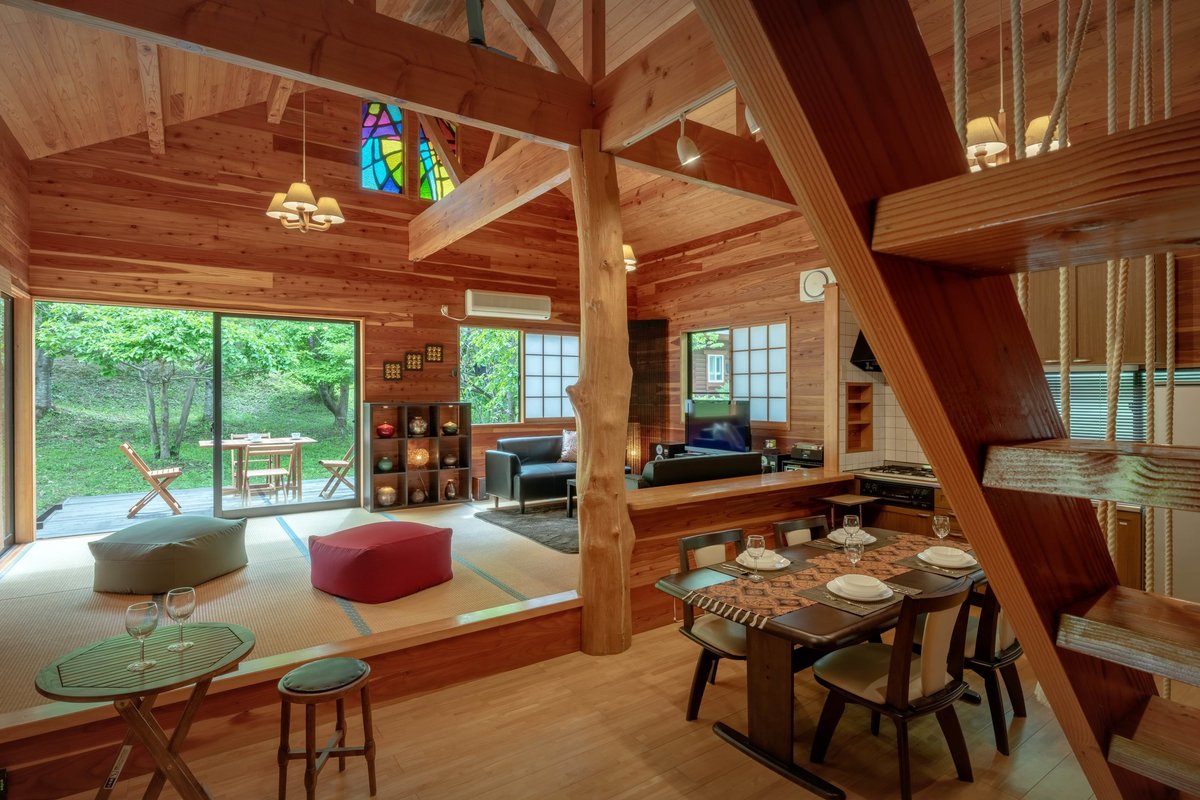
Perched in the highlands of Zao — one of Tohoku’s most celebrated mountain destinations — this private villa is one of the most refined rural stays in Japan. Four Seasons Oasis ZAO belongs to Japan’s first Albergo Diffuso-certified resort in Tohoku: a European-inspired accommodation model that integrates individual villas into a broader natural landscape, rather than concentrating guests under one roof.
The interior pairs dark contemporary walls with stained glass windows, and the private bath draws from Zao’s natural volcanic hot springs — piped in directly from the still-active crater above. In summer, the surrounding highlands offer wildflower meadows, cool highland air, and some of the most accessible volcano scenery in all of Tohoku.
Summer highlights:
- Private natural hot spring bath fed by Zao’s active volcanic springs
- Hike to Okama Crater — Zao’s iconic emerald caldera lake, accessible late April to early November via the Zao Echo Line toll road
- Explore the Zao Fox Village and highland wildflower meadows
- Day trip to Sendai for the Tanabata Festival (early August) — Japan’s most elaborate summer celebration
Best for: Couples and design-minded travelers seeking rural immersion without sacrificing comfort
Location: Zao, Miyagi Prefecture — approx. 30 min by car from Shiroishi-Zao Shinkansen station
Hanaya Estate — Tonami, Toyama (Days 5–6)
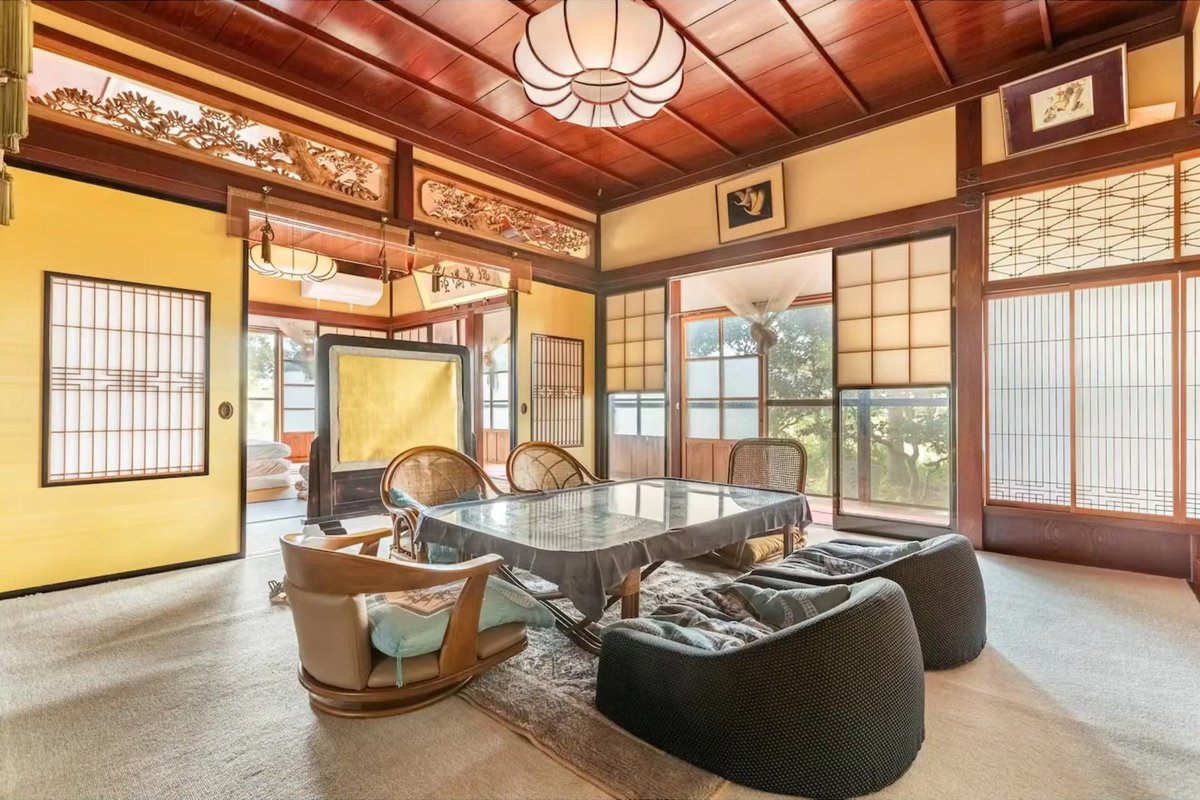
Few rural destinations in Japan are as quietly spectacular as Tonami in Toyama Prefecture — and Hanaya makes the most of it. This private estate accommodates up to 8 guests across a complex of traditional Japanese rooms arranged around a formal moss garden, with a separate detached tea house and a back garden where seasonal flowers bloom from spring through autumn.
Three sides of the property face open rice paddies, creating an atmosphere of near-total rural quiet. Tonami is famous throughout Japan for its sankyoson landscape — a distinctive agricultural pattern where individual farmhouses sit isolated in vast, flat paddy fields, rather than clustered in villages. It’s a setting unlike anything else in Japan, and it’s best understood from a stay that gives you time to walk the narrow paddy roads at dusk.
Nearby, the UNESCO World Heritage village of Gokayama — a thatched-roof gassho-zukuri community and a quieter alternative to the more visited Shirakawa-go — is approximately 50 minutes away by car.
Summer highlights:
- Early morning walks through Tonami’s sankyoson paddy landscape
- Visit Zuiryuji Temple in Takaoka — the only National Treasure architectural complex in Toyama Prefecture, a masterpiece of early Edo period Zen architecture
- Day trip to Gokayama UNESCO World Heritage village, approximately 50 minutes by car
- Explore the Nanto Inami Wood Carving district, renowned for traditional woodcraft
Best for: Groups and families seeking a ryokan-level private experience; design and architecture travelers
Location: Tonami, Toyama Prefecture — approx. 20 min from Takaoka Station by car; JR Johana Line stops at Takaoka
Satoyama Farmhouse hana — Komagane, Nagano (Days 7–8)
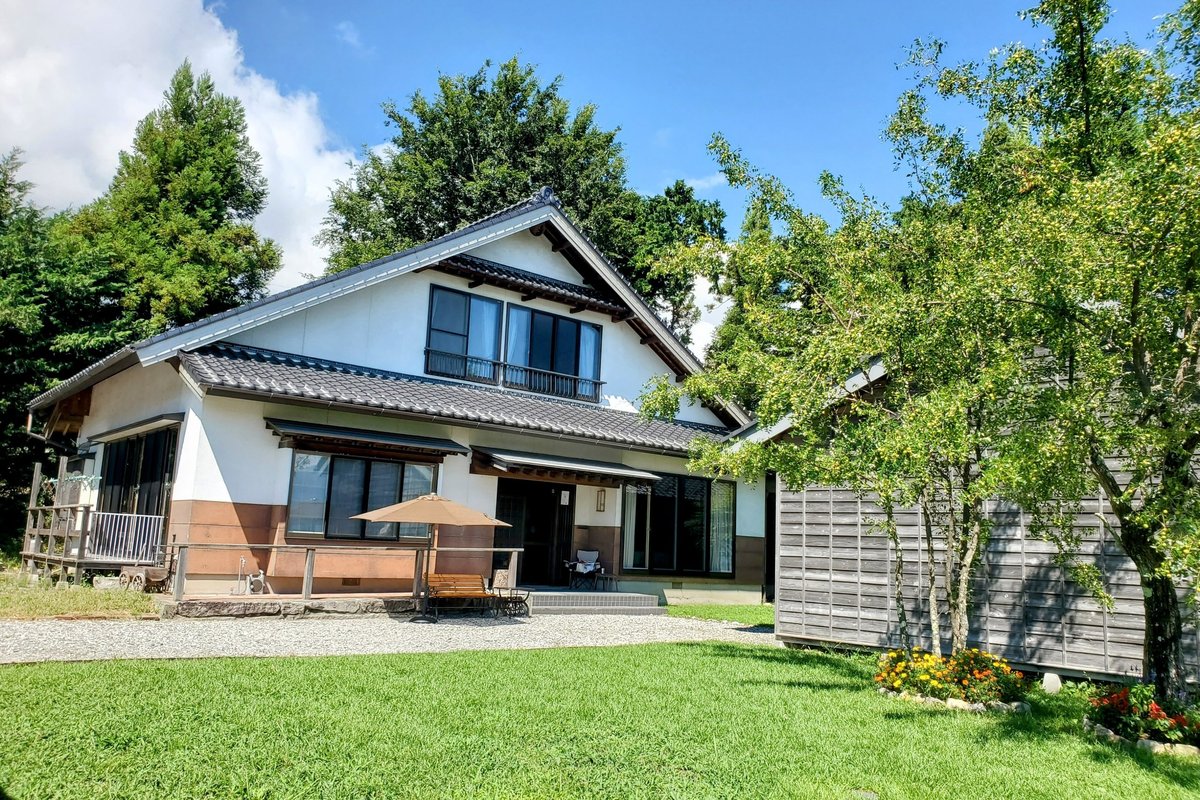
Set on a hillside above Komagane city, hana is a spacious kominka farmhouse with a panoramic view of the Central Alps from its wide lawn — one of the most dramatic mountain vistas available from a private rural rental in Japan. The house sits in a quiet residential neighbourhood above the Ina Valley, where the landscape shifts quickly from orchard roads and rice terraces to the towering ridgeline of the Chuo Alps.
Inside, a wood-burning stove anchors the main living room, and a traditional irori sunken hearth offers the kind of warmth that no hotel lobby replicates. Two upstairs bedrooms, a large kitchen, and a separate tatami room make hana a natural choice for families and small groups.
Komagane’s main attraction — the Komagatake Ropeway — is the fastest way to step into true alpine Japan without a full mountaineering kit. In about 7 minutes, the ropeway lifts you from the valley floor to the Senjojiki Cirque, a glacier-carved alpine basin at 2,612m that turns vivid green in summer and crimson red in autumn. It’s one of Japan’s most accessible high-altitude landscapes.
Summer highlights:
- Take the Komagatake Ropeway to the Senjojiki Cirque alpine basin at 2,612m elevation
- Pick seasonal fruit at local Ina Valley farms (peaches, blueberries, and apples from July onwards)
- Cycle the Ina Valley cycling route along the Tenryu River
- Visit Suwa Taisha — one of Japan’s oldest Shinto shrines, set at the edge of Suwa Lake 40 minutes away by car
Best for: Families, small groups, and active travelers; alpine hiking base
Location: Komagane, Nagano — approx. 2.5 hrs from Shinjuku by direct express bus; or by direct highway bus from Nagoya (approx. 2.5 hrs)
Noboriya — Bizen, Okayama (Days 9–10)
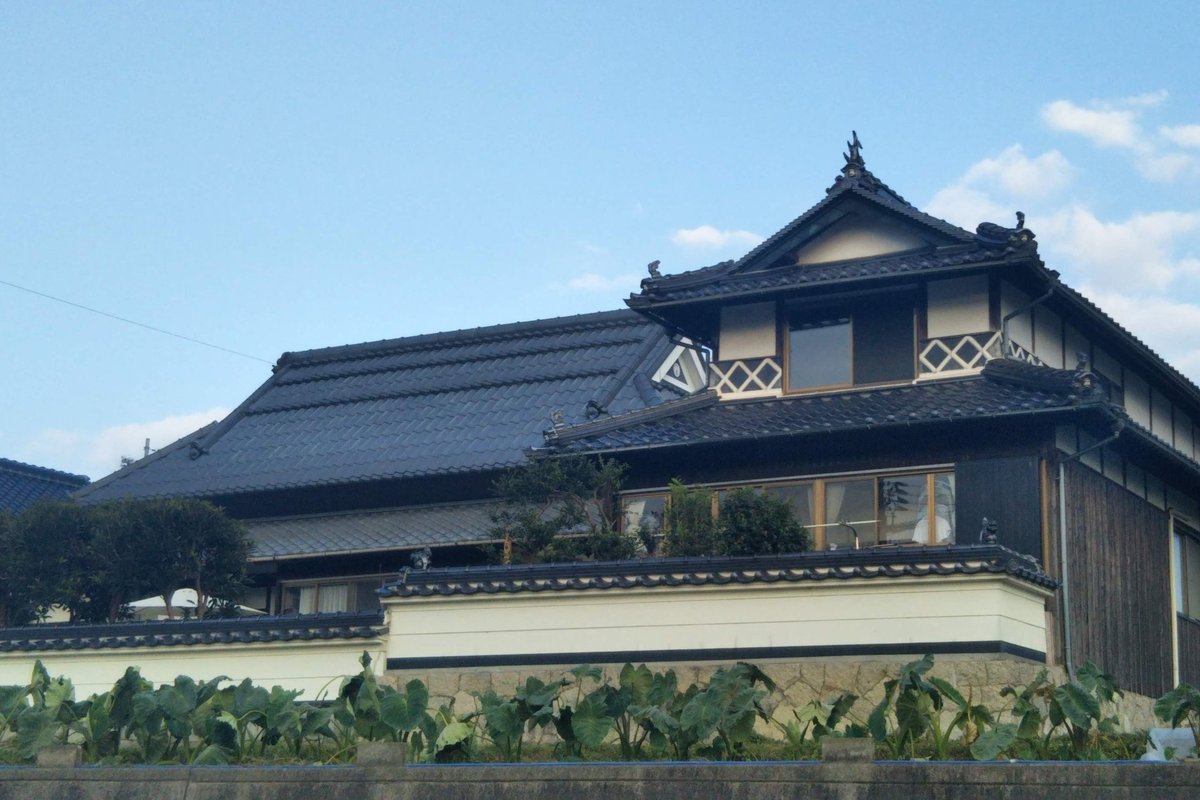
A 106-year-old farmhouse with a story built into every beam: Noboriya was once the workshop of a family who crafted traditional nobori flags and carp streamers — koinobori — beloved symbols of Japanese spring festivals. After more than a decade of meticulous renovation by a couple who relocated from Osaka, it stands today as one of the Setouchi region’s finest private rental properties.
The house retains its original earthen-floored genkan entrance, ceramic irori hearth, and weathered wooden lattice windows. In cooler months, guests gather around the irori to roast local Bizen oysters over embers — a tradition the hosts have preserved. In summer, the stone-walled town of Bizen and its coastal breezes create a deeply unhurried atmosphere.
Bizen is the birthplace of Bizen-yaki ceramics, one of Japan’s oldest and most celebrated pottery traditions. The town is dotted with kiln studios and galleries where master potters work in full view of visitors. In addition, the Bizen Osafune Japanese Sword Museum offers a rare look at one of Japan’s most iconic craft traditions.
Summer highlights:
- Visit live Bizen-yaki kiln studios and pottery galleries
- Explore the Bizen Osafune Japanese Sword Museum, in neighboring Setouchi City — approx. 20 min by train from Imbe on the JR Ako Line
- Day trip to the Seto Inland Sea coast, approximately 30 min away, for coastal walks and fresh seafood
Best for: History and design travelers; slow Setouchi explorers; couples
Location: Bizen, Okayama Prefecture — approx. 15 min from Imbe Station (JR Ako Line); Okayama is 1 hr from Shin-Osaka by Shinkansen
Waki — Bungo-Ono, Oita (Days 11–12)
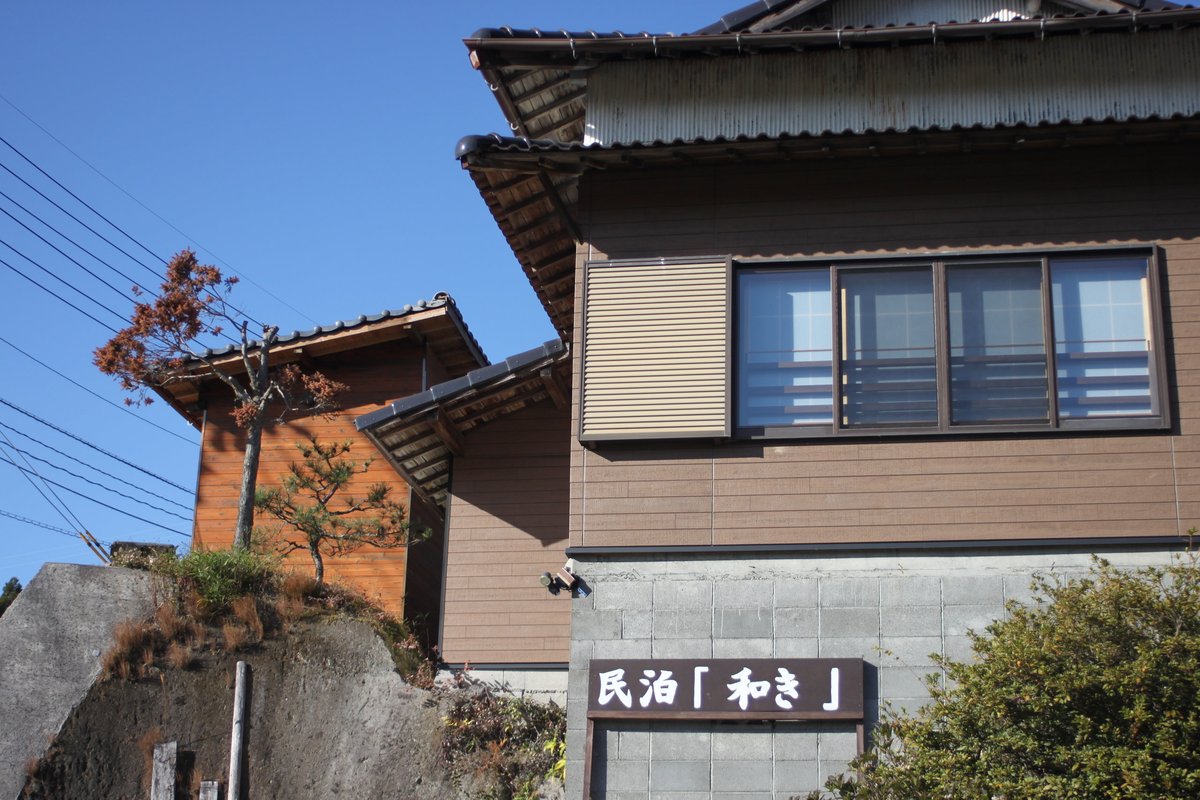
The final stop on this itinerary may be its most unforgettable. Waki sits in a valley recognized as one of Japan’s Top 100 Most Beautiful Terraced Rice Landscapes, deep in the Kyushu Mountains — a region that lies within the Sobo-Katamuki-Okue UNESCO Global Geopark. The surrounding terrain is ancient and rugged, the kind of landscape that makes city life feel very far away.
This one-building rental comes equipped with a private outdoor sauna — a rare feature in rural accommodation — and positions guests for day trips to three of Kyushu’s finest hot spring areas: Kurokawa Onsen, Nagayu Onsen, and Takeda Onsen, all within an hour by car. The surrounding hills offer serious hiking terrain into Geopark scenery, and a supermarket 2km away stocks Oita beef, one of Japan’s most prized wagyu varieties.
⚠️ Note: Waki is highly sought-after and has limited availability during peak summer. We strongly recommend booking as far in advance as possible.
Summer highlights:
- Private outdoor sauna sessions surrounded by terraced rice paddies and mountain air
- Hiking trails into the Sobo-Katamuki-Okue UNESCO Global Geopark
- Hot spring day trips to Kurokawa Onsen, Nagayu Onsen, and Takeda Onsen
- Local Flavors: Pick up Oita wagyu beef at the local supermarket 2km away and cook it in the fully-equipped kitchen
Best for: Hot spring enthusiasts, outdoor adventurers, couples and groups seeking complete privacy
Location: Bungo-Ono, Oita Prefecture — approx. 1.5 hrs from Oita Airport by car; accessible via JR Hohi Line to Bungo-Taketa Station (in neighboring Taketa city)
Tips for Planning Your 14-Day Japan Rural Itinerary
- Book accommodations 2–3 months in advance. Rural properties typically have only one or two units, and summer (July–August) fills up fast. Start booking as soon as your dates are confirmed — and if you’re planning an autumn trip, now is the ideal time to secure October and November availability.
- Plan your rail tickets in advance — skip the pass, buy point-to-point. For a route that spans Tohoku to Kyushu over 14 days, purchasing individual Shinkansen tickets for each leg (Zao to Tonami, Tonami to Komagane, Komagane to Okayama, Okayama to Oita) is typically more economical than a blanket rail pass. Book online through JR’s official reservation system or at major Shinkansen stations. An IC card (Suica or ICOCA) handles all local trains, buses, and regional connections.
- Expect transit days — and enjoy them. Each hop on this route takes approximately 3–5 hours by train. Rather than viewing these as “lost” days, plan them as slow travel in themselves: pack a bento from the station, find a window seat, and watch Japan’s landscape change from pine forest to paddy field to coastline. Specifically, the scenic train routes connecting from Nagoya through the Ina Valley to Komagane — including the famous Iida Line — offer some of the most scenic rail journeys in Japan.
- Rent a car for at least the Kyushu leg. Public transit in Bungo-Ono (Oita) is limited, and a car unlocks the full potential of the area: Geopark trailheads, onsen day trips, and market runs are all significantly easier. One-way car rental from Oita Airport to a nearby drop-off point is a practical option.
- Bring cash. Rural ATMs can be scarce, and some restaurants and local shops are cash-only. Stock up at convenience store ATMs (7-Eleven, Lawson) before leaving major towns.
- Message your host before arrival. STAY JAPAN hosts are local experts. A quick message asking for seasonal tips, restaurant recommendations, or transport advice typically unlocks knowledge no guidebook includes — and sets a warm tone for the stay.
Frequently Asked Questions
Is 14 days enough for this route?
Yes — 14 days is the right pacing for this itinerary. With two nights at each rural stop and built-in transit time, you’ll have one full day to explore each destination without rushing. The route runs broadly north to south, with each transit leg taking half a day by Shinkansen and regional train. It’s designed to feel like a journey rather than a checklist.
How does this compare to the 7-day itinerary?
Our 7-Day Central Japan Rural Itinerary focuses on central Honshu and is ideal for first-time rural visitors or those with limited time. This 14-day version extends north into Tohoku and south into Kyushu, creating a more complete picture of Japan’s rural landscape across five distinct regions. If you’ve done the 7-day route and want to go further, this is the natural next step.
Do I need to speak Japanese?
All properties listed here are available on STAY JAPAN’s English site. Most hosts have basic English communication capability, and the STAY JAPAN messaging platform makes pre-arrival communication straightforward. Google Translate handles most on-the-ground situations effectively. In general, rural Japanese hospitality transcends language barriers — hosts go out of their way to make international guests feel welcome.
What’s the best time of year for this itinerary?
Summer (late June–September) and autumn (late September–November) are both excellent. In summer, Zao and Nagano are refreshingly cool — often 8–12°C cooler than Tokyo — and the Senjojiki Cirque is in full alpine bloom. In autumn, the same landscapes transform: rice terraces turn gold, the Central Alps glow crimson, and the Setouchi coast is at its most temperate. Notably, autumn availability at rural properties tends to be better than peak summer, making October and November an ideal time to plan this route.
How much does this 14-day itinerary cost?
Accommodation at the featured properties typically runs ¥8,000–¥22,000 per night, depending on season and group size. Point-to-point train tickets for the full route total approximately ¥60,000–¥75,000 per person, depending on the exact itinerary — roughly comparable to a 14-day JR Pass, but with more flexibility to mix Shinkansen, limited express, and scenic local lines. Meals in rural Japan are excellent value — village restaurants and local supermarkets typically offer full meals at ¥600–¥1,500.
Ready to Plan Your Rural Japan Adventure?
Japan’s countryside is waiting — and it looks nothing like the photos you’ve already seen. This 14-day route crosses five distinct regions, five climate zones, and five centuries of Japanese architectural heritage. Every stop is a different Japan.
Looking for mountain and highland retreats specifically? Explore our curated Highland Retreat Stays collection → for more handpicked properties across Japan’s mountain regions.
⚡ Don’t wait — the best rural properties book out early. Whether you’re planning a summer stay or looking ahead to autumn foliage season, start browsing availability now.