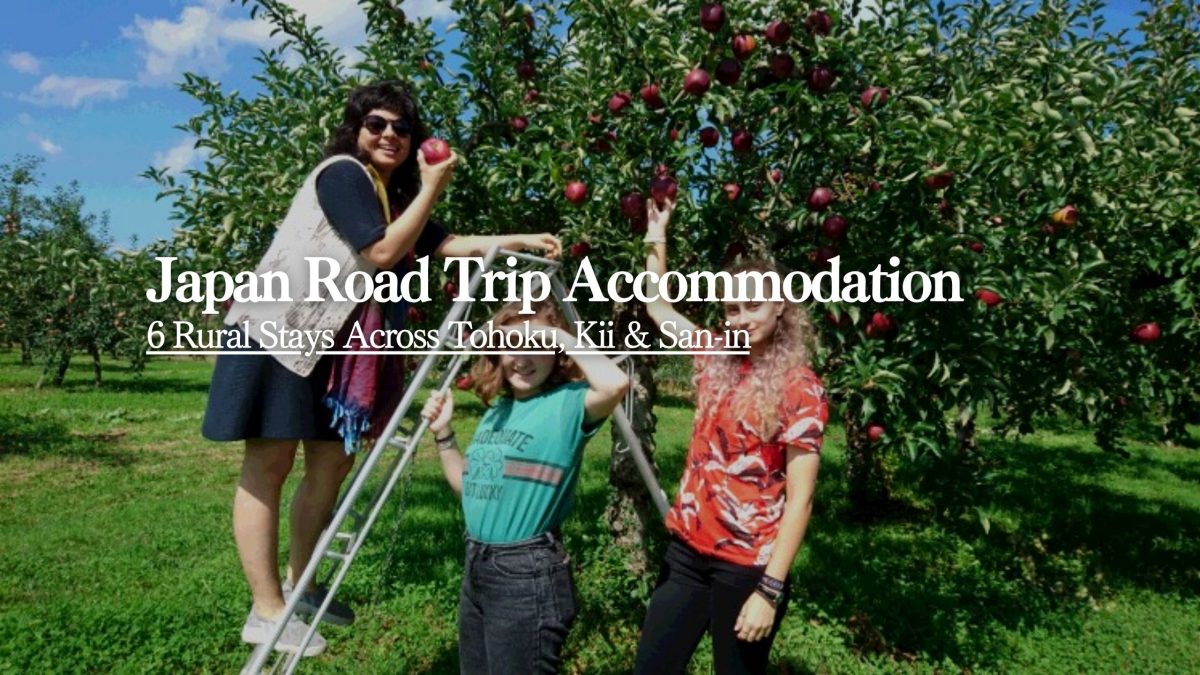

Japan’s countryside reveals itself slowly, at a pace that no express train can match. Between one station and the next, entire worlds of rice paddies, river gorges, fishing coves, and mountain villages pass unseen — accessible only to those with a car and the willingness to turn off the main road.
A Japan road trip isn’t about speed. It’s about the farmhouse at the end of a gravel path, the seaside village that doesn’t appear in any guidebook, the taste of an apple picked in the orchard behind your room that morning. STAY JAPAN connects road-trippers with the hosts, homes, and experiences that make the countryside unforgettable: traditional kominka farmhouses, farm inns with home-cooked meals, and private villas where the view from the window is worth the detour.
This guide covers seven exceptional Japan road trip accommodation options spread across Tohoku, the Boso Peninsula, the Japanese Alps, the Kumano Coast, and the San-in region — properties that work as natural bases for exploring the surrounding countryside by car, with hosts who know the local roads, seasonal highlights, and hidden stops that don’t appear on any map.
Why Drive Through Rural Japan?
Japan’s rail network is one of the world’s finest — but it runs on corridors, not across the landscape. By car, you can stop whenever something catches your attention: a roadside stall selling mountain vegetables, a temple gate half-hidden in cedar forest, a river pool that looks exactly right for a swim.
Driving also opens up accommodation options that simply don’t exist near train lines. Some of Japan’s most remarkable traditional homes — 150-year-old kominka farmhouses, riverside farm inns, cliff-edge sea houses — sit in places that require a car to reach. With STAY JAPAN, these properties are available for booking, which means your road trip can double as a series of genuinely memorable stays rather than a string of forgettable business hotels.
Japan’s expressway network is well-maintained, clearly signed in English, and easier to navigate than first-time visitors expect. With an international driver’s license, a local SIM card, and the NAVITIME or Google Maps app downloaded, most rural Japan driving is straightforward. The challenge is choosing where to stop — which is where this guide comes in.
7 Best Japan Road Trip Accommodation Picks
Acorn Garden — Zao, Miyagi (Tohoku Route)
On the slopes of Zao — Tohoku’s most celebrated mountain range, known for its snow monsters in winter and crater lake in summer — Acorn Garden is a private villa with natural hot spring access, making it one of the most complete rest stops on any Tohoku road trip. Up to six guests can enjoy the full property, complete with a carved-stone private bath for soaking after a day’s driving. The resort grounds include a tennis court and summer pool, with convenience stores and a bus stop within walking distance. Acorn Garden holds the Albergo Diffuso certification — a rare international standard recognizing properties that contribute genuinely to their surrounding community — which means staying here connects you to Zao’s local food, onsen culture, and mountain landscape rather than simply providing a bed for the night.
Road trip highlights:
- Natural hot spring private bath — ideal after long drives through Tohoku
- Summer pool and tennis court on the resort grounds
- Excellent base for Zao hiking, crater lake (Okama) day trips, and Sendai city access
Best for: Friend groups, remote workers, long-stay travelers on a Tohoku loop
Road trip context: Zao sits between Sendai and Yamagata city, making Acorn Garden a natural midpoint stop on any southern Tohoku circuit
Daichan Farm CHERRY — Asahi, Yamagata (Tohoku Route)
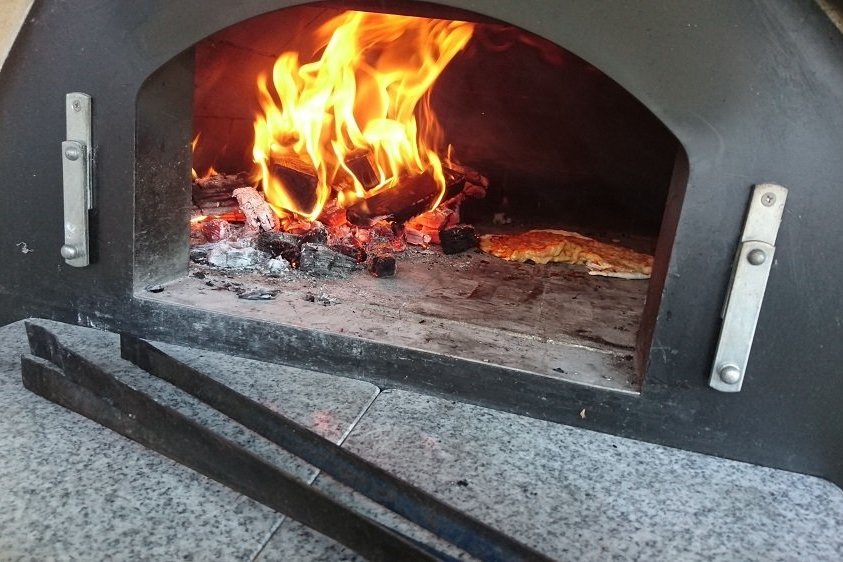
In the quiet mountain town of Asahi in Yamagata Prefecture, beside the Mogami River, Daichan Farm is the first agricultural guesthouse in Asahi-machi — and it captures exactly what rural Yamagata is about. The farm grows apples, cherries, and blueberries depending on the season, and guests can pick fruit directly from the trees as part of their stay. Your host offers optional traditional cooking sessions — Yamagata’s imoni (taro stew) is a local specialty — as well as irori hearth dining and outdoor pizza and BBQ. Pickup from the nearest station is available if you’re leaving your car temporarily, and pets are welcome with prior arrangement. Up to three guests can take the dedicated CHERRY room, with a second room (up to two guests) also available in the main house.
Road trip highlights:
- Seasonal fruit-picking (cherries July, apples September-October, blueberries August)
- Traditional Yamagata cooking experiences including imoni stew and irori dining
- Pickup service available — flexibility for car-free segments of your trip
Best for: Solo travelers, couples, anyone wanting hands-on farm food experiences
Road trip context: Asahi-machi sits along the Mogami River valley, naturally connecting Yamagata city and Tsuruoka on a western Tohoku loop
Guest House Aka-Renga — Senboku, Akita (Tohoku Route)
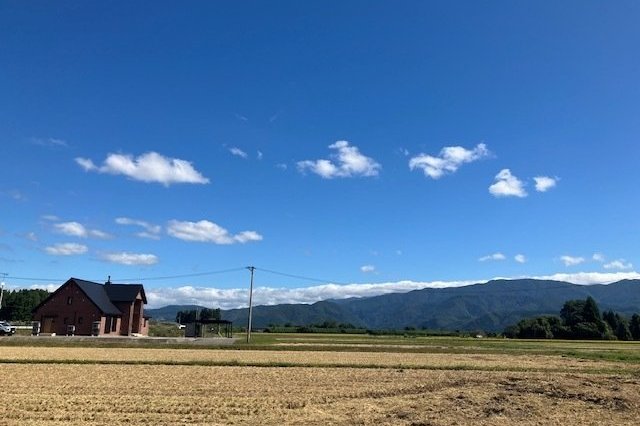
Guest House Aka-Renga — “Red Brick” — is a distinctive red-brick guesthouse standing alone in the middle of Senboku City’s wide rice-paddy landscape, with the Akita Nairiku Jukan Railway line visible from the windows. The property is run by the owner as a one-group-at-a-time stay (up to four guests), making it ideal for couples or small groups who want a genuinely quiet, genuinely rural night. The location is close to several of Akita’s most rewarding road trip destinations: Kakunodate’s famous samurai district, the Tazawako highland resort with its deep blue crater lake, and Nyūtō Onsen — one of Japan’s most celebrated rustic hot spring villages. Akita road trips can be deceptively rich, and Aka-Renga puts you at the crossroads of the region’s best routes.
Road trip highlights:
- One-group-only stay — complete privacy in a rice-paddy setting
- Crossroads location for Kakunodate, Tazawa Lake, and Nyūtō Onsen
- Views of the Akita Nairiku Railway from the property — Japan’s most local rail line
Best for: Couples, solo road-trippers, slow travelers with Akita on their itinerary
Road trip context: Senboku City sits at the junction of routes to Kakunodate (15 min), Tazawako (30 min), and Hachimantai (60 min)
KOZUKA513 — Kamogawa, Chiba (Boso Peninsula Route)
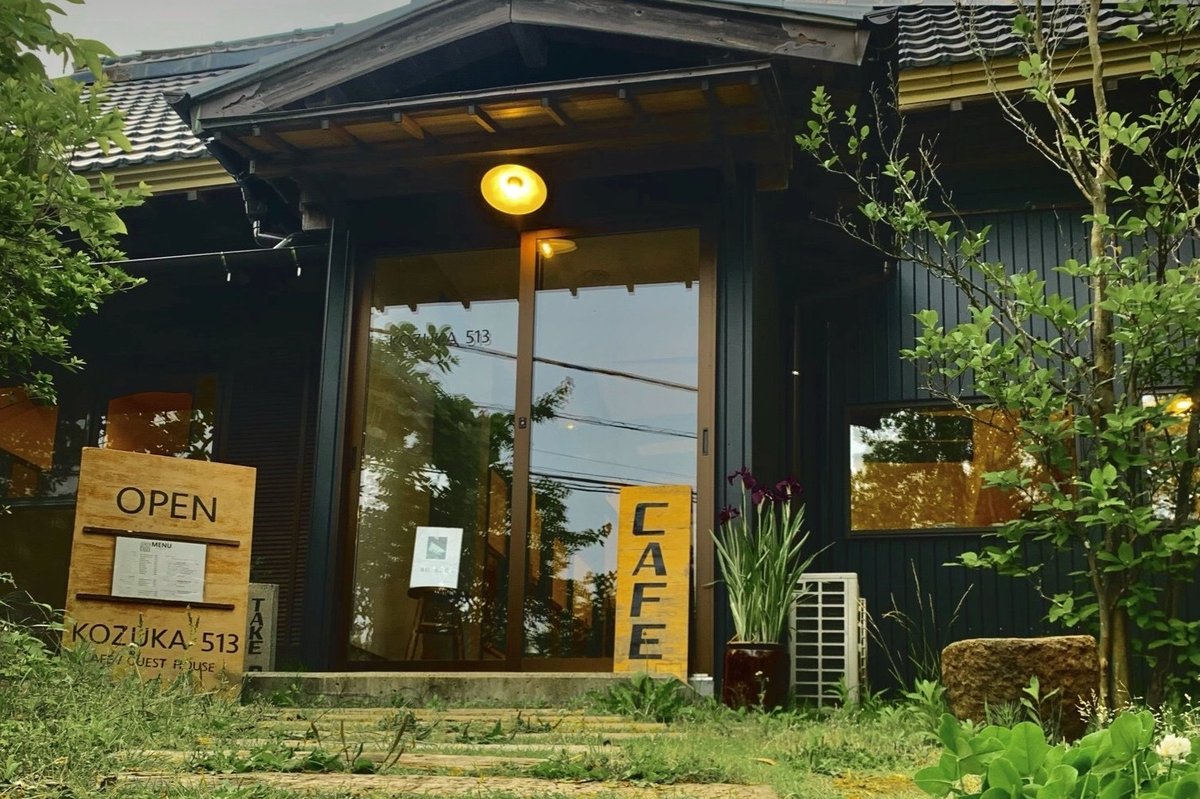
The Boso Peninsula in Chiba Prefecture is Tokyo’s most underrated road trip destination — an hour-and-a-half from the city center but feeling entirely separate from it. KOZUKA513 is a retro-modern farmhouse inn in Kamogawa’s Nagasa district, housed in a beautifully converted traditional kominka with a 15-tatami living room and two private bedrooms for up to seven guests. The inn sits in the heart of Nagasa — a landscape of terraced rice fields, old farming roads, and ocean-adjacent hills that road-trippers from Tokyo regularly discover and return to. Oyama Senmaida terraced rice fields are five minutes away, the Pacific coast (with surfing, sea kayaking, and seasonal swimming) is 20–30 minutes in either direction, and the whole peninsula loops naturally in a single day’s drive that can end comfortably back at KOZUKA513.
Road trip highlights:
- Retro-modern kominka farmhouse with 15-tatami common space — a relaxed base after coastal driving
- Oyama Senmaida terraced rice fields 5 minutes away (seasonal illumination events in autumn)
- Pacific surf coast, sea kayaking, and snorkeling accessible within 30 minutes
Best for: Tokyo road-trippers, surfers, families, weekend escape seekers
Road trip context: Kamogawa is the southern anchor of a natural Boso Peninsula loop — Chiba city → Tateyama → Kamogawa → Ichinomiya (surf town) → back to Tokyo
Magokoro — Iida, Nagano (Central Japan Route)
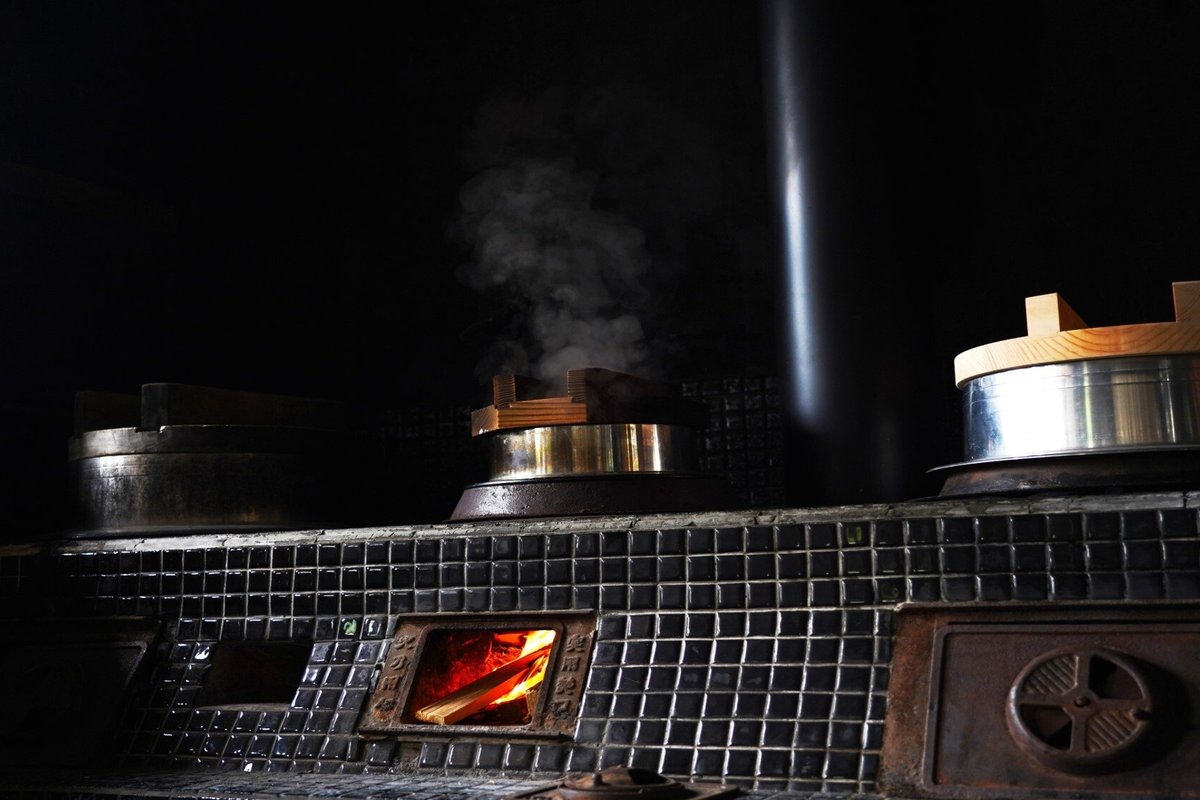
In the Ina Valley of southern Nagano — set along the Chuo Highway corridor linking Nagoya and the Japanese Alps — Magokoro is a 150-year-old kominka renovated into what its hosts call a “farmhouse auberge”: a single-group stay where accommodation and cuisine are inseparable. Up to five guests take the entire property, with two meals included per night and no other guests sharing the space. The kitchen is run by the resident couple, using local Minami-Shinshu ingredients prepared over an irori hearth and a traditional kamado clay stove. For road-trippers who have been eating convenience store onigiri, pulling into Magokoro feels like arriving somewhere that actually wanted you to come. The name says it plainly: magokoro means “wholehearted sincerity” in Japanese, and from the fire-lit irori to the morning rice cooked over the kamado, the entire stay reflects exactly that.
Road trip highlights:
- Full-house kominka auberge with two meals included per night — irori and kamado cooking by resident chef
- 150-year-old farmhouse, one group only (max 5) — complete privacy in the Ina Valley
- Minami-Shinshu location on the Chuo Highway between Nagoya, the Southern Alps, and central Honshu
Best for: Couples and small groups who want rural hospitality and Japanese countryside cuisine together in one stay
Road trip context: Iida City sits in the Minami-Shinshu valley along the Chuo Expressway — a natural overnight stop on any central Japan road trip linking Nagoya, the Japanese Alps, and Matsumoto
Nagi no Ie — Kumano, Mie (Kii Peninsula Route)
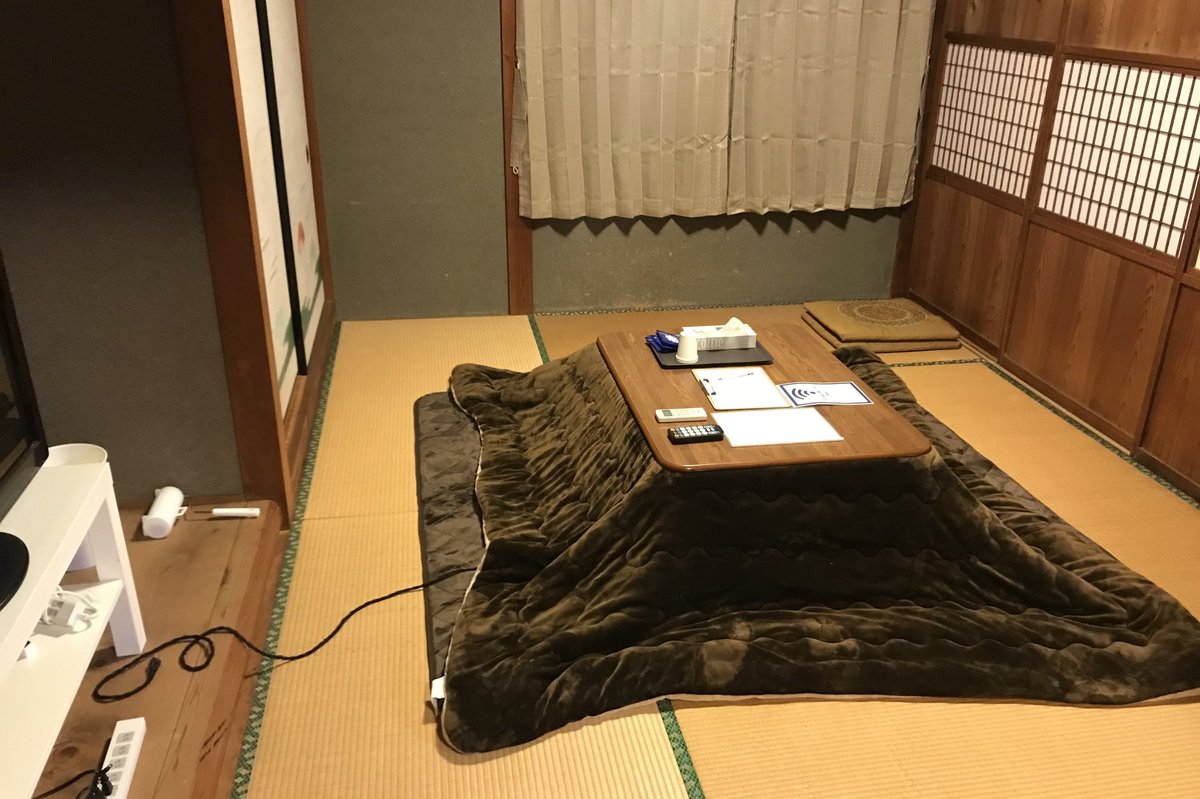
On the Kumano Coast in Mie Prefecture, directly facing one of Japan’s 100 Best Beaches, Nagi no Ie is a full-house rental with capacity for eight guests, a seaside garden for BBQ and bonfires, and direct access to the crystal-clear waters of Atashika Beach. The property sits along the Kumano Kodo pilgrimage trails — a UNESCO World Heritage network of coastal and mountain walking routes — making it an ideal overnight stop for anyone driving the Kii Peninsula loop. The surrounding coastline features rocky coves, sea caves, and the dramatic Oni-ga-Jō (Demon’s Castle) rock formations just north in Kumano City. All rooms are traditional tatami-floored, and the open-air garden fires make evenings here genuinely memorable. For road-trippers who want ocean views and Kumano forest air in equal measure, this is the stay.
For even more oceanfront accommodation options across Japan, explore STAY JAPAN’s curated selection of ocean-view stays: en.stayjapan.com/feature/ocean-view-stays
Road trip highlights:
- Right on Atashika Beach — one of Japan’s 100 Best Beaches
- Kumano Kodo UNESCO pilgrimage trails accessible directly from the property
- BBQ and bonfire garden for evening seaside gatherings
Best for: Beach lovers, pilgrimage walkers, Kii Peninsula road-trippers
Road trip context: Kumano sits between Ise Grand Shrine (2 hours north) and Nachi Taisha waterfall (1 hour south) — the heart of any Kii Peninsula road trip
NIPPONIA Izumo Taisha — Izumo, Shimane (San-in Route)
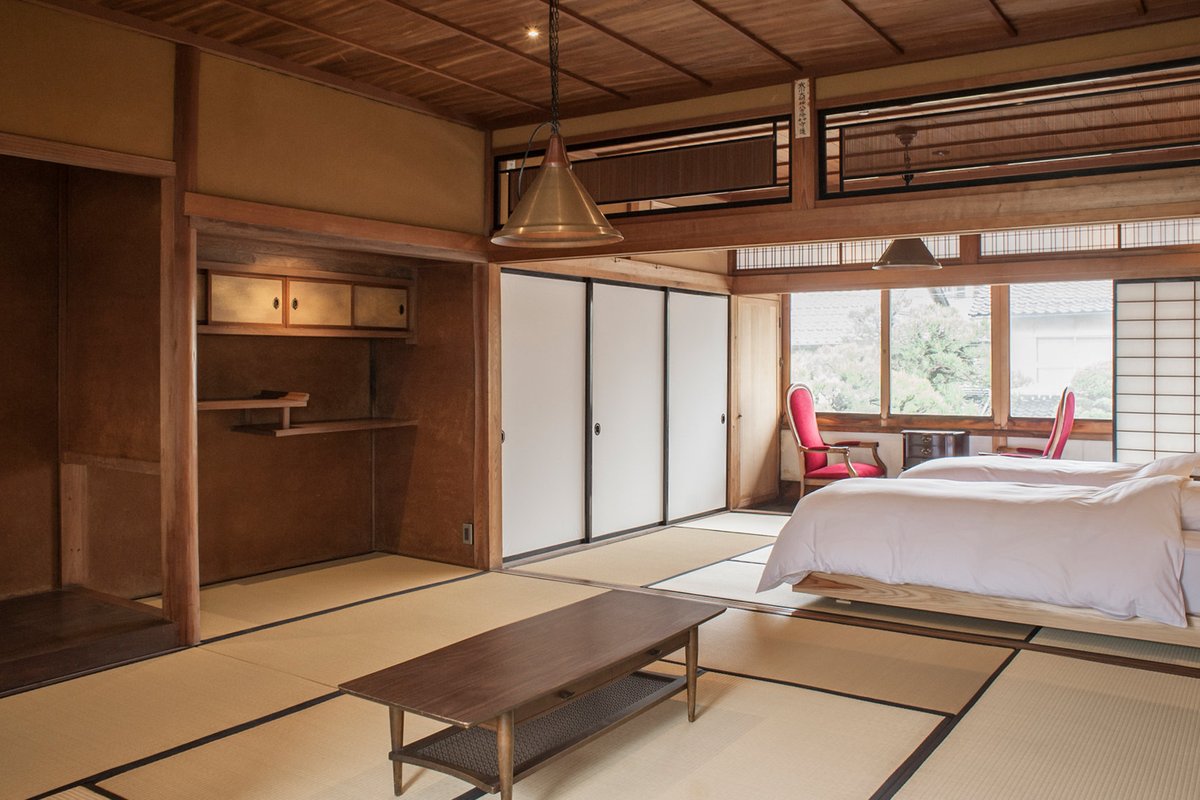
The San-in Route — National Route 9 along Japan’s Sea of Japan coast — is one of the country’s most underdriven road trip corridors, connecting Kyoto with Tottori’s sand dunes and Shimane’s ancient shrine towns through a landscape of rugged coastal cliffs and rural fishing villages. At the heart of it all is Izumo, home to Izumo Taisha Grand Shrine — one of Japan’s oldest and most spiritually important Shinto shrines. NIPPONIA Izumo Taisha is a 100-year-old Taisho-era building — once a medical clinic — converted into a refined guesthouse just five minutes’ walk from the shrine’s great torii gate. The European antique furnishings blend unexpectedly with traditional tatami rooms, creating an interior atmosphere that mirrors the San-in’s capacity to surprise. Optional experiences include shimenawa rope-making, traditional tea ceremony, rickshaw tours of the shrine district, and a French restaurant operating in the building’s original clinic wing.
Road trip highlights:
- Five-minute walk to Izumo Taisha Grand Shrine — essential San-in stop
- Taisho-era architecture with French restaurant in the same historic building
- Optional experiences: shimenawa rope-making, tea ceremony, rickshaw tour
Best for: Architecture lovers, cultural travelers, San-in Route road-trippers
Road trip context: Izumo sits midpoint on the San-in Route between Tottori (2 hours east) and Hagi (2.5 hours west) — a natural overnight stop on any western Honshu drive
Road Trip Tips for Japan
- Get an International Driving Permit before you leave. Japan requires a valid IDP from your home country — pick one up before departure, as it cannot be issued in Japan.
- Download offline maps. NAVITIME Japan is the most accurate navigation app for rural roads and expressway tolls. Google Maps works well for general routing. Download offline maps for your region before driving into areas with limited signal.
- Get an ETC card with your rental. The Electronic Toll Collection (ETC) system makes expressway tolls seamless — without it, you’ll queue at cash booths. Most rental companies offer ETC cards; ask when booking.
- Plan for expressway tolls. Japan’s expressways are excellent but not free. Budget approximately ¥3,000–5,000 per day for tolls on a moderate driving route. The Japan Expressway Pass (JEP) offers fixed-rate coverage for foreign visitors — check availability when renting.
- Convenience stores are your friend. Japan’s konbini (7-Eleven, FamilyMart, Lawson) are open 24 hours, stock everything from hot meals to travel essentials, and serve as reliable ATMs (useful if your card has international limitations). In rural areas, they’re often the only open establishment after 8pm.
- Roadside stations (Michi-no-Eki) are worth stopping for. These public rest areas serve local produce, regional specialties, and regional crafts — and are often the best source of information about what’s worth seeing nearby.
Frequently Asked Questions
Do I need an international driving permit to rent a car in Japan?
Yes. Japan requires a valid International Driving Permit (IDP) from your home country. Most countries’ automobile associations (AAA, RAC, etc.) can issue one quickly before your trip. Your home license alone is not sufficient in Japan, and you cannot obtain an IDP after arriving in the country.
Is driving in rural Japan difficult for first-time visitors?
Most visitors find rural Japan driving easier than expected. Roads are well-maintained, signs are clear and often bilingual, and traffic outside cities is light. The main adjustments are driving on the left and navigating narrow rural roads — take them slowly and you’ll be fine. Japan road trip accommodation through STAY JAPAN is typically located on or near main roads, making arrival straightforward.
What is the best season for a Japan road trip?
Each season offers something different: spring (late March–April) for cherry blossoms, summer (July–August) for mountains, beaches, and festivals, autumn (October–November) for fall foliage, and winter (January–February) for snow landscapes and onsen. For road trip comfort and road conditions, spring and autumn are the most popular — summer works beautifully in mountain areas and along the coasts, while winter road trips require checking for snow-closure alerts on mountain passes.
How far in advance should I book Japan road trip accommodation?
For peak season (Golden Week in late April/May, Obon in mid-August, autumn foliage in October–November), book 2–3 months ahead. For shoulder season travel, 3–4 weeks ahead is usually sufficient. STAY JAPAN properties with limited capacity (one-group stays) book faster — prioritize these early in your planning.
Can I drive a rental car between cities in Japan?
Yes. Most Japanese rental car companies allow one-way rentals between major cities for an additional fee. This is ideal for linear road trips (e.g., Fukuoka → Hiroshima → Osaka) where returning to your starting point doesn’t make sense.
Ready to Plan Your Japan Road Trip?
The rural stays on this list aren’t just places to sleep — they’re the reason to take the road that goes the long way around.
Browse all available STAY JAPAN properties across Japan’s countryside and start building your road trip route:
Related Articles
- Japan Without Tokyo: A 2-Week Countryside Itinerary
- 7-Day Central Japan Rural Itinerary: Rice Country, Mountains & Ancient Temples
- Best Kominka Stays in Tohoku: Traditional Houses of Northern Japan