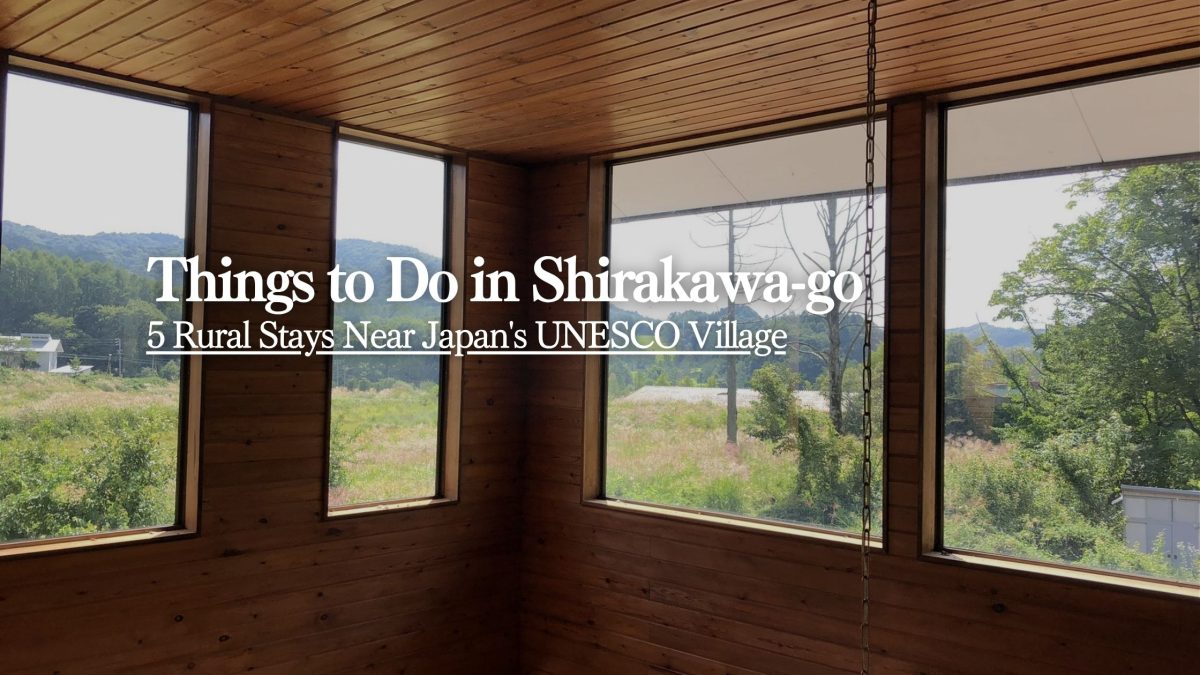

Shirakawa-go is one of Japan’s most photographed villages — a UNESCO World Heritage Site where centuries-old gasshō-zukuri farmhouses still stand in the mountain valleys of Gifu Prefecture. Whether you’re visiting in the warm amber of autumn or the snow-draped silence of winter, there are far more things to do in Shirakawa-go than most travel guides suggest.
Yet here’s what most itineraries miss: the villages themselves offer limited accommodation, and staying in a tour-group hotel nearby means waking up in an atmosphere that has nothing to do with what you’ve come to see. The Hida region, Gujo highlands, and Hokuriku coast surrounding Shirakawa-go are dotted with remarkable rural stays through STAY JAPAN — traditional homes, organic farm inns, and mountain villas that let you live the experience instead of just photographing it.
This guide covers the top things to do in Shirakawa-go — from the famous gasshō-zukuri viewpoint to riverside walks and traditional crafts — alongside five exceptional rural stays in the surrounding region where you can fully immerse yourself in Japan’s living rural heritage. By pairing your Shirakawa-go day trip with a genuine countryside base, you’ll leave with a far richer understanding of what these mountains have always meant to the people who call them home.
Top Things to Do in Shirakawa-go
Shirakawa-go’s appeal lies in its remarkable preservation. The UNESCO-designated Ogimachi district in the Shō River valley has been continuously inhabited for centuries, and its gasshō-zukuri farmhouses — named for their steep, thatched roofs resembling “hands pressed in prayer” (gassho) — are found nowhere else on earth in this concentration.
Walk Through Ogimachi Village
The main Ogimachi district is compact and entirely walkable. Follow the central path past the remaining traditional farmhouses, stopping at Wada House — the largest surviving gasshō-zukuri home in the village and open to visitors. The upper floors traditionally housed silkworms, a reminder that these homes were working farms long before they became heritage sites. Give yourself at least two hours to walk slowly and appreciate the architecture without rushing.
Visit the Open-Air Folk Museum
Just a short walk from the main village, the outdoor folk museum at Shirakawa-go brings together historic farmhouses from across the valley on a single hillside, with guides available to explain the traditional crafts and agricultural tools on display. It’s one of the best single-stop experiences for understanding the region’s living history before the crowds arrive.
Climb to Shiroyama Viewpoint
A 10-minute walk (or a short shuttle ride from the bus terminal) takes you to Shiroyama Viewpoint — the iconic elevated lookout that frames the entire Ogimachi district in one sweeping panorama. Visit in the early morning or late afternoon to avoid the peak crowds and catch the most atmospheric light. In winter, the nighttime illumination events held in January and February transform this view into something genuinely otherworldly.
Try Hoba Miso and Local Cuisine
Hoba miso — miso paste, mushrooms, and seasonal vegetables grilled on a large dried magnolia leaf — is the signature dish of the Hida region. You’ll find it at several restaurants throughout Ogimachi, along with freshwater river fish and mountain vegetables that change with the seasons. Look also for Hida beef (a local wagyu variety) and sake brewed with Shirakawa-go’s exceptionally pure snowmelt water.
Day-Trip to Gokayama
Just 30 minutes north of Shirakawa-go in Toyama Prefecture, Gokayama shares the UNESCO designation with far fewer visitors. The twin hamlets of Ainokura and Suganuma offer an even more tranquil gasshō-zukuri experience — many travelers find Gokayama the more moving of the two sites precisely because the crowds haven’t arrived yet. Adding Gokayama to your Shirakawa-go day creates a full Hida cultural circuit.
Explore by Bicycle or on Foot
The flat valley floor around Ogimachi is ideal for slow exploration by bicycle — rentals are available near the bus terminal. Cycling between farmhouses, following the Shō River upstream, and stopping at the few remaining working fields gives you a sense of Shirakawa-go’s rhythm that a rushed tour cannot.
Why Stay Near Shirakawa-go Rather Than in the Village?
Accommodation inside Ogimachi village is extremely limited — a handful of minshuku (family inns) that book up months ahead during peak seasons. More importantly, many travelers find that the most memorable part of a Japanese rural trip isn’t the UNESCO site itself — it’s the texture of actually living in a traditional space.
The Hida region, Gujo highlands, and Hokuriku coast surrounding Shirakawa-go are home to exceptional rural stays through STAY JAPAN, each offering a direct connection to the living traditions that the World Heritage Site preserves only as a snapshot. By staying in a working kominka or farm inn just 30–90 minutes from Ogimachi, you can wake to the smell of a wood-burning irori hearth, eat vegetables pulled from the garden that morning, and arrive at Shirakawa-go at your own pace — early, before the tour buses, when the village belongs to the mountains.
Browse STAY JAPAN’s curated collection of food and craft stays in rural Japan — properties where regional ingredients and traditional techniques are part of every stay: en.stayjapan.com/feature/food-craft-stays
Our Top 5 Rural Stays Near Shirakawa-go
Cool-Villa Hida Resort — Hida City, Gifu
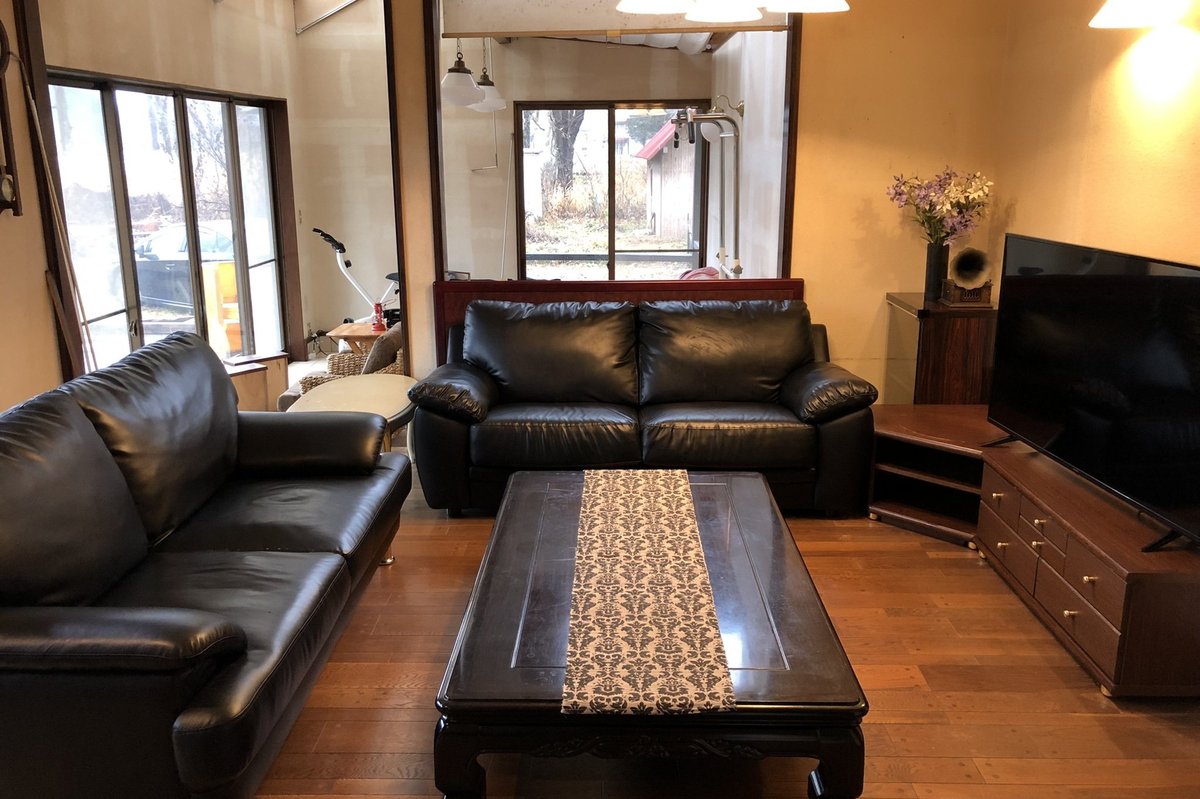
Set on the Hida Kuzugawa plateau, approximately 50–55 minutes east of Shirakawa-go, Cool-Villa Hida Resort is a 200-square-meter private villa with 1,000 square meters of completely private grounds. The setting is spectacular: mountain forest on all sides, total privacy, an outdoor BBQ deck, and enough space to pitch tents for a proper camping night under Hida’s unpolluted skies. Up to 12 guests can share the full property, making it the ideal choice for large families or groups who want a back-to-nature experience with genuine comfort built in. Pets are welcome, and the villa is available as a full rental — no shared facilities, no other guests.
Summer highlights:
- Private outdoor BBQ and camping grounds in Hida mountain forest
- Full villa rental for up to 12 guests — complete privacy
- Close access to both Shirakawa-go and Hida Folk Village in Takayama
Best for: Large groups, families with pets, outdoor enthusiasts
Access: Best reached by rental car. Free parking available.
Location: Hida City, Gifu — approx. 50–55 min to Shirakawa-go, 50 min to Takayama
HONMACHI House — Takaoka, Toyama
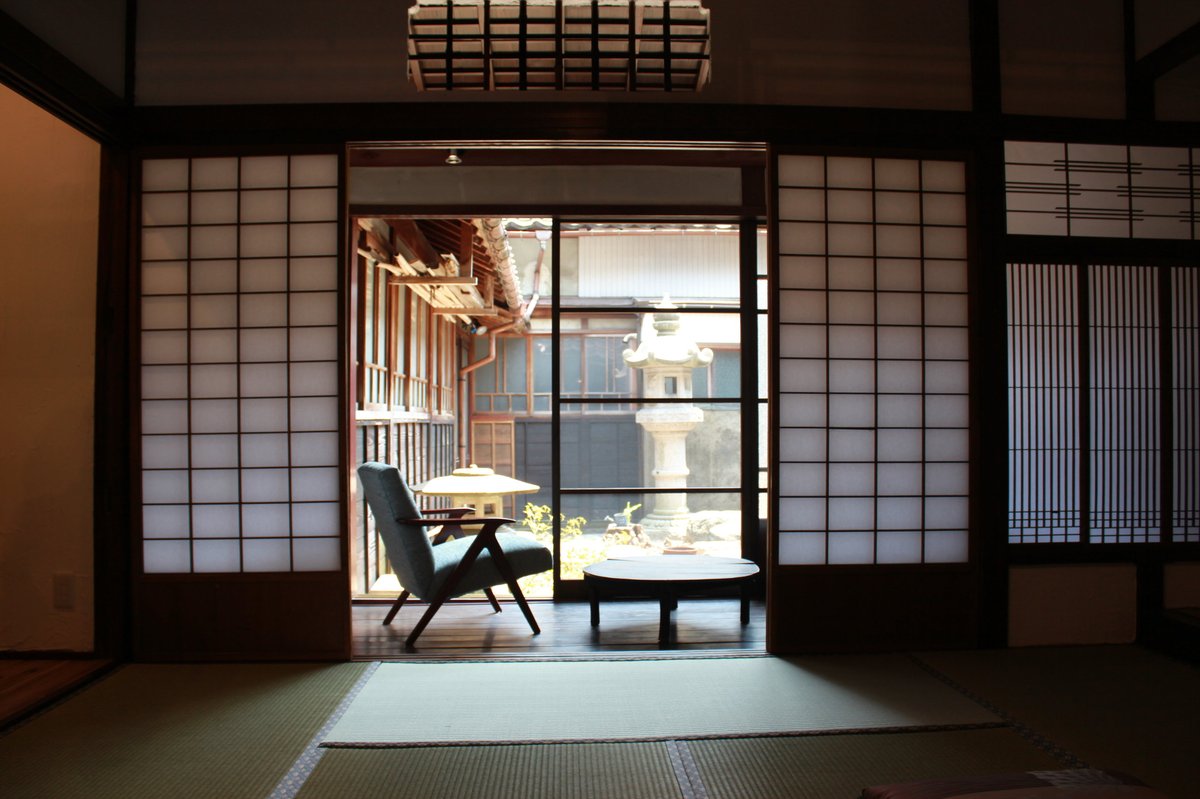
In the historic castle town of Takaoka — 50–60 minutes from Shirakawa-go and 30 minutes from Gokayama — HONMACHI House is an 85-year-old machiya (traditional townhouse) available for full-house rental. Up to nine guests can experience a North Hokuriku townhouse exactly as it was designed to be lived in: complete with a kura storehouse, an authentic Goemon iron soaking tub, and lacquer-painted pillars that speak directly to Takaoka’s centuries-old craft tradition. The location puts you walking distance from Takaoka’s temple and canal district, and within easy reach of both UNESCO heritage sites. Furthermore, Toyama Bay’s exceptional seafood — fresh squid, firefly squid, and local fish — is on your doorstep.
Summer highlights:
- Full-house machiya rental in Takaoka’s historic district
- Goemon iron soaking tub and traditional kura storehouse
- Gateway to Gokayama, Toyama Bay seafood, and Noto Peninsula crafts
Best for: Groups and families, design enthusiasts, slow cultural travelers
Access: Best reached by rental car. Free parking available.
Location: Takaoka, Toyama — approx. 50–60 min to Shirakawa-go, 30 min to Gokayama
Old Folk House Kanade — Hakui, Ishikawa
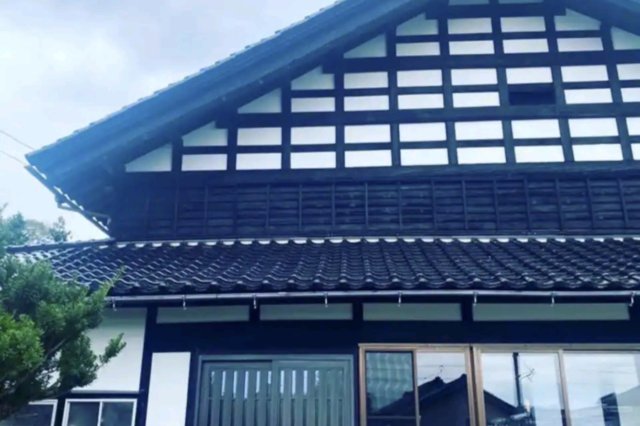
On the southern gateway of the Noto Peninsula in Hakui, Ishikawa, Old Folk House Kanade is a 150-year-old kominka farmhouse renovated in 2022 while preserving everything that makes traditional Japanese architecture alive: a sunken irori hearth, hand-hewn ceiling beams, and wide wooden floors worn smooth by generations. Up to 10 guests can take the full house, with an option for semi-private arrangements for smaller parties. Hakui sits roughly 90 minutes from Shirakawa-go by expressway, making it an excellent choice for travelers who want to combine a Shirakawa-go day trip with deeper exploration of the Noto Peninsula coast and Ishikawa’s sake culture. In particular, the irori hearth at Kanade creates an evening atmosphere that mirrors the interior of the gasshō-zukuri farmhouses you’ll visit by day.
Summer highlights:
- Authentic irori hearth in a lovingly restored 150-year-old kominka
- Up to 10 guests — ideal for multi-family or friend groups
- Day-trip access to Shirakawa-go plus Noto Peninsula beaches and sake breweries
Best for: Large groups, architecture enthusiasts, travelers combining Noto Peninsula and Hida
Access: Best reached by rental car. Free parking available.
Location: Hakui, Ishikawa — approx. 90 min to Shirakawa-go, 60 min to Kanazawa
Cocoro Farm Stay — Gujo, Gifu
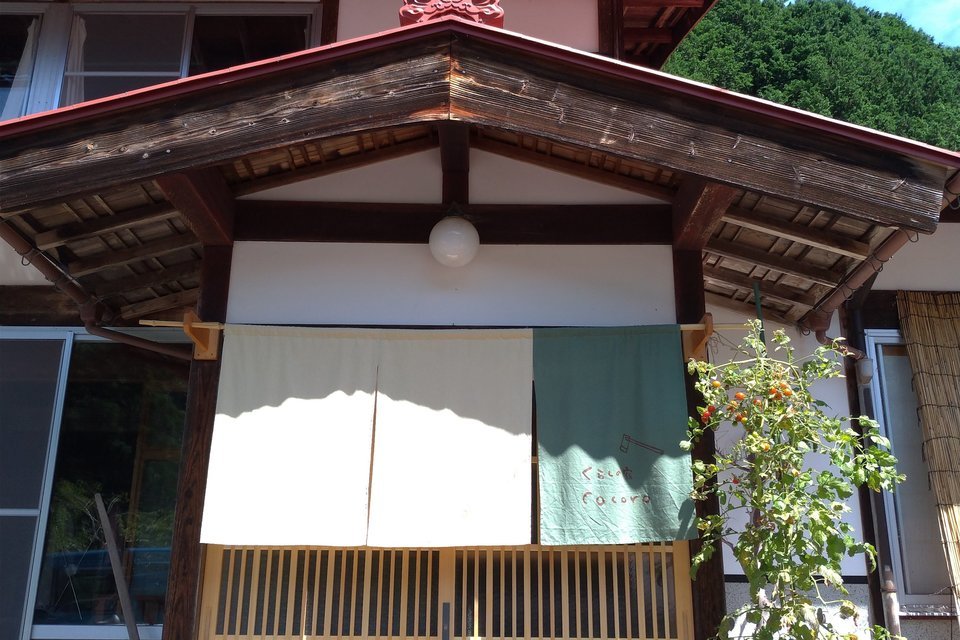
In the mountain valley of Gujo, 60 minutes south of Shirakawa-go, Cocoro is a STAY JAPAN exclusive organic farm stay that captures the deepest soul of the Hida region: seasonal farming, a wood-burning stove that heats the whole space, a kamado clay rice cooker for communal meals, and friendly resident cats who take their hospitality seriously. This property is reserved for just one group at a time — up to four guests — turning your stay into a fully private farm immersion. Your hosts are passionate small-scale farmers who will walk you through seasonal harvesting, share their philosophy on organic food and country living, and prepare two meals using ingredients grown on the property. It’s the most immersive experience on this list, specifically for guests who want to feel what it means to grow, cook, and eat with the seasons in the mountains of Gifu.
Summer highlights:
- Organic farm experience with seasonal vegetable harvesting and communal meals
- Wood stove and kamado cooking — genuine hands-on rural living
- Fully private for one group — no other guests, complete immersion
Best for: Couples, small groups, and anyone seeking a deep, slow connection with rural life
Access: Best reached by rental car. Free parking available.
Location: Gujo City, Gifu — approx. 60 min south of Shirakawa-go
Minshuku Yaichi — Gujo, Gifu
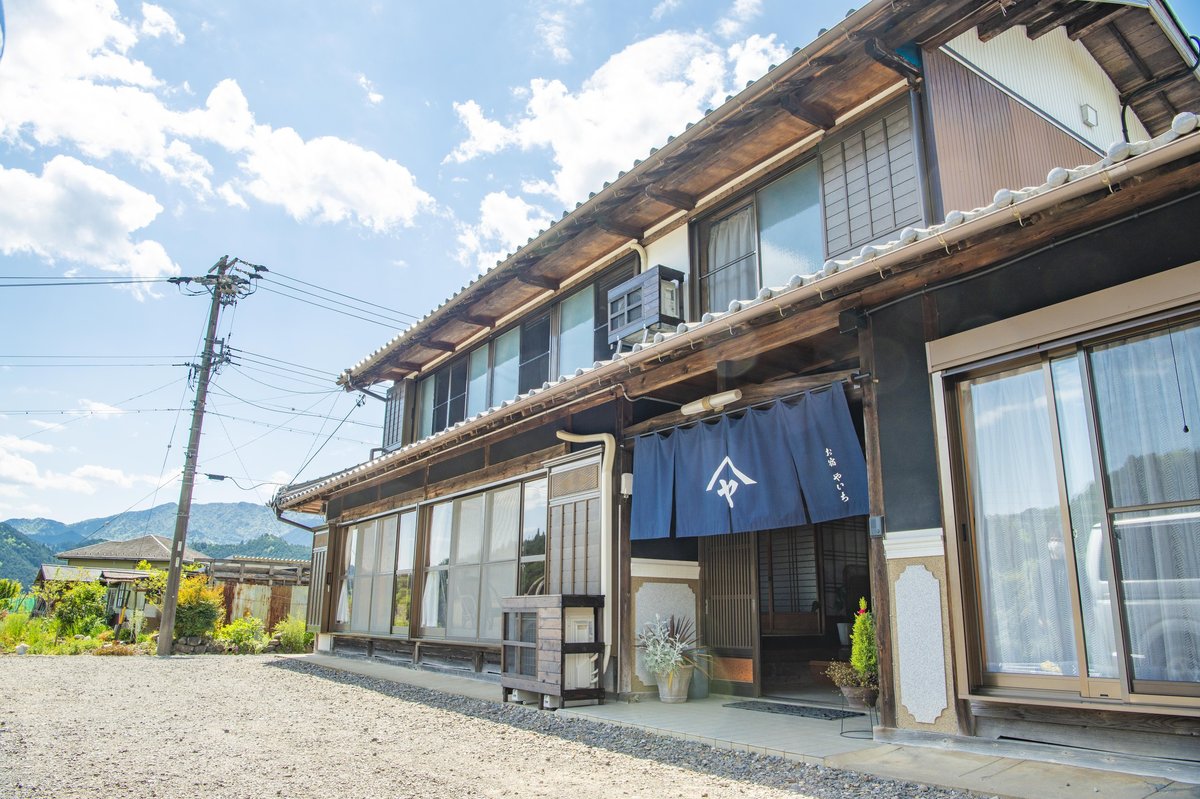
Beside the Nagara River in the Minami district of Gujo City, Minshuku Yaichi is a traditional farm inn with a genuine and specific passion for seasonal cooking. The hosts run their own vegetable garden and turn its harvests into meals that shift with the seasons — in summer, expect river-fresh ayu (sweetfish) grilled over charcoal alongside mountain vegetables picked that very morning. The Nagara River flowing past the inn is one of Japan’s clearest waterways, known for its exceptional natural water quality and the traditional cormorant fishing culture that has survived along its banks for centuries. Guests can add a farm experience as an optional activity, making Yaichi a working farm inn in the truest sense of the term. With capacity for up to seven guests, it works equally well for families and small groups.
Summer highlights:
- Seasonal meals with homegrown vegetables and Nagara River ayu sweetfish
- Optional farm experience add-on for hands-on agricultural participation
- Riverside setting on the pristine Nagara River
Best for: Food lovers, families, and travelers who want genuine farm hospitality without pretension
Access: Best reached by rental car. Free parking available.
Location: Gujo City, Gifu — approx. 60–70 min south of Shirakawa-go
Tips for Visiting Shirakawa-go
- Book transport well in advance. Highway buses from Nagoya (approximately 2.5 hours), Kanazawa (approximately 1 hour 20 minutes), and Toyama (approximately 75 minutes) all stop at Shirakawa-go. In peak season — particularly winter illumination events and autumn foliage — seats fill weeks ahead. Book as early as possible.
- Arrive early or come late. The Ogimachi village center fills with day-trip tour groups between around 10am and 3pm. Arriving before 9am or after 4pm gives you the quieter, more atmospheric experience that the village rewards.
- Combine Shirakawa-go with Gokayama. Adding 1–2 hours for a stop at Gokayama’s Ainokura hamlet — 30 minutes north into Toyama — gives you a complete picture of the gasshō-zukuri culture with far fewer crowds. Most highway buses stop at both.
- Consider renting a car. Driving gives you total flexibility to link Shirakawa-go, Gokayama, Hida Folk Village (Takayama), and your STAY JAPAN accommodation in a seamless multi-day Hida loop. The mountain roads are well-maintained and the scenery between stops is exceptional.
- Summer festivals and fireflies. July and August bring local summer festivals and, in the right riverside locations, firefly watching — an increasingly popular summer experience in the Gujo and Hida valleys. Ask your STAY JAPAN host what’s happening locally during your stay.
- Dress in layers. Even in summer, mountain temperatures in the Hida region can drop significantly after sunset. A light jacket for evenings is essential, particularly at higher elevations.
Frequently Asked Questions
What are the top things to do in Shirakawa-go?
The most popular things to do in Shirakawa-go include walking through the Ogimachi heritage district, visiting Wada House (the largest gasshō-zukuri farmhouse open to the public), exploring the outdoor folk museum, climbing to Shiroyama Viewpoint for the panoramic village view, and trying traditional hoba miso cuisine at local restaurants. Combining Shirakawa-go with a same-day visit to Gokayama (30 minutes north in Toyama) gives you the most complete gasshō-zukuri experience with significantly fewer crowds.
Can you stay overnight in Shirakawa-go?
A small number of gasshō-zukuri farmhouses inside Ogimachi village operate as minshuku (family inns), but availability is extremely limited — especially during winter illumination events, autumn foliage season, and Golden Week. An increasingly popular alternative is staying in a traditional rural home through STAY JAPAN in the surrounding Hida or Gujo region, allowing you to day-trip to Shirakawa-go at a comfortable pace while spending your nights in an equally atmospheric — and often more spacious — traditional setting.
How far is Shirakawa-go from Takayama?
Shirakawa-go is approximately 50 kilometres north of Takayama, connected by the Tokai-Hokuriku Expressway. By car the drive takes around 45–55 minutes. Highway buses also connect the two destinations, making it feasible to combine Takayama (Hida Folk Village, historic merchant district) and Shirakawa-go in a single day.
What is the best time of year to visit Shirakawa-go?
Shirakawa-go is genuinely rewarding in every season, though each offers something different. Winter (January–February) brings snow-covered gasshō-zukuri rooftops and special nighttime illumination events that attract large crowds. Spring (April) brings cherry blossoms against the farmhouse backdrop. Summer (July–August) offers lush green rice paddies, cooler mountain air, and local festivals. Autumn (October–November) frames the farmhouses in fiery foliage that many visitors consider the most beautiful of all. For first-time visitors, autumn or early summer offers the best balance of color, weather, and manageable crowds.
Is it possible to visit Shirakawa-go without a car?
Yes. Highway buses from Nagoya, Kanazawa, and Toyama serve the Shirakawa-go bus terminal, which is a 5–10 minute walk from the main Ogimachi area. However, having a car gives you considerably more flexibility to visit Gokayama, Takayama’s Hida Folk Village, and the Hokuriku coast in a single trip — and makes it far easier to reach the rural STAY JAPAN properties in the surrounding Hida and Gujo valleys.
Ready to Stay in Rural Japan?
Shirakawa-go shows you what rural Japan has preserved. Staying in a STAY JAPAN property nearby shows you how that spirit still lives today.
Browse all available stays near Shirakawa-go and across the Hida region — from centuries-old kominka farmhouses to private mountain villas — and book your perfect base for exploring Japan’s UNESCO heritage villages.
Related Articles
- What is a Kominka? A Complete Guide to Traditional Japanese Farmhouse Stays
- 7-Day Central Japan Rural Itinerary: Rice Country, Mountains & Ancient Temples
- Nouhaku Japan: The Complete Guide to Countryside Agricultural Stays